
Can Hamsters Eat Tomatoes? Ripe Flesh vs Leaves, Stems and Unripe Fruit
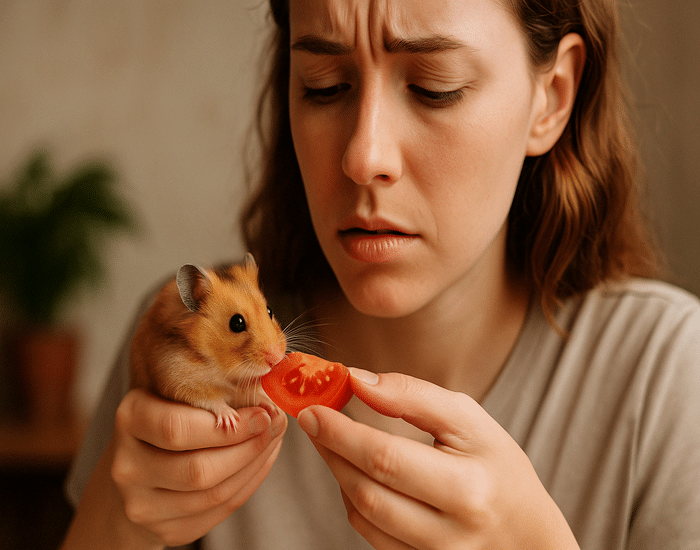
The original claim that tomatoes are simply “dangerous for hamsters” is too broad. A tiny amount of fully ripe tomato flesh can be suitable for many hamsters, while the green parts of the plant and unripe fruit are a different issue and should be avoided.

The safe part: fully ripe tomato flesh
The UK veterinary charity PDSA includes tomato among fresh foods that can be offered to hamsters in small portions. PetMD similarly warns specifically against unripe tomatoes, which is an important distinction.
The parts to avoid
- tomato leaves;
- tomato stems and vines;
- green, unripe tomato;
- seasoned tomato sauce;
- ketchup and other processed tomato products.
Why plant parts are different
Tomato plants contain glycoalkaloid compounds at higher concentrations in green tissues and unripe fruit. There is no nutritional reason to expose a hamster to those parts when safer fresh-food choices are available.
How much ripe tomato?
Think tiny. A small fragment is enough to introduce the food. Hamsters have small digestive systems, and tomato is watery and acidic enough that a large serving may contribute to loose stool or digestive upset.
Introduce one fresh food at a time
If several new foods are offered together and stool changes, you will not know which one caused the problem. Offer a tiny portion, observe, and remove uneaten fresh food later so it does not rot in the hamster’s cache.
Tomato is optional
A balanced hamster ration should remain the nutritional foundation. Tomato does not need to be fed for vitamin benefits, “detox,” hydration or dental health. For the everyday foundation of the diet, see our hamster diet guide covering balanced food, fresh extras and foods to limit.
What if your hamster ate a leaf or green tomato?
Remove access to the plant and contact a veterinarian experienced with small mammals if a meaningful amount was eaten or the hamster develops lethargy, reduced appetite, diarrhea or other abnormal signs.
Keep the answer simple: ripe flesh only, and very little
If tomato is offered at all, use only fully ripe plain flesh in a tiny portion. Leaves, stems and unripe green fruit are not worth the risk and provide no nutritional advantage.
Why green plant parts are treated differently
Tomato plants contain glycoalkaloids at higher concentrations in green tissues and unripe fruit. The practical owner rule is therefore conservative: keep vines, leaves, stems and green tomatoes out of the enclosure.
Ripe tomato is still optional
A hamster does not need tomato for vitamins or hydration. RSPCA recommends balanced hamster food as the foundation with fresh extras kept small.
Use a tiny amount
Tomato is watery and acidic. A small fragment is enough to test acceptance without turning it into a major part of the diet.
Remove skin only if it helps preparation
There is no need to create a complicated serving. Wash the tomato well, use ripe flesh and remove any green stem attachment or spoiled area.
Seeds are not the main concern
The bigger practical issues are ripeness, plant-part exposure, portion size and spoilage. A tiny piece of ripe flesh can be served without turning seed removal into the central safety question.
Introduce tomato alone
Do not add cucumber, fruit and another new vegetable at the same time. If stool softens or appetite changes, one-food introduction makes the cause easier to identify.
Fresh tomato spoils quickly in the cache
Check later for hidden leftovers. Remove the perishable piece without destroying the hamster’s normal dry-food store.
What if a leaf or stem was eaten?
Remove access to the plant and contact a veterinarian experienced with small mammals if a meaningful amount was swallowed or the hamster develops lethargy, diarrhea, reduced appetite, weakness or other abnormal signs.
What if a large amount of ripe tomato was eaten?
Digestive upset is the more practical concern. Return to the normal ration and water, and seek veterinary advice if abnormal stool or appetite persists.
Tomato is not a hydration treatment
Clean drinking water remains essential every day. A watery vegetable cannot compensate for a blocked or empty bottle.
Use tomato as variety, not therapy
There is no evidence-based reason to use tomato to “detox,” improve teeth or treat illness. If the hamster needs dietary modification for disease, follow an exotics veterinarian’s plan.
Keep plant safety separate from feeding safety
This page owns the feeding question—whether and how to offer ripe tomato flesh. Our companion tomato plant safety guide focuses specifically on leaves, stems and unripe fruit.
How often should ripe tomato be offered?
There is no need for a routine schedule. If you choose to offer it, keep it occasional and tiny because the hamster receives its real nutritional balance from the formulated ration.
Ripe tomato versus cucumber
Both are watery fresh foods. There is little reason to feed both in the same session. Rotating them on different days makes digestive tolerance easier to monitor.
Do not use cherry tomatoes whole
A whole cherry tomato is much too large and can be carried into a cache where it spoils. Cut off a tiny amount of ripe flesh and discard the rest or use it for human food.
Do not use canned tomato
Canned tomatoes may contain salt, acids or seasonings, while sauces can contain onion and garlic. Only plain fresh ripe tomato is relevant to this feeding question.
Tomato paste and ketchup are not hamster foods
These products are concentrated and often contain salt, sugar, vinegar or spices. They should not be offered.
What if the hamster refuses tomato?
Remove it and move on. Tomato is optional, and there is no nutritional reason to persuade the hamster to eat it.
Watch the balanced ration after introducing fresh food
If the hamster begins selecting tomato while leaving formulated food, cut back extras. Fresh foods should not displace the nutritionally complete base.
Do not use tomato for dental wear
Soft ripe tomato does nothing to correct overgrown teeth. A hamster struggling to eat normal food needs a dental and health assessment.
Keep preparation separate from garden plants
Bring only the ripe fruit into the feeding area. Keeping vines and leaves away reduces the chance of accidental exposure to the green plant parts this page specifically warns about.
Do not use tomato from a mixed prepared salad
Human salads may include onion, garlic, dressing, salt, cheese or herbs. Prepare a fresh plain piece separately.
Use ripe color and firmness as a practical check
Choose fully ripe fruit without green shoulders, mold or damaged areas. If ripeness is uncertain, choose another fresh food.
Do not let plant-trimming waste reach the enclosure
Leaves and stems should go directly into a secure waste or compost container where an escaped hamster cannot reach them.
Ripe tomato is easy to skip entirely
If you are uncomfortable distinguishing plant parts or ripeness, choose another suitable fresh food. There is no nutritional need to include tomato specifically.
Reader takeaway
A tiny piece of fully ripe plain tomato flesh can be an optional fresh extra for many healthy hamsters, while leaves, stems and unripe fruit should be avoided. The safest approach is conservative portioning, one-food introduction and quick removal of leftovers.
For a broader feeding baseline, use our hamster care and diet guide. For another high-water vegetable, see how to portion cucumber safely.



0 comments