
Budgerigar (Budgie) Species Guide: Origin, Size, Personality and Care Basics

Budgerigars—usually called budgies—are small parrots native to Australia and among the most familiar companion birds in the world. The words budgerigar and budgie refer to the same species, Melopsittacus undulatus. In some countries they are also casually called parakeets, although “parakeet” is a broader term that can describe many small, long-tailed parrots.
This page is a species profile: what a budgerigar is, where the species comes from, what its normal size and behavior are like, and what prospective owners should understand before bringing one home. For a step-by-step husbandry plan, use our Budgie Care Guide.
Budgerigar, budgie and parakeet: what is the difference?
Budgerigar is the species name most closely tied to Melopsittacus undulatus. Budgie is the common shortened name. In the United States, pet shops and owners often say parakeet, but that word can also refer to other small parrot species.
If you are searching for care information, “budgie” and “budgerigar” usually lead to the same bird. The important part is confirming that the advice is actually about Melopsittacus undulatus, not a different parakeet species.
Where do budgerigars come from?
Budgerigars originate from Australia, where wild birds live across dry and semi-arid regions and can form large, mobile flocks. The Association of Avian Veterinarians describes budgerigars as small parrots from Australian desert and grassland regions.
That wild history helps explain why companion budgies are social, active and adapted to moving frequently in search of food and water. A pet budgie may live in a cage, but its behavioral needs still include movement, social contact, foraging and environmental choice.
How big is a budgerigar?
Budgies are small parrots. Veterinary reference material commonly places adult body length at around seven inches from head to tail, although individual birds vary. Their small body size can make them look easy to house, but a small bird still needs enough horizontal room to move between perches and use its wings.
Do not choose a cage only because the packaging says “parakeet cage.” The usable internal space, bar spacing, perch layout and ability to move matter more than the marketing label.
Wild-type color and pet color varieties
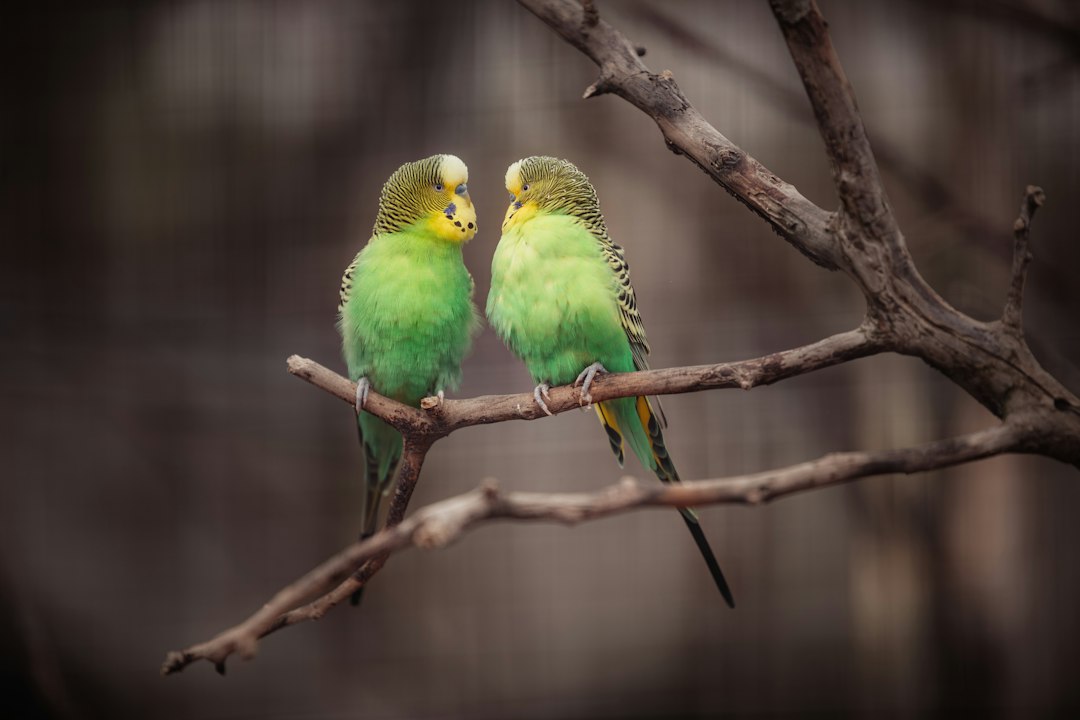
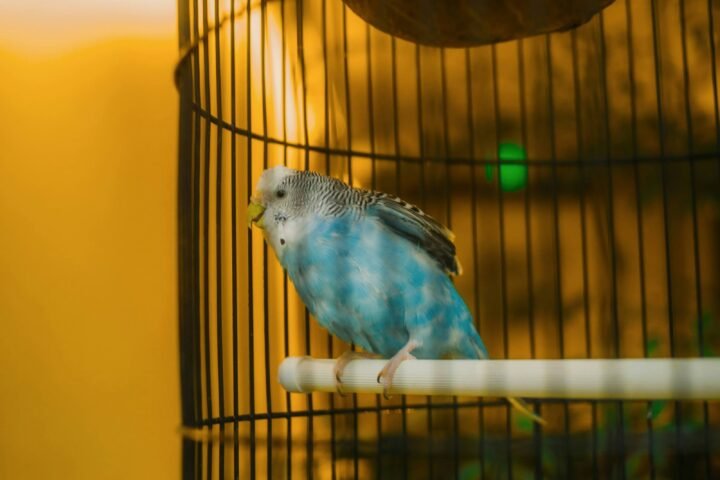
Wild budgerigars are predominantly green and yellow with dark scalloped markings. Selective breeding has produced many companion-bird color mutations, including blue, grey, violet, pied, opaline, spangle and other patterns.
Color does not determine personality, intelligence or the quality of care a bird needs. Choose a bird because the household can meet its social, veterinary and husbandry needs—not because one color is advertised as “rare” or more affectionate.
What are budgies like as pets?
Budgies are active, vocal and highly social parrots. Many enjoy interaction, training, climbing, flying and exploring safe objects with the beak. They can learn routines quickly and may imitate household sounds or human speech.
The VCA budgie profile describes them as social, inquisitive and active birds that enjoy flying, playing and chewing. Individual temperament still varies: one bird may be bold and interactive while another needs more time before accepting close handling.
Can budgies talk?
Some budgies become skilled vocal mimics, while others mainly chirp, whistle and chatter. Talking ability should be treated as a possible behavior, not a guarantee or a reason to buy a particular bird.
Training works best when it is low-pressure and reward-based. A bird that feels secure around people is more likely to engage than one that is repeatedly grabbed or forced to interact.
Are budgies noisy?
Budgies can be quite vocal throughout the day, especially when socially engaged, excited or calling to other birds. Their normal chatter is usually less powerful than the calls of many larger parrots, but a quiet household should still expect daily sound.
A sudden change in vocal behavior can also matter. A normally active bird that becomes unusually quiet, fluffed or withdrawn may be unwell and should not simply be described as “calmer.”
How long do budgerigars live?
Lifespan figures vary among veterinary and husbandry references because genetics, nutrition, disease, exercise and access to veterinary care all influence longevity. PetMD commonly cites about 10–12 years with appropriate care, while avian-veterinary references also show substantial individual variation.
The practical point is that a budgie is not a temporary or disposable pet. Bringing one home can mean a commitment lasting many years.
Budgies are flock-oriented birds
Wild budgerigars are highly social. In captivity, that does not mean every household must keep a large flock, but it does mean social deprivation is a real welfare concern. A single bird generally needs meaningful daily interaction and enrichment. Multiple birds still need enough food stations, perches, space and supervision so one bird cannot monopolize resources.
New birds should not be placed together immediately without considering quarantine, veterinary advice, behavior and safe introduction.
Flight and movement are normal behavior
Budgies are built to move horizontally through space. A cage should therefore be arranged around usable movement rather than filled with so many toys that the bird can barely travel between sides.
Vary perch diameter and texture instead of relying on one smooth dowel. Our bird perch guide explains safe materials, sizing, placement and foot-health considerations.
Cage location affects everyday welfare
A well-sized cage can still be poorly placed. Budgies need clean air, predictable sleep and protection from household hazards. Kitchens are poor locations because fumes, heat and cooking hazards can affect birds.
For practical room placement, sleep and air-quality guidance, see our pet bird cage placement and sleep guide.
Seed-only feeding is not a complete plan
Budgies naturally eat seeds in the wild, but a bowl of commercial seed alone does not automatically provide balanced companion-bird nutrition. Avian-veterinary guidance generally recommends evaluating the complete diet rather than assuming the bird should live on seed because it enjoys it.
Diet changes should be made carefully. A small bird that rejects unfamiliar food can lose weight quickly, so abrupt conversion is not a good experiment. Work with an avian veterinarian when changing a long-standing diet, especially if the bird has health concerns.
Weight is one of the most useful health trends to track
Because birds often hide illness, gradual weight loss may appear before dramatic symptoms. A gram scale and consistent routine can help owners notice a trend early.
Our guide to weighing a pet bird at home explains how to track weight without turning the process into a stressful restraint session.
Learn what is normal for your own bird
Healthy baseline behavior matters. Notice normal appetite, activity, droppings, breathing, posture, vocalization and sleep. A meaningful change is more useful information than a generic checklist alone.
Birds can hide disease until they are significantly unwell. Persistent fluffing, sitting low, breathing changes, reduced appetite, weakness, repeated vomiting or major changes in droppings deserve prompt attention from an avian veterinarian.
Who is a budgerigar a good fit for?
A budgie may suit someone who wants an intelligent, social companion bird and is prepared for daily feeding, cleaning, interaction, safe exercise and veterinary care. It is a poor fit for a household that wants a silent decorative pet or expects the bird to remain content with food and water alone.
Children can enjoy budgies, but an adult should remain responsible for care, safety and veterinary decisions. Small size makes the bird physically delicate; handling should be calm and supervised.
Budgerigar vs larger parrots
Budgies share many parrot traits—social learning, vocal behavior, chewing, flock awareness and a need for enrichment—but their small size changes housing, handling and medical logistics. Small should not be confused with simple.
Bottom line
A budgerigar is a small Australian parrot with a large behavioral repertoire. Budgies are social, active, vocal and capable of learning complex routines. Their care should support flight and movement, varied perching, balanced nutrition, safe air quality, predictable sleep, enrichment and regular avian-veterinary oversight.
If you are moving from species research into practical setup, continue with our complete Budgie Care Guide.
For husbandry and preventive care, the Association of Avian Veterinarians’ pet bird care resources are a useful starting point, while its guidance on small parrots reinforces that budgies need serious care despite their size. For a clinical overview of the species, VCA’s budgie guide provides additional veterinary context.
0 comments