
Reptile Heat Lamp vs Heat Mat: Which Heat Source Makes Sense for Your Species?
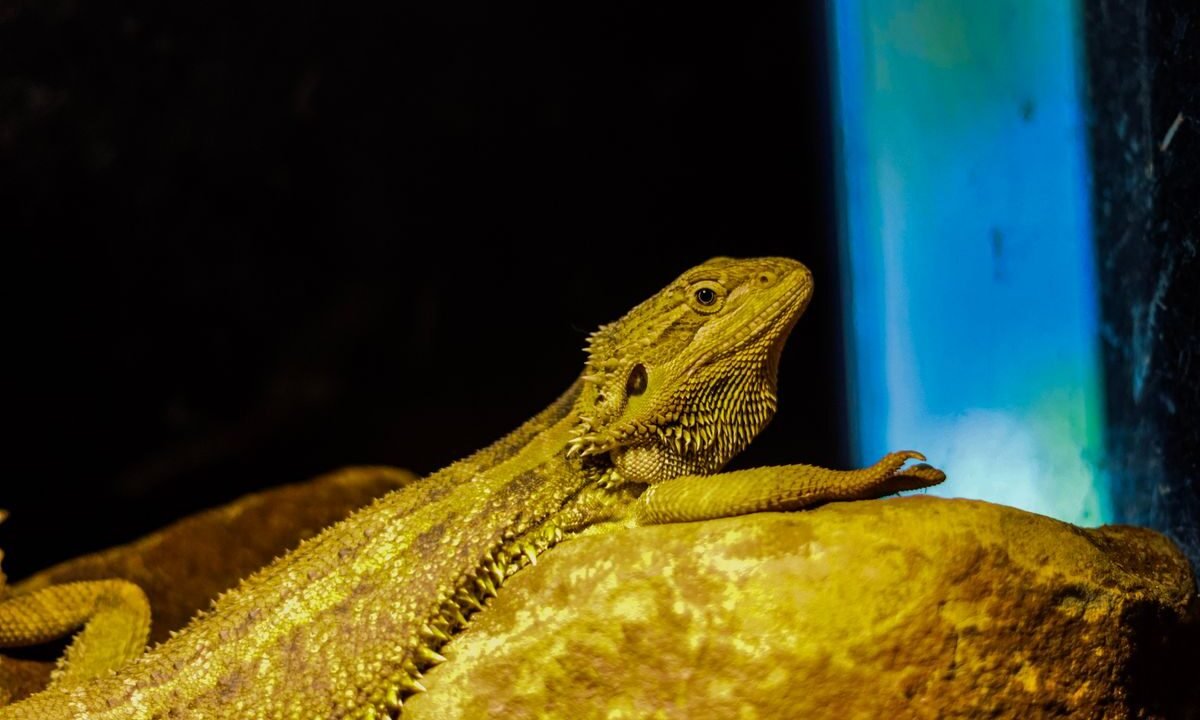
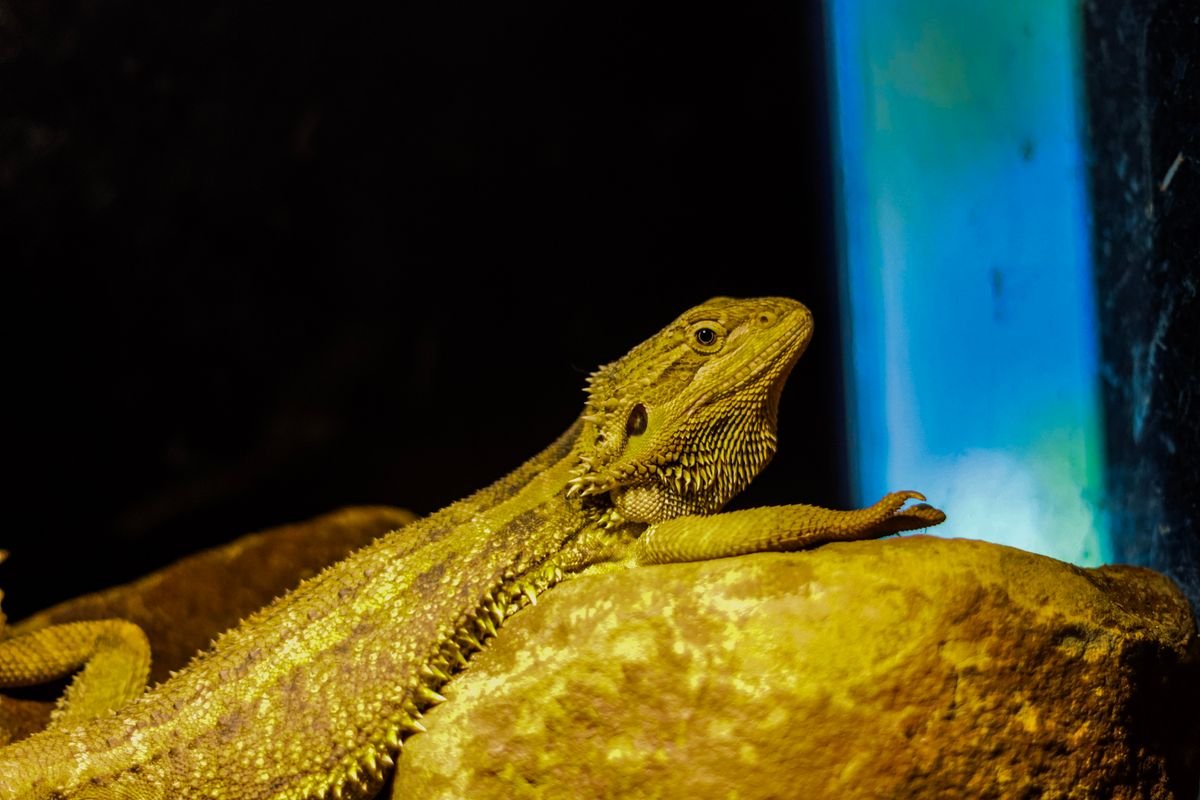
Reptile heat lamp vs heat mat is not a question with one universal winner. Heat lamps and heat mats warm an enclosure in different ways, and the better choice depends on the reptile’s natural behavior, enclosure size, basking needs and nighttime requirements. For many reptiles, overhead heating is the more natural daytime heat source because it creates a basking zone from above, while heat mats are more limited tools that can be useful in some smaller enclosures or specific setups.
First understand what the reptile is trying to do
Reptiles regulate body temperature by moving between warmer and cooler areas. A heat source should create a usable thermal gradient rather than making the entire vivarium the same temperature. Our reptile terrarium setup guide explains why the warm end, cool end and hides need to work together.
Heat lamps create overhead basking zones
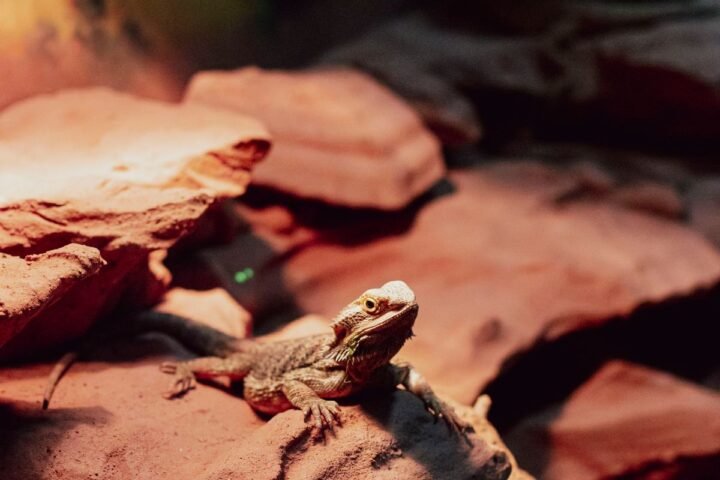
The RSPCA recommends overhead heat lamps for basking in several species guides, including bearded dragons, garter snakes, kingsnakes, corn snakes and royal pythons. A lamp can warm the animal and nearby surfaces from above in a way that better resembles daytime radiant heat.
Some species use visible light as part of basking behavior
The RSPCA’s bearded dragon care guidance notes that bearded dragons use light to help detect heat and recommends a basking lamp at one end of the enclosure. For a diurnal basking lizard, a heat mat alone cannot recreate that same daytime basking environment.
Heat mats mainly warm the surface they contact
A heat mat produces a localized warm area rather than a broad overhead basking zone. RSPCA snake guides often describe heat mats as an option for smaller or hatchling enclosures, used on one side and controlled by an on/off thermostat.
A heat mat is not automatically safer because it has no bulb
Uncontrolled mats can become hot enough to cause burns, particularly if probe placement is poor or the animal can contact the heater directly. Every heat mat should be used with a compatible thermostat, installed according to its instructions and independently checked with a thermometer.
A heat lamp also needs a thermostat and guard
Overhead heat can burn reptiles that climb against a bulb or hot fixture. The RSPCA requires guards around accessible heat lamps and recommends thermostat control. A visible basking lamp is commonly paired with a dimming thermostat rather than a simple on/off controller.
Enclosure material affects how a heat source behaves
Glass, wood, PVC and mesh-topped enclosures lose and retain heat differently. A heat mat under a thick wooden base may transfer very little usable heat unless designed for that setup, while a powerful lamp above a small glass enclosure may create excessive surface temperatures. Follow equipment instructions and test the completed enclosure before use.
Substrate depth changes heat-mat performance
Deep substrate can insulate the warm surface and lead keepers to raise the thermostat unnecessarily. Burrowing reptiles may also reach different temperatures beneath the surface. Monitor at the level the animal actually occupies rather than relying on the thermostat number alone.
Heat mats do not provide UVB or daytime illumination
Heating and lighting are separate husbandry needs. A heat mat does not replace species-appropriate UVB or a normal day-night light cycle. Many reptiles need UVB exposure and visible light even when a separate device provides heat.
Overhead heat can be paired with UVB to create a useful basking zone
For species that bask in light, grouping appropriate UVB and heat toward the warm end can create a more natural light-and-heat gradient. The cool end then remains more shaded, giving the reptile choice.
Nighttime heating changes the comparison
Bright basking lamps should not remain on all night. Some species can tolerate an appropriate nighttime temperature drop; others need supplemental non-light-emitting heat if the room becomes too cool. A ceramic heat emitter, deep heat source or safely controlled mat may be considered depending on the species and enclosure.
Do not choose a heater by wattage alone
A 100-watt lamp is not inherently better than a 60-watt lamp, and a larger mat is not always better than a smaller one. The correct output is whatever safely produces the species-appropriate warm zone while preserving a cool zone.
Use thermometer readings to decide whether the system works
RSPCA reptile guidance repeatedly warns that thermostat settings themselves are not enough. Measure warm and cool areas daily with digital thermometers and use an infrared thermometer for basking surfaces where appropriate.
Heat mats make more sense as a targeted tool than a universal solution
Our reptile heating-pad guide covers safe mat setup in detail. In many modern reptile enclosures, a mat works best when there is a clear reason for localized surface or supplemental heat—not simply because it is cheaper or easier to install.
Choose the heat source that matches the animal’s biology
For a basking lizard, overhead radiant heat is usually central to the setup. For some hatchling snakes or carefully planned supplemental systems, a thermostat-controlled heat mat may have a role. The right comparison is not “lamp good, mat bad” or the reverse; it is whether the heat source lets that species thermoregulate naturally and safely.

0 comments