
Bird Losing Weight: Why Small Changes Matter and How to Track Them at Home
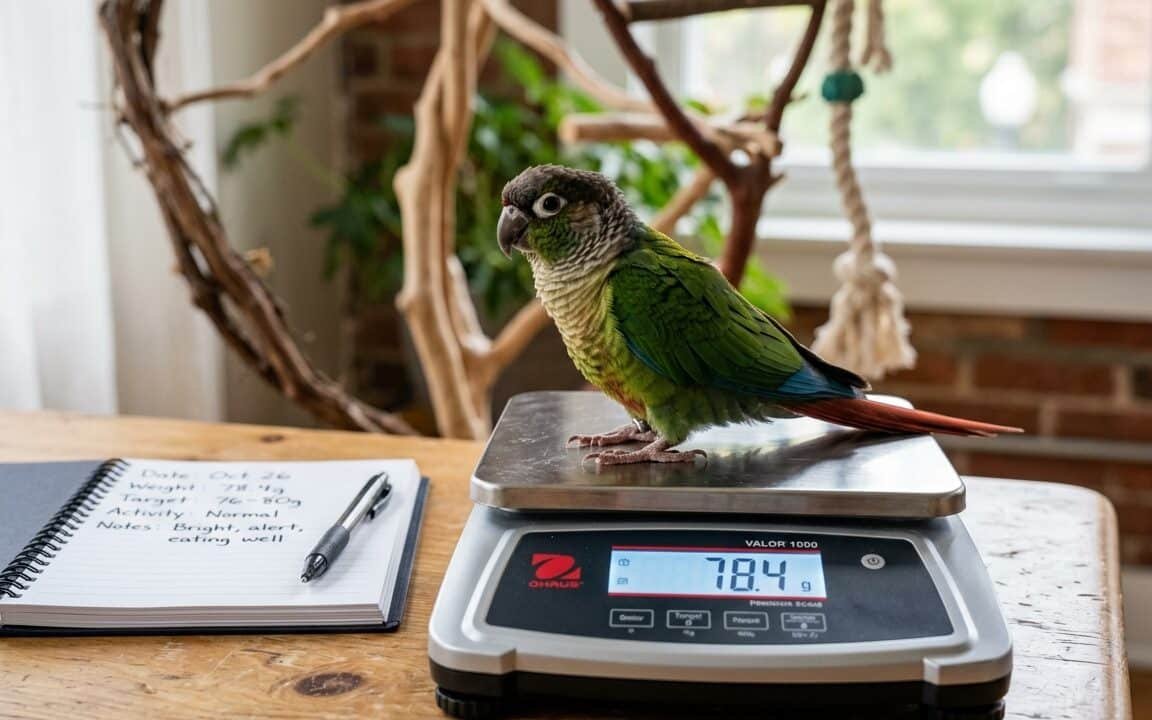
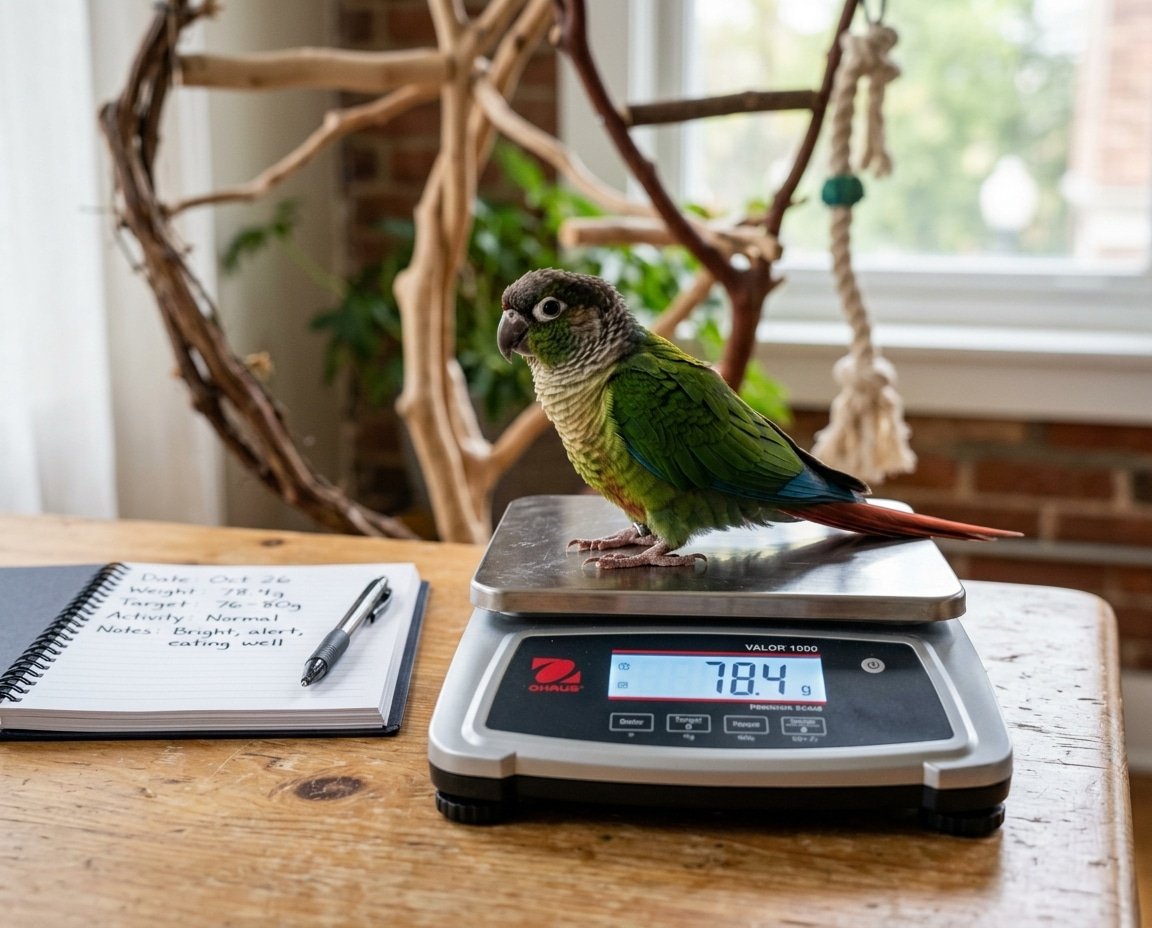
Birds can lose meaningful weight without looking dramatically thinner because feathers hide body shape. A small digital gram scale can therefore reveal a problem earlier than a visual check.
The Association of Avian Veterinarians recommends monitoring body weight as part of recognizing early illness, and VCA includes major weight change among important signs that a bird may be sick.
Start with the trend, not one isolated number
Weigh at roughly the same time of day and use the same scale. Record the result in grams. Small day-to-day shifts can happen because of food, water and droppings; a consistent downward pattern is more meaningful.
If you have no previous baseline, begin now and discuss the number with an avian veterinarian rather than comparing blindly with an internet average.
Know the bird’s own normal range
A budgie and an African grey obviously have very different body weights, and even birds of the same species vary by sex, frame and body condition. There is no single “correct” gram weight for every bird of a species.
Your veterinarian can help determine whether the individual bird is in appropriate body condition and what range should trigger concern.
Use a gram scale, not a kitchen guess
A perch-style bird scale is convenient, but a flat digital gram scale can also work with a small stable container or perch setup. The important things are accuracy, consistency and low stress.
Our guide to weighing a pet bird at home shows how to build a repeatable routine without stressful restraint.
Weighing should not become a wrestling match
If the bird panics when placed on the scale, use positive reinforcement and gradual training. A frightened bird may give unreliable readings and can injure itself during restraint.
For a bird that is already weak, avoid repeated handling just to collect data. Veterinary care is more important than another home measurement.
Why birds can appear to eat while losing weight
Birds may shell seeds, crumble pellets, toss food or sit at the bowl without consuming enough. A full-looking dish does not prove adequate intake.
Watch what is actually swallowed, note whether food is dropped, and check whether droppings are becoming smaller or less frequent.
Loss of appetite is only one possible cause
Infection, liver disease, kidney disease, tumors, parasites, chronic pain, reproductive disease and other conditions can all change weight. Some birds lose muscle while continuing to show interest in food.
Weight loss is therefore a sign to investigate, not a diagnosis.
Watch the keel and chest muscles
As body condition declines, the keel bone can become more prominent and the pectoral muscles on either side may shrink. Experienced avian clinicians use body-condition assessment alongside weight because two birds at the same gram weight may have very different muscle mass.
Do not repeatedly press or restrain a sick bird to assess this yourself.
Pair weight with behaviour
A downward trend is more concerning when the bird is also quieter, fluffed for long periods, sleeping more, breathing differently, avoiding favourite perches or producing fewer droppings.
A bird that has lost weight but remains outwardly active still deserves assessment if the trend continues.
Droppings can add useful context
Smaller or fewer droppings may suggest reduced food intake. Persistent changes in colour, volume or consistency can also signal disease or dietary change.
Our bird droppings guide explains what owners can record before a veterinary visit.
How fast is too fast?
There is no safe universal percentage or gram threshold that replaces clinical judgment for every species and body size. A small bird can be affected by what looks like a modest gram change.
That is why repeated measurements and the bird’s overall condition matter more than one internet rule.
Sudden weight loss deserves faster attention
A rapid drop over a short period, especially in a small bird, can become serious quickly. Contact an avian veterinarian rather than waiting for the next routine wellness visit.
If the bird is also weak, not eating or having trouble breathing, use our bird emergency warning-signs guide.
Do not respond by offering only favourite treats
Tempting a bird with high-fat seeds may increase short-term calorie intake but can also hide the fact that the underlying problem has not been addressed. Veterinary diagnosis matters more than finding a food the bird will nibble.
Do not abruptly change the whole diet of a sick bird without professional guidance.
What if the bird has just changed diets?
Diet transitions can change calorie intake, especially if a bird does not recognise the new food as edible. During any planned conversion, body weight should be monitored closely.
If weight is falling, the transition may need to slow down and veterinary input may be appropriate.
Young birds and newly weaned birds need special caution
A young bird that is not maintaining weight may have a feeding or health problem that deserves prompt attention. Do not assume begging behaviour or food exploration means the bird is eating enough.
Ask an avian veterinarian or experienced breeder/rescue professional about species-appropriate weaning and weight monitoring.
Older birds can lose muscle before owners notice
Senior birds may become less active, but reduced muscle mass should not automatically be dismissed as aging. Chronic disease, pain and nutritional problems can also contribute.
Regular weight records become especially useful because they reveal a gradual trend that memory may miss.
Feather changes can mislead the eye
Moulting, fluffing and dense plumage can make a bird look larger than its actual body condition suggests. Conversely, wet feathers or a tight posture can make the bird look thinner.
That is another reason scale data is useful.
What about breeding or egg-laying birds?
Reproductive activity can change weight and body condition. A female bird may gain and lose weight around egg production, but abnormal straining, weakness or abdominal enlargement needs veterinary attention.
Do not assume every weight fluctuation in a hen is “just an egg.”
Build a simple record that your vet can use
Keep a note with date, weight, appetite, activity and any major droppings change. You do not need a complex spreadsheet. A few consistent observations are far more useful than trying to remember whether the bird “looked thinner last month.”
Bring food information to the appointment
Write down the actual diet: pellet brand, seed mix, vegetables, treats and any supplements. “He eats bird food” does not give the veterinarian enough information to judge nutrition.
If the bird recently changed diets, include when the change started.
When body weight and body condition disagree
A bird can maintain a similar number on the scale while losing muscle and gaining fat, or vice versa. That is why veterinary body-condition assessment still matters.
Home weighing is a screening tool, not a substitute for examination.
What not to do
- Do not force-feed a weak or breathing-impaired bird without veterinary instruction.
- Do not rely on visual appearance alone.
- Do not compare your bird with random online weight charts as if they were diagnostic.
- Do not hide a falling trend by offering only high-fat treats.
- Do not wait for severe weakness if weight continues to decline.
When to call the vet
Call when weight loss is consistent, unexplained, rapid, or paired with changes in appetite, droppings, breathing, activity or perching. If the bird is collapsing, struggling to breathe, repeatedly vomiting or unable to perch, treat the situation as urgent.
The practical takeaway
A scale does not tell you why a bird is losing weight. What it does is make a subtle change measurable—and that can be enough to get a sick bird examined earlier.
Use the same scale, measure consistently, keep a simple record, and look at weight alongside appetite, droppings and behaviour. If the trend is genuinely downward, do not wait for the feathers to make the problem obvious.
0 comments