
Hamster Not Eating: What to Check First and When It Becomes Urgent
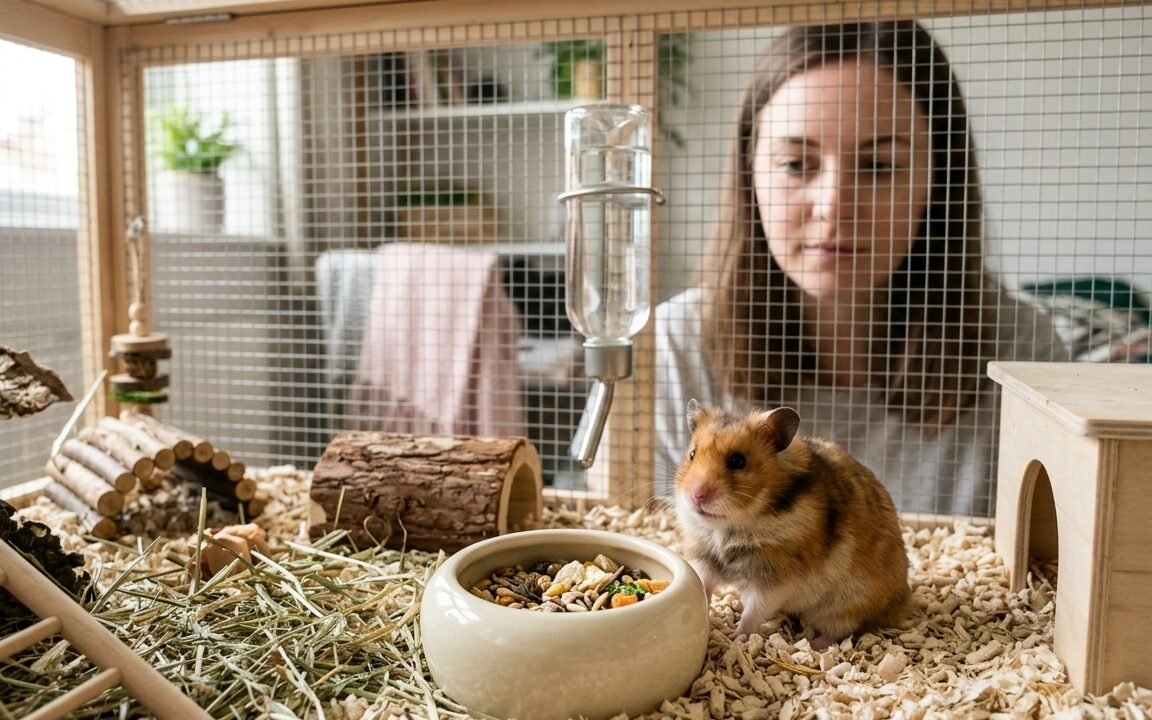

A hamster leaving food untouched is easy to miss because hamsters store food and often eat when people are asleep. Before assuming the bowl proves anything, check the whole pattern: food stores, droppings, body weight, water use, activity and whether the hamster is actually chewing.
Merck Veterinary Manual lists loss of appetite as an illness sign in hamsters. Because hamsters are small, a sustained drop in intake deserves prompt attention rather than a long wait-and-see period.
Confirm that the hamster is truly eating less
Look in usual food-storage areas before judging by the bowl alone. If you normally scatter-feed, compare how much is disappearing overnight. Check whether fresh foods are being eaten while harder pellets remain untouched.
Check the mouth and chewing behavior
Overgrown incisors, damaged teeth, cheek-pouch problems and oral pain can make a hamster approach food but fail to eat normally. Drooling, wet fur around the mouth, repeated food dropping or obvious difficulty chewing are important clues.
Look at droppings
Fewer or smaller droppings can support the suspicion that intake has fallen. Diarrhea, wet fur around the rear or a suddenly dirty enclosure points toward a different set of urgent problems.
Weigh the hamster
A gram scale gives more useful information than appearance alone. If you have a previous weight, compare the trend. Our hamster weight-loss guide explains how to track changes and what they can mean.
Do not force-feed blindly
There are situations where veterinary teams use assisted feeding, but forcing food into a hamster that is having trouble breathing, swallowing or emptying the cheek pouches can be dangerous. Get veterinary guidance before improvising syringe feeding.
Keep water available
Make sure the bottle works and is positioned correctly. A stuck ball bearing or empty bottle can worsen dehydration quickly.
Heat and cold can change behavior
A hamster that is too cold may become very inactive; a hamster in torpor can look gravely ill. If temperature is part of the picture, use our hamster torpor guide rather than warming the animal aggressively.
When this is urgent
Seek prompt veterinary care if poor appetite comes with lethargy, trouble breathing, diarrhea, repeated straining, swelling, bleeding, inability to walk normally, severe weight loss or a hunched painful posture.
The most useful question is not “What food can I tempt the hamster with?” It is “Why has normal eating changed?” Finding that cause is what protects the hamster.
Check food stores before deciding the bowl is untouched
Hamsters commonly hoard food in a nest or storage corner. A full bowl does not automatically mean the hamster has stopped eating. Check the normal cache, compare droppings and look at body weight before drawing conclusions.
Actual intake matters more than interest in treats
A hamster may still take a favourite seed while eating far less of the balanced diet overall. Treat acceptance can therefore create false reassurance. Watch normal ration intake, food stores and droppings together.
Dental pain is a common reason eating changes
Overgrown or broken incisors can make hard food difficult to pick up. Drooling, food dropping, wet fur around the mouth or a sudden preference for soft food makes a dental problem more likely.
Our hamster overgrown-incisor guide explains what to look for.
Cheek-pouch trouble can reduce eating too
Food can become impacted in a cheek pouch, or the pouch can be injured. One-sided facial swelling, bad odor, pawing at the mouth or a pouch that never seems to empty deserves veterinary attention.
Illness outside the mouth can suppress appetite
Respiratory disease, gastrointestinal illness, pain, kidney disease, tumors and many other problems can reduce food intake. Loss of appetite is a sign, not a diagnosis.
Count droppings as part of the picture
Fewer, smaller or absent droppings can support the suspicion that intake has fallen. Diarrhea or a wet rear changes the urgency and may point toward gastrointestinal disease.
Watch drinking at the same time
Make sure the bottle is actually working. Press the ball tip gently to confirm water flows, check the bottle is not empty and make sure it is low enough to reach. Reduced eating plus increased thirst can be useful information for a veterinarian.
Weigh instead of guessing by appearance
Use a gram scale and record the number. Fur can hide gradual loss, especially in long-coated hamsters. A downward trend helps show whether poor appetite is affecting body condition.
Do not wait for dramatic weight loss
A small animal has limited reserves. If intake is clearly reduced and the hamster is also lethargic, hunched or breathing abnormally, veterinary assessment should not wait for the hamster to look thin.
What if the hamster is eating only soft food?
That pattern can suggest dental or oral pain, especially if the change is new. Do not assume the hamster has simply become picky. Keep the normal diet available and arrange a mouth examination.
What if the hamster is cold and inactive?
Torpor can make a hamster seem unresponsive and uninterested in food. If the room is cold, check temperature and use our hamster torpor guide. Do not heat a cold, weak hamster aggressively.
Do not force-feed a hamster with breathing trouble
Placing food or liquid into the mouth of a weak, struggling or poorly swallowing hamster can cause aspiration. Assisted feeding should be guided by a veterinarian who has assessed the cause.
Keep familiar food available
A sick hamster is not the time for a complete diet experiment. Offer the normal balanced diet and only make major feeding changes on veterinary advice. Sudden rich treats can also upset the gastrointestinal tract.
When appetite loss is urgent
- little or no eating together with lethargy;
- rapid or laboured breathing;
- diarrhea or a wet rear;
- repeated straining;
- drooling or obvious dental trouble;
- significant weight loss;
- abdominal swelling;
- inability to walk normally;
- collapse or severe weakness.
Prepare useful information for the vet
Record when normal eating changed, recent body weights, water intake, droppings, food offered and whether the hamster is chewing normally. Bring the food package or a photo of the diet if the clinic asks.
Keep the enclosure simple while the hamster is unwell
Food, water and a hide should be easy to reach. Remove high climbing risks if the hamster is weak. Keep the enclosure at a stable comfortable temperature and reduce unnecessary handling.
Recovery means normal eating should return
If the hamster has already seen a veterinarian, continue tracking intake and weight. A temporary nibble after treatment is encouraging, but ongoing poor intake or continued weight loss deserves a follow-up call.
Merck lists appetite loss and weight loss among important hamster illness signs. The safest response is to find the cause early, not simply keep offering increasingly tempting foods.
Check whether the hamster is physically able to reach food
Weakness, pain or an injury can make the normal feeding area difficult to access. Move the dish and water closer temporarily if the hamster is unwell, but keep the enclosure familiar and simple. A hamster that still will not eat despite easy access needs veterinary assessment.
Do not mistake hoarding for recovery
A hamster may carry food to the nest without consuming it. During illness, check whether the cache is increasing while body weight falls. Moving food is not the same as eating enough to maintain health.



0 comments