
Senior Cat Home Adaptations: Small Changes That Make Daily Life Easier
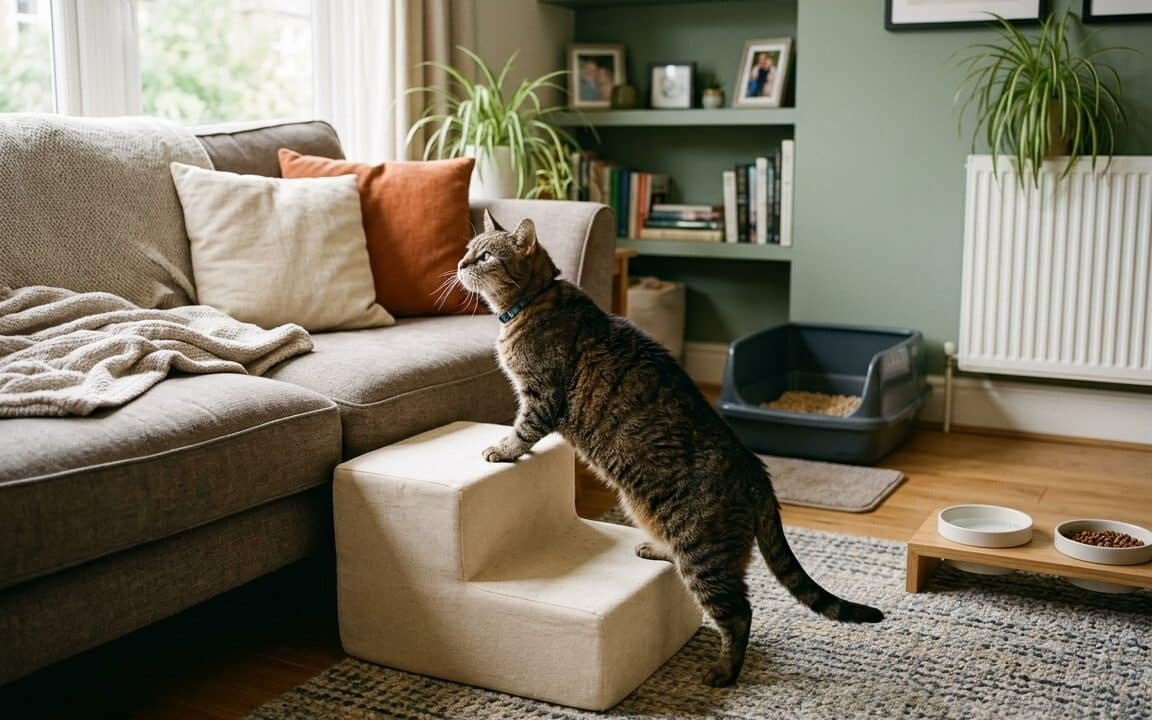
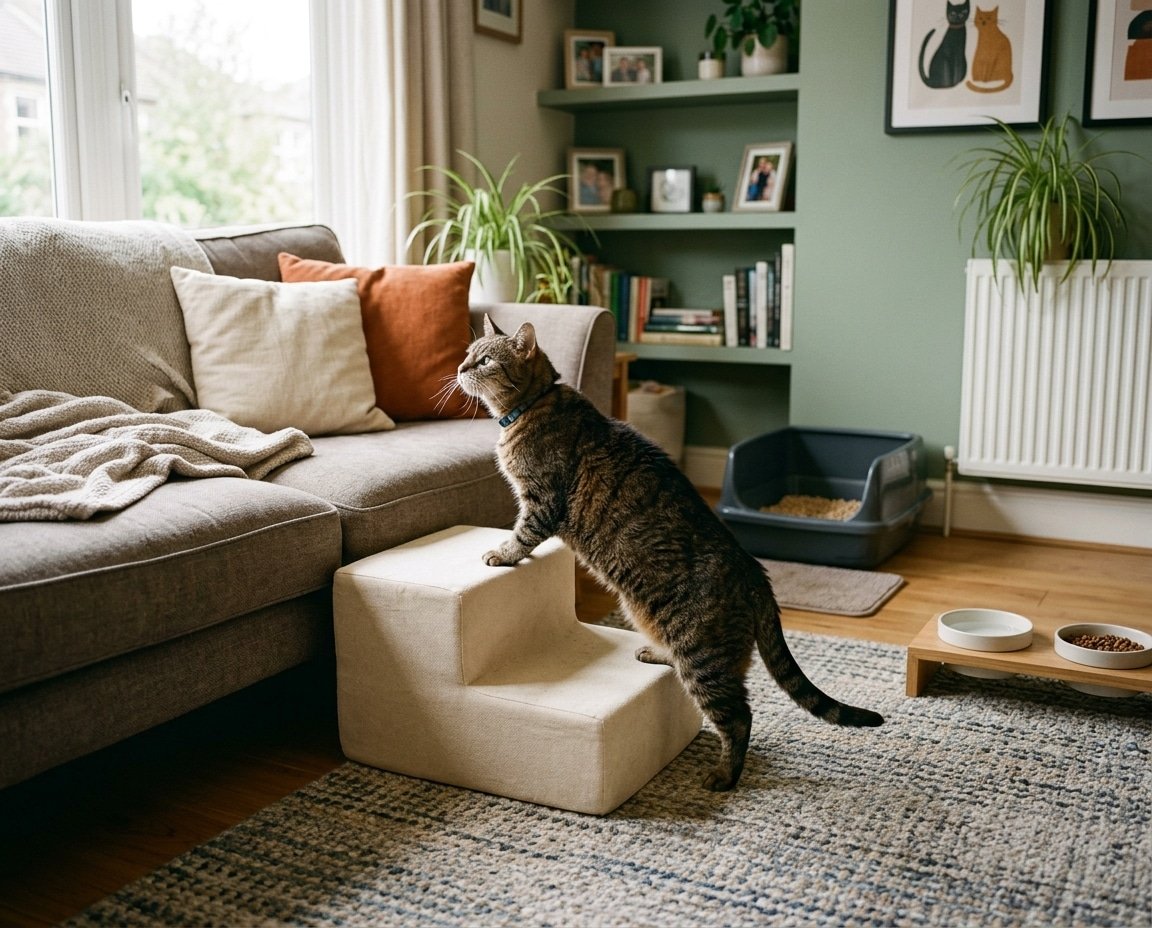
An older cat may still want the same window seat, bed and evening routine they have loved for years. The problem is that the route to those things can become harder before the cat looks obviously disabled.
Good senior-cat home adaptations reduce unnecessary effort without turning the house into a hospital ward.
Watch where hesitation appears
Start by observing rather than shopping. Does the cat pause before jumping onto the sofa? Take stairs one step at a time? Slip on laminate? Stand beside the bed and look up without jumping?
Those moments tell you where the home has become difficult.
Add traction before adding height
Slippery flooring can make weak or arthritic legs look worse. Runners, yoga mats and nonslip rugs can create stable routes between the cat’s favourite places.
AAHA senior-care guidance includes rugs, mats, ramps and other environmental modifications among practical ways to support mobility.
Use steps for favourite furniture
A low step beside the sofa or bed can preserve access without requiring one large jump. Make sure the step itself does not slide and that the surface offers grip.
Lower the litter-box entry
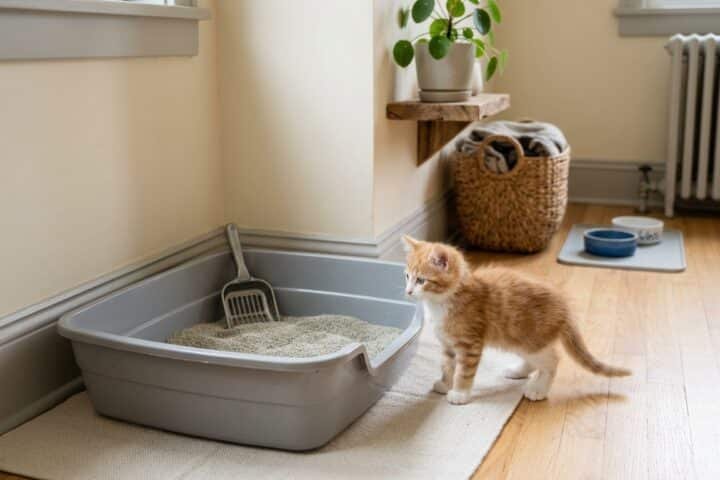
An older cat may still reach the box but struggle to climb over a tall side. AAHA/AAFP guidance for senior cats recommends easy litter-box access and notes that lower entry height and avoiding stairs can help cats with mobility limitations.
Our senior cat litter-box guide covers box design in detail.
Bring resources closer together—but not on top of each other
A senior cat should not have to cross two floors for water. Add water and resting options near core areas while still keeping food, water and litter appropriately separated.
Warm, soft beds matter more with age
Older cats may seek warmer spots and spend more time resting. Provide supportive beds away from drafts. If using heated pet products, choose items specifically designed for pets and follow the safety instructions.
Keep vertical territory, just make it reachable
Do not remove every perch simply because the cat is older. A window shelf may still be emotionally valuable. Add intermediate steps, a ramp or a lower alternative rather than taking the resource away.
Move bowls only when there is a reason
A cat with neck or mobility discomfort may benefit from a different feeding setup, but elevated bowls are not automatically better for every cat. Keep the change practical and observe whether eating looks easier.
Night lighting can help some cats
Vision changes, cognitive changes or household obstacles may make night navigation harder. A low night-light near stairs or core resources can make the route more predictable without brightly lighting the whole house.
Make grooming easier
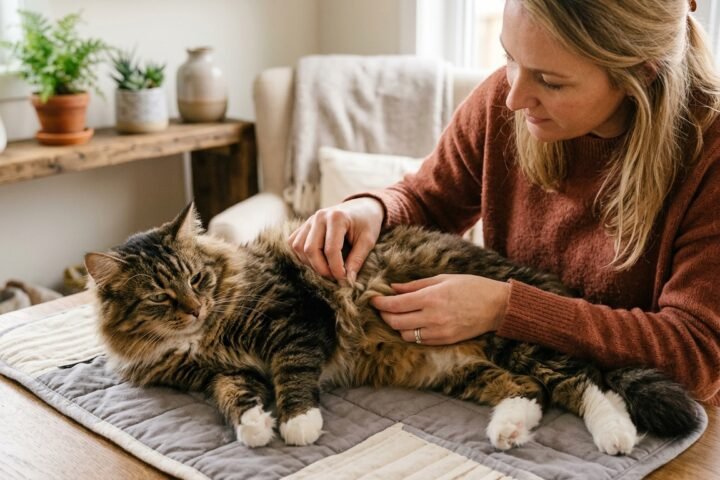
Reduced flexibility can leave the lower back, hindquarters and chest under-groomed. Short, gentle brushing sessions can help, provided the cat is comfortable with touch.
See our senior cat grooming guide if coat care is becoming difficult.
Keep claws under control
Older cats may scratch less vigorously and can develop overgrown nails. Check claws regularly, especially if the cat no longer uses vertical scratchers the way they once did.
Do not explain away pain as age
AAHA notes that new behaviour and reduced jumping or climbing in senior cats can reflect degenerative joint disease and other medical problems. A ramp is helpful, but it should not replace veterinary assessment when mobility changes.
Our cat arthritis guide covers subtle signs.
Keep change gradual
Older cats often value predictable territory. Add helpful equipment without rearranging every familiar resource at once. A new step beside the bed is easier to accept than moving the bed, food, litter and scratching post in one afternoon.
The best adaptation is the one the cat actually uses
Watch the cat after each change. If the ramp is ignored but a simple footstool is used every day, keep the footstool. Senior-friendly design is not about buying the most equipment; it is about making the cat’s existing life easier to continue.
Map the cat’s important daily routes
Think in paths rather than individual products. Trace the route from the main bed to food, water, litter, favourite people and window perches. Anywhere the cat hesitates, jumps down awkwardly or crosses a slippery surface is a candidate for improvement.
Create at least one easy route to every favourite level
If the cat loves a bed or windowsill, provide intermediate steps rather than expecting one high jump. A stable footstool, pet step or low bench may work better than a steep ramp the cat does not trust.
Keep steps wide and stable
Narrow foam stairs that wobble can make an older cat less confident. The surface should provide grip, and the structure should not slide when the cat pushes off. Test it yourself before expecting the cat to use it.
Give the cat choices rather than one “senior zone”
Older cats still benefit from controlling where they rest. Offer more than one accessible bed and more than one water location so the cat does not have to choose between comfort and proximity to the family.
Adjust scratching options
A senior cat may stop stretching vertically on a tall post but still enjoy scratching. Add a horizontal or gently angled scratcher near a favourite resting area. Scratching supports normal marking and stretching even when jumping has decreased.
Think about the height of food and water dishes
Some cats with neck or forelimb discomfort may prefer a slightly raised dish, while others do fine at floor level. There is no universal senior bowl height. Watch posture and ask your veterinarian if eating looks uncomfortable.
Water access deserves extra attention
Kidney disease and other age-related conditions can increase water needs. Put clean water in several easy-to-reach places. If the cat has always preferred a fountain, make sure the route to it remains comfortable.
Keep the litter route short at night
A cat sleeping upstairs should not need to navigate a full staircase in the dark to reach the only box. Our senior litter-box guide explains why extra boxes and low entries can matter.
Use predictable furniture placement
Frequent rearrangement can be harder for a cat with vision or cognitive changes. Keep core furniture and resources stable, especially in the cat’s main living area.
Reduce surprise from other pets
An older cat may move too slowly to avoid a playful dog or younger cat. Use gates, elevated resting areas or separate feeding spaces so the senior can rest without being chased or blocked.
Support grooming where flexibility has declined
Check the lower back, hindquarters, chest and armpits for tangles. Short cooperative grooming sessions can prevent mats without exhausting the cat.
If mats are becoming a new problem, see our cat mat prevention guide.
Watch claws and paw comfort
Less scratching and climbing can mean less natural nail wear. Overgrown claws may curl toward the pads. Check them regularly and ask a vet or groomer for help if trimming has become difficult.
Make medication routines physically easy
If the cat takes daily medication, choose a location that does not require climbing onto a counter or being carried awkwardly. A stable floor-level routine can reduce stress for both cat and owner.
Think about temperature
Senior cats often seek warmth. Provide cosy beds away from drafts, but make sure heated products are designed for pets and allow the cat to move away from the heat.
Home adaptations should not replace a medical work-up
A ramp can make life easier, but it does not explain why mobility changed. New stiffness, reduced jumping, altered grooming or litter-box difficulty can accompany arthritis and other disease. Environmental support and veterinary assessment work together.
Review the setup every few months
Senior needs change. A step that worked last winter may become too high later. Reassess how the cat moves through the home and adjust before a favourite resource becomes inaccessible.
A useful room-by-room check
- Bedroom: can the cat reach the bed without a large jump?
- Living room: are favourite seats reachable with stable footing?
- Kitchen: are food and water easy to approach?
- Litter area: is the entry low and the route free of stairs?
- Hallways: are slippery sections covered?
- Windows: is there a lower perch or intermediate step?
The best senior-cat home is not packed with equipment. It simply removes unnecessary physical barriers while preserving the places, routines and choices the cat already values.
0 comments