
Hamster Wheel Size Guide: Syrian vs Dwarf Hamsters and Why Back Position Matters
A hamster wheel should be large enough for the animal to run without the back curving sharply upward. That principle matters more than the marketing label on the package.
Watch the hamster’s posture
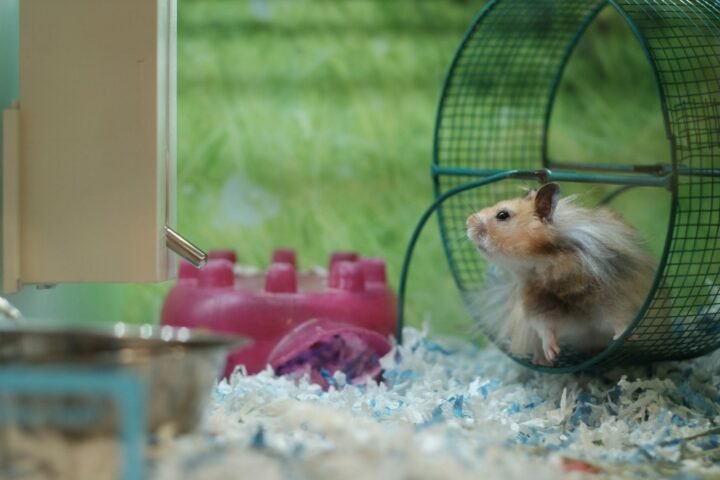
The best size check is the hamster itself. During running, the spine should look close to neutral rather than forming a strong arch. If the head and tail are pushed upward by the wheel curve, the wheel is too small.
Syrian hamsters usually need larger wheels
Adult Syrians are much larger than most dwarf hamsters and generally need a larger diameter. Many welfare-oriented keepers use wheels around 28–30 cm for Syrians, while dwarf species may fit smaller wheels, but individual body length matters.
Do not rely on one number for every hamster
Growth, sex, individual size and species all change the fit. A wheel that worked for a juvenile may become too small after several weeks.
Blue Cross guidance
Blue Cross has advised using a suitably sized wheel and has historically recommended wheels large enough to avoid spinal curvature. Its current hamster-care guidance also emphasizes a spacious enclosure, deep bedding and opportunities for normal movement rather than exercise balls.
Choose a solid running surface
Avoid wire or open-rung running surfaces that can trap feet or toes. A solid, stable track is easier to run on safely.
Check wheel stability
A wheel that wobbles, tips or rubs against bedding can discourage use and may become unsafe. Make sure the stand or mounting point remains stable after the hamster begins running at speed.
Leave enough bedding clearance
Deep bedding is important, but it can jam a low-mounted wheel. Raise or mount the wheel so the hamster can keep the required bedding depth without burying the track.
Wheel size does not replace enclosure size
A large wheel inside a tiny cage is still a poor setup. Our hamster enclosure guide covers floor space, bedding depth, ventilation and other essentials.
What if the hamster does not use the wheel?
Check that the wheel turns freely, is stable and is located where the hamster can reach it. Some animals use it mostly after people go to sleep. A camera can show whether the wheel is being used overnight.
Exercise balls are not a substitute
Blue Cross advises against hamster exercise balls because the animal cannot choose to leave, hide, drink or control the environment. A secure enclosure, correctly sized wheel and supervised safe play area provide more choice.
Use posture rather than packaging as the final size test
Wheel labels such as “small pet,” “dwarf” or “Syrian” are not reliable enough on their own. Individual hamsters vary. Watch the animal run from the side. The back should remain close to a natural position rather than forming a strong upward curve.
Typical starting sizes are only starting points
Many adult Syrian hamsters need a wheel around 28–30 cm in diameter, while dwarf hamsters can often use a smaller wheel. But a large dwarf may need more room, and a growing young Syrian can quickly outgrow a wheel that once looked adequate.
If posture is curved, choose a larger wheel even if the package claims the current size is suitable.
Wheel width matters too
A narrow track can make a hamster twist or brush against the sides while running. The running surface should be wide enough for the body to stay centred without repeated contact with supports or edges.
Solid does not mean slippery
A safe wheel needs a continuous surface without wire rungs, but the hamster still needs traction. Very slick plastic can be difficult to run on. Look for a lightly textured surface that is easy to clean without abrasive grit.
Check the axle and support points
Long fur, bedding or toes can become caught in badly designed gaps around the axle or stand. Spin the empty wheel by hand and inspect the moving parts before installation.
A good wheel should rotate smoothly without scraping, wobbling or exposing pinch points.
Mounting height needs to work with deep bedding
Hamsters benefit from deep bedding for burrowing, but loose substrate can jam a wheel placed too low. Use a stable platform or secure mount so the wheel remains usable without sacrificing bedding depth across the entire enclosure.
Heavy wheels need stable support
Large wheels can shift when a Syrian runs at speed. Check that the base cannot tip and that a freestanding wheel is not balanced on loose bedding alone.
Noise is not only a human problem
A squeaking or rattling wheel may indicate poor alignment or worn parts. It can also discourage use. Repair or replace a wheel that no longer spins cleanly instead of assuming the hamster has lost interest in exercise.
Why wheel use varies from hamster to hamster
Some hamsters run for long periods at night; others divide activity between burrowing, foraging, climbing and the wheel. A camera can help you see what happens after dark.
Low wheel use is not automatically a health problem, but a sudden change in a hamster that normally runs deserves attention.
Sudden avoidance can signal pain
If a hamster stops using the wheel and also limps, moves stiffly or becomes less active elsewhere, look beyond the equipment. Our hamster limping guide covers injury warning signs.
Do not use the wheel as the entire exercise plan
Running is one activity. Hamsters also need deep bedding, hides, tunnels, foraging and enough floor space to move normally. A giant wheel cannot compensate for an undersized enclosure.
Exercise balls remove too much control
Exercise balls prevent the hamster from choosing when to stop, hide, drink or investigate normally. They can also create collision and ventilation concerns. A secure enclosure and supervised safe play area offer more control to the animal.
Cleaning the wheel
Some hamsters urinate while running. Clean the wheel often enough to prevent buildup, but avoid strong scented cleaners. Dry it completely before returning it to the enclosure.
When to replace a wheel
Replace it when cracks, rough edges, wobbling, exposed gaps or damaged bearings cannot be repaired safely. A wheel is a high-use item; wear that looks minor when stationary can matter at running speed.
A practical fit check
- Back remains close to neutral while running.
- Body fits comfortably within the track width.
- Running surface is solid and provides traction.
- No open rungs or pinch points are present.
- Wheel spins smoothly and stays stable.
- Deep bedding does not block rotation.
- The hamster chooses to use it without obvious discomfort.
Wheel size should work together with the rest of the habitat. Our hamster cage-type guide compares common enclosure formats, while the broader hamster enclosure guide covers floor space, bedding and layout.
Growing hamsters need the wheel rechecked
A juvenile can outgrow a wheel surprisingly quickly. Reassess posture as the hamster matures rather than assuming the first wheel will remain suitable for life. The clearest sign is still body position while running: if the spine begins curving or the hamster looks cramped, move up a size.
Measure the wheel itself, not the product name
Manufacturers sometimes list outside dimensions that include the stand. What matters is the usable internal running diameter and track width. Measure the surface the hamster actually runs on if packaging information is unclear.
Bottom line
Choose the largest practical wheel that lets your hamster run comfortably with a neutral back, a solid surface and stable footing. Syrian hamsters usually need a larger diameter than dwarf hamsters, but posture is the final test.


0 comments