
Grooming Senior Cats: Coat Care for Stiff Joints, Mats and Sensitive Skin
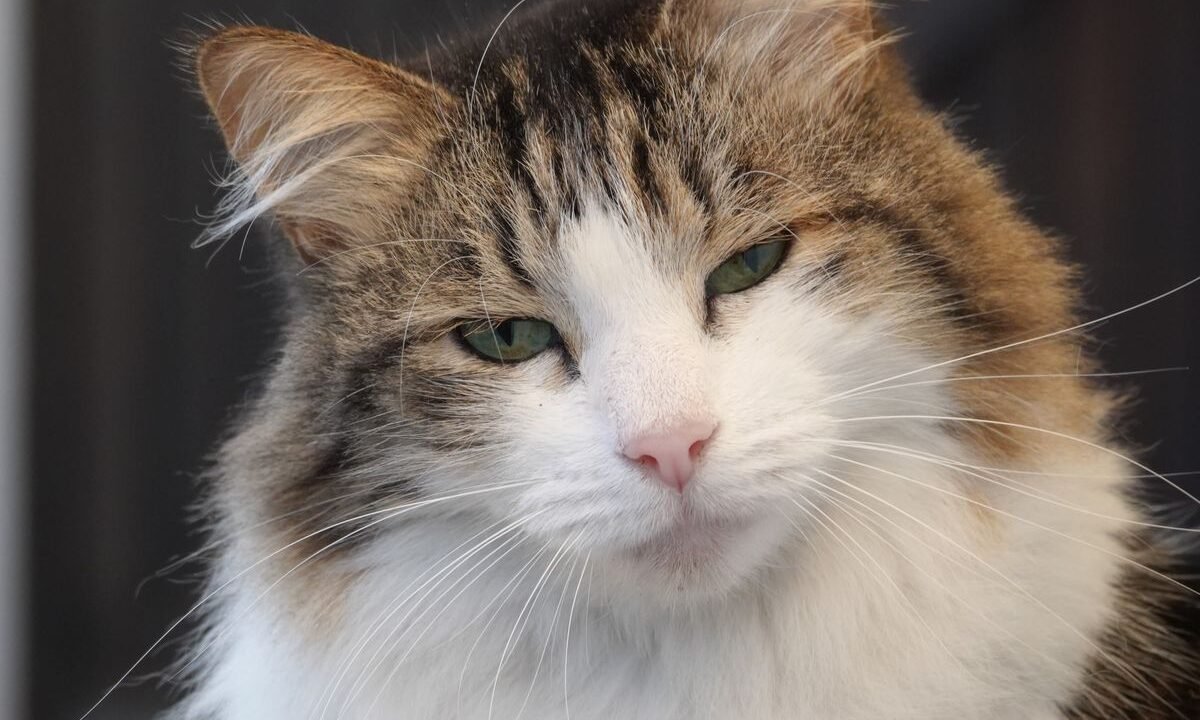
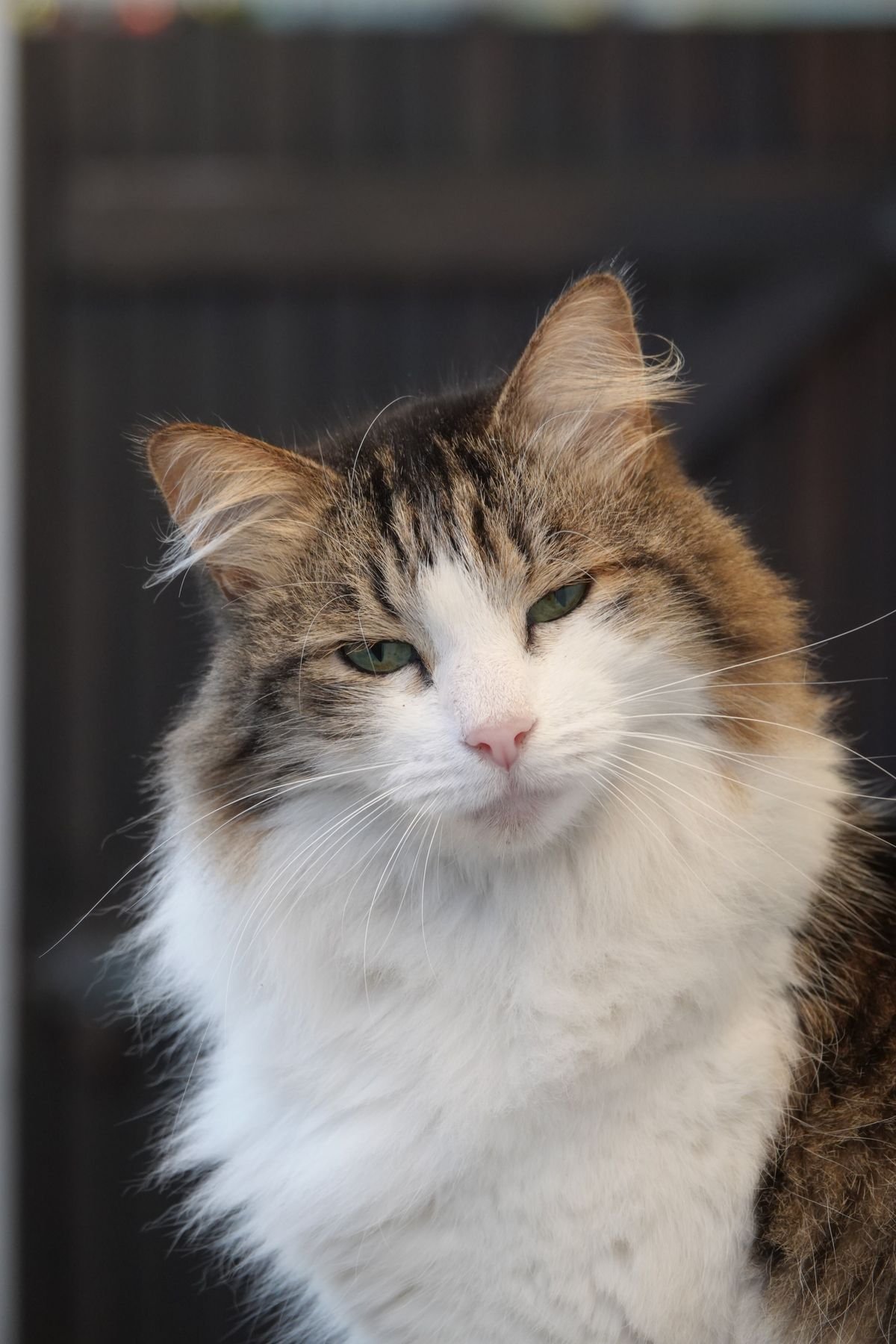
Grooming senior cats often becomes more important because an older cat may not bend, twist or balance as easily as they once did. A cat that kept a perfect coat for years can begin developing greasy patches, dandruff or mats around the back and hips. Helping with the coat is useful, but the change itself can also be a clue that something hurts.
Notice when self-grooming starts to change
An older cat may stop reaching the lower back, hind legs or base of the tail. Cornell’s older-cat care guidance notes that reduced self-grooming can occur with age and that sudden decline can also signal a health problem.
Use a softer touch than you did years ago
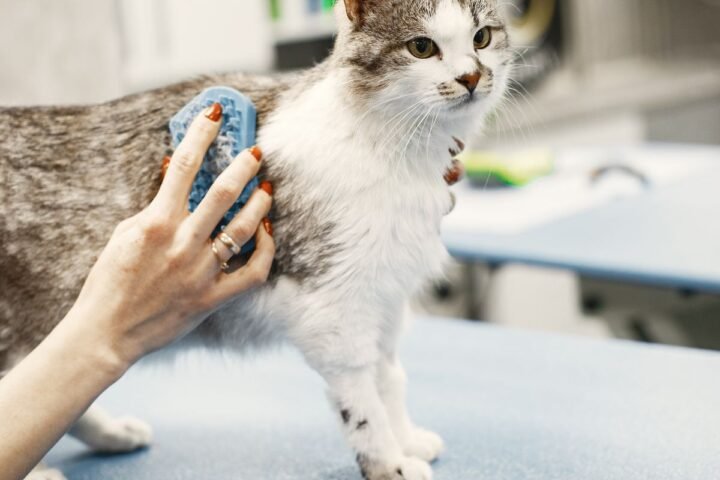
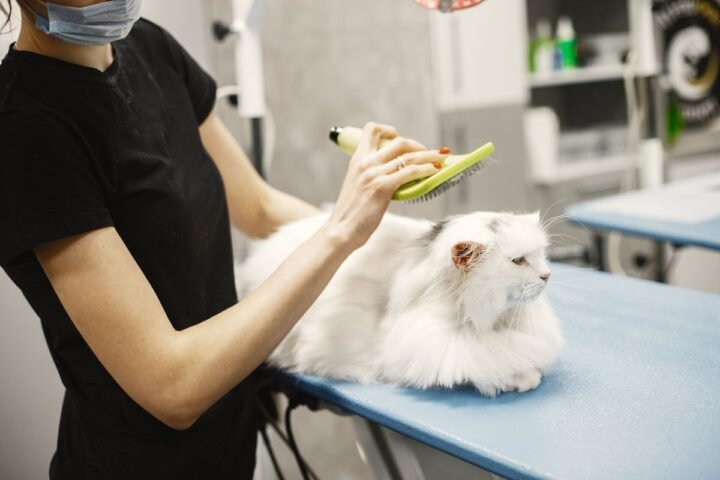
Senior skin can be thinner and a cat with arthritis may dislike pressure over the spine, hips or shoulders. Start with a soft brush or comb the cat already accepts and use short strokes in the direction of hair growth.
Long-haired senior cats usually need daily attention
Cats Protection recommends daily brushing for long-haired older cats and once or twice weekly grooming for short-haired seniors. Their elderly-cat care guide also advises checking for mats, lumps and sore areas during grooming.
Keep sessions short enough that the cat stays relaxed
You do not have to finish the entire body in one sitting. Brush the shoulders and sides today, then check the back legs later. A cat that knows they can leave is often easier to groom than one being held in place until the job is done.
Support the body instead of twisting it
Choose a stable, non-slip surface and let the cat stand or lie in a comfortable position. Do not lift a stiff leg high simply to reach the fur underneath. Adjust your own position around the cat rather than making the cat bend for you.
Check for mats before they become tight
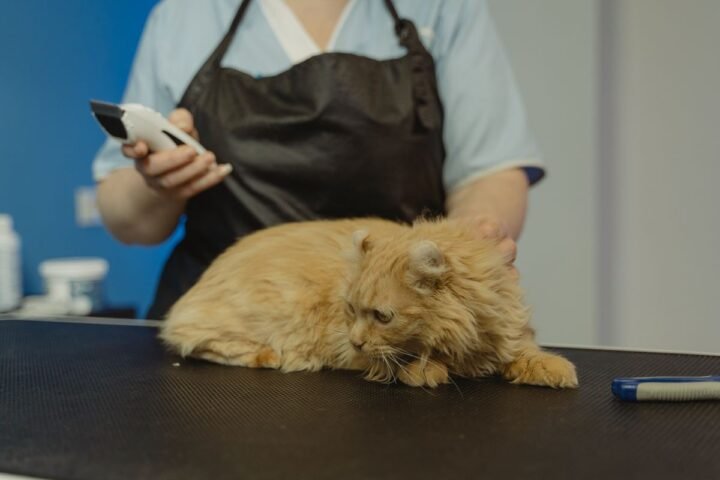
Behind the ears, under the front legs and around the hindquarters can mat quickly in long coats. If you find a dense mat close to the skin, do not cut it with scissors. Our cat grooming techniques guide explains safer routine coat care and when to stop.
A painful reaction deserves attention
If your cat suddenly resists brushing one part of the body, cries, flinches or tries to bite when a particular area is touched, do not label them difficult. Joint pain, skin disease, dental discomfort or another problem may be involved. Mention the change at a veterinary appointment.
Look beyond the coat while you groom
Gently check for changes in body weight, skin, claws and mobility. Older cats can lose muscle or gain weight gradually, and regular hands-on care makes those changes easier to notice.
Claw care may also become more important
Senior cats may scratch less vigorously and can develop overgrown claws. Check the paws periodically and ask your veterinarian to show you safe trimming technique if you are unsure. Do not assume scratching posts alone will manage every older cat’s claws.
The goal is comfort, not a perfect-looking coat
A senior cat does not need salon-level grooming. They need a coat that stays clean, untangled and comfortable, plus an owner who notices when grooming becomes harder. Gentle help can support that without turning every session into restraint.
0 comments