
Best Toys for Bored Indoor Cats: What Keeps Them Interested at Home
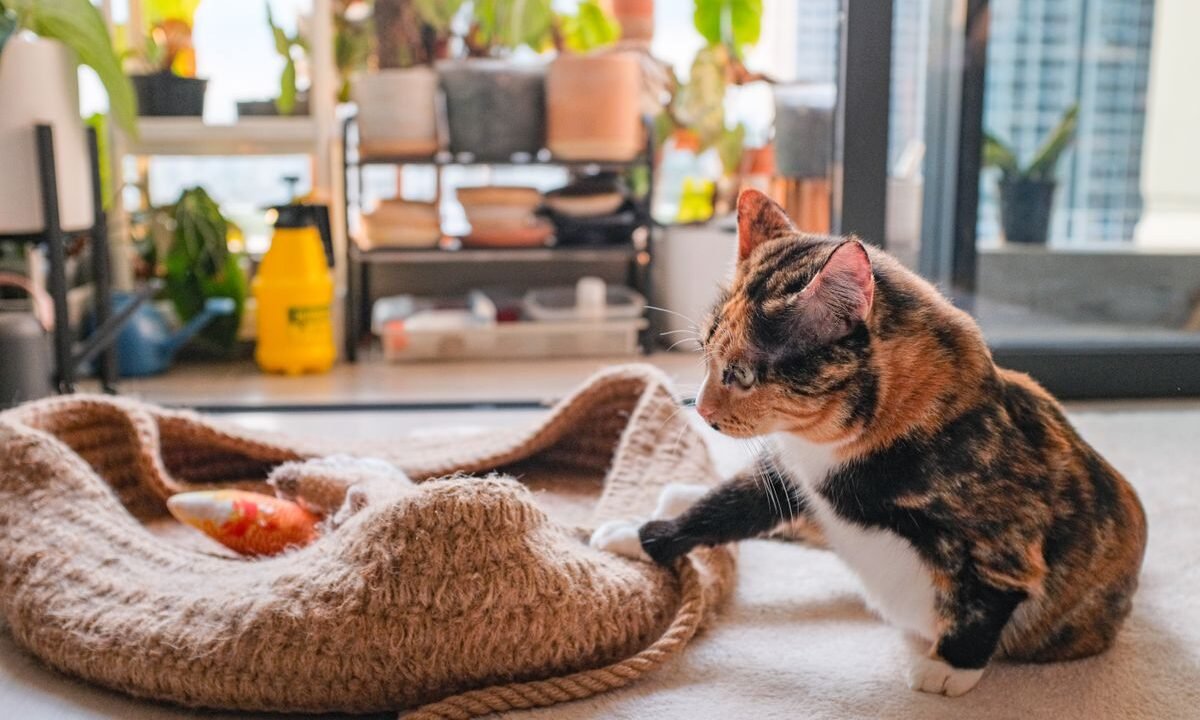
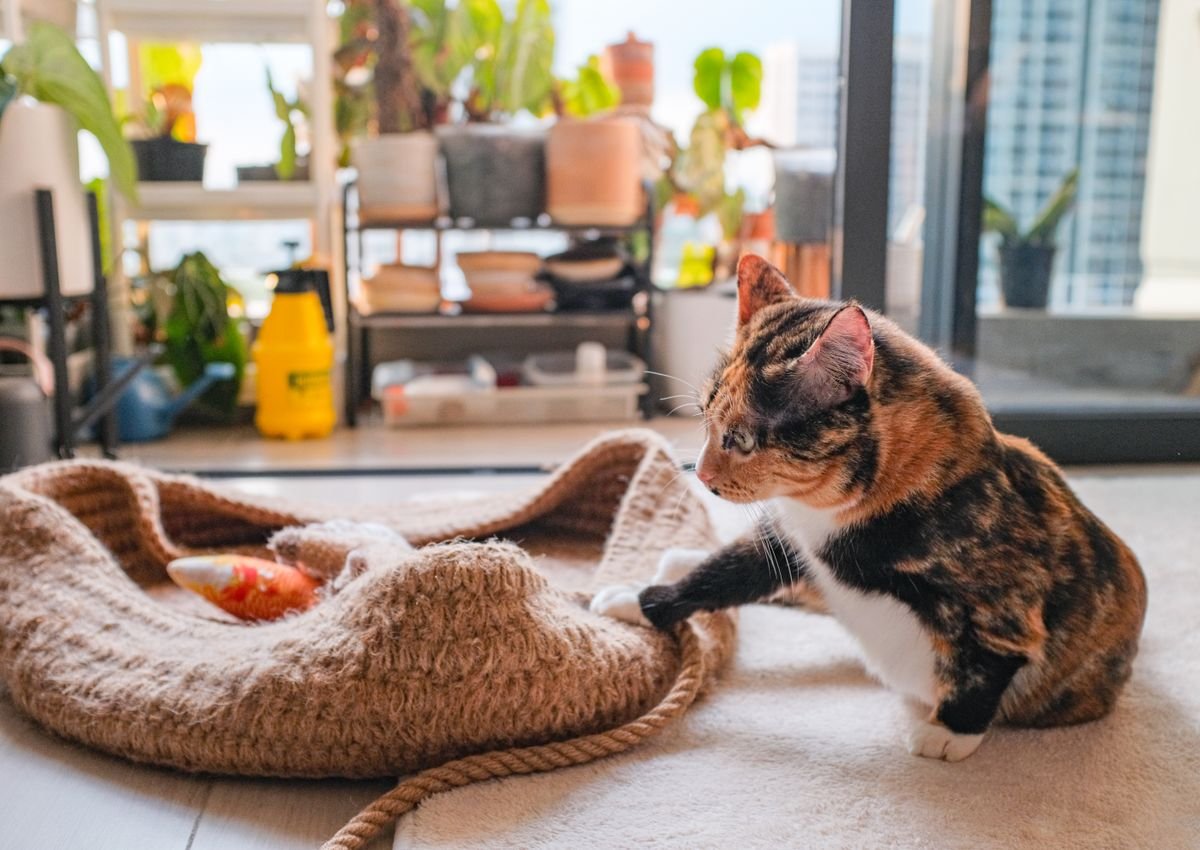
The best toys for bored indoor cats are not necessarily the most expensive ones. What matters is whether a toy gives your cat a reason to stalk, chase, pounce, grab, climb, investigate or work something out. A cat can ignore a new gadget after two days and stay fascinated by a cardboard box for weeks. The useful question is not “Which toy is popular?” but “What kind of play does my cat actually choose?”
Start by watching how your cat likes to hunt
Some cats love fast movement across the floor. Others prefer something that disappears behind furniture, hangs above them or lets them grab and kick. If your cat spends most of playtime watching rather than chasing, slow the toy down and make it behave more like prey. A sudden pause can be more interesting than constant movement.
Use wand toys for short bursts of active play
A wand or fishing-rod toy gives you control over speed, direction and hiding places. Move it away from the cat rather than pushing it toward their face. Let them stalk, chase and actually catch it several times. The Feline Veterinary Medical Association recommends providing opportunities for play and predatory behavior as part of an indoor cat’s normal environmental needs, not as an optional extra. You can read their indoor-cat welfare guidance for the broader picture.
Kicker toys work for cats that like grabbing
Long soft toys are useful for cats that grab with the front paws and kick with the back legs. Choose one that is large enough not to disappear into the mouth and sturdy enough to tolerate claws. If seams open or stuffing becomes exposed, retire it rather than waiting for pieces to come loose.
Puzzle feeders can turn food into an activity
A puzzle feeder asks the cat to manipulate, roll, paw or search for part of a meal. That can be especially useful for cats that finish food quickly and then look for something else to do. Count the food inside the puzzle as part of the normal daily ration so enrichment does not quietly become overfeeding.
Small balls and mice are useful for independent play
Lightweight balls and sturdy toy mice can work well when you are busy, provided they are too large to swallow and do not have loose eyes, bells, strings or glued-on pieces. Roll one away from your cat and see whether they chase, bat or carry it. If the toy simply sits in the middle of the room, move it beside furniture or into a paper bag so it becomes less predictable.
Cardboard boxes are still real enrichment
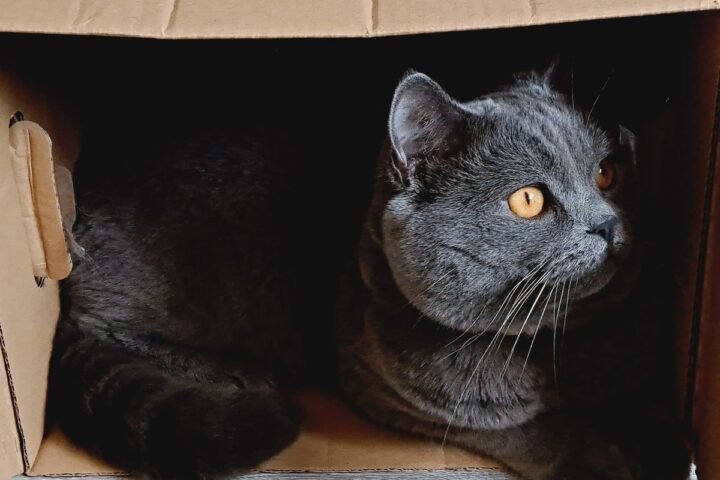
A box can be a hide, ambush point, scratching surface and place to investigate new smells. Cut safe entrance holes, remove staples and tape that could be chewed, and replace the box when it becomes damp or damaged. You do not need to buy a new toy every time your cat seems bored.
Do not leave every toy out all day
When the same toys stay in the same place, they can become part of the furniture. Keep a few safe independent-play toys available and put others away. Bringing an old toy back after a break can make it interesting again. Our guide to choosing safe cat toys explains how to match toy type with hunting and chasing behavior.
Use height as part of play
Boredom is not only about toys on the floor. Cats also need places to climb, survey a room and move vertically. A toy trail that leads from the floor to a stable cat tree or perch can create a more complete play session. Our guide to creating a cat-friendly home covers the environment around the toys as well.
Avoid making your hands the toy
Hand wrestling can be entertaining with a kitten, but it teaches the cat that human skin is an acceptable target for teeth and claws. Use a toy that creates some distance between your body and the play. This is particularly important in homes with children.
String and ribbon need supervision
String-like toys can be exciting, but they are not good unsupervised toys because swallowing string or thread can cause a serious intestinal problem. Put wand toys, ribbon and loose cord away when play ends. If you ever see string hanging from a cat’s mouth, do not pull it; contact a veterinarian.
Bored cats often need variety, not intensity
If your cat loses interest quickly, change the location, timing or movement before buying something else. Play behind a chair, under a paper sheet or along a hallway. A toy that seemed uninteresting yesterday may work when it behaves differently.
Let your cat tell you which toys deserve to stay
A useful toy earns repeated attention without creating obvious frustration or safety problems. Keep the types your cat returns to, rotate the rest, and mix active play with opportunities to climb, hide and forage. That is usually more effective than filling the floor with toys and hoping boredom disappears on its own.
0 comments