
How to Introduce Two Cats: A Slow, Staged Process
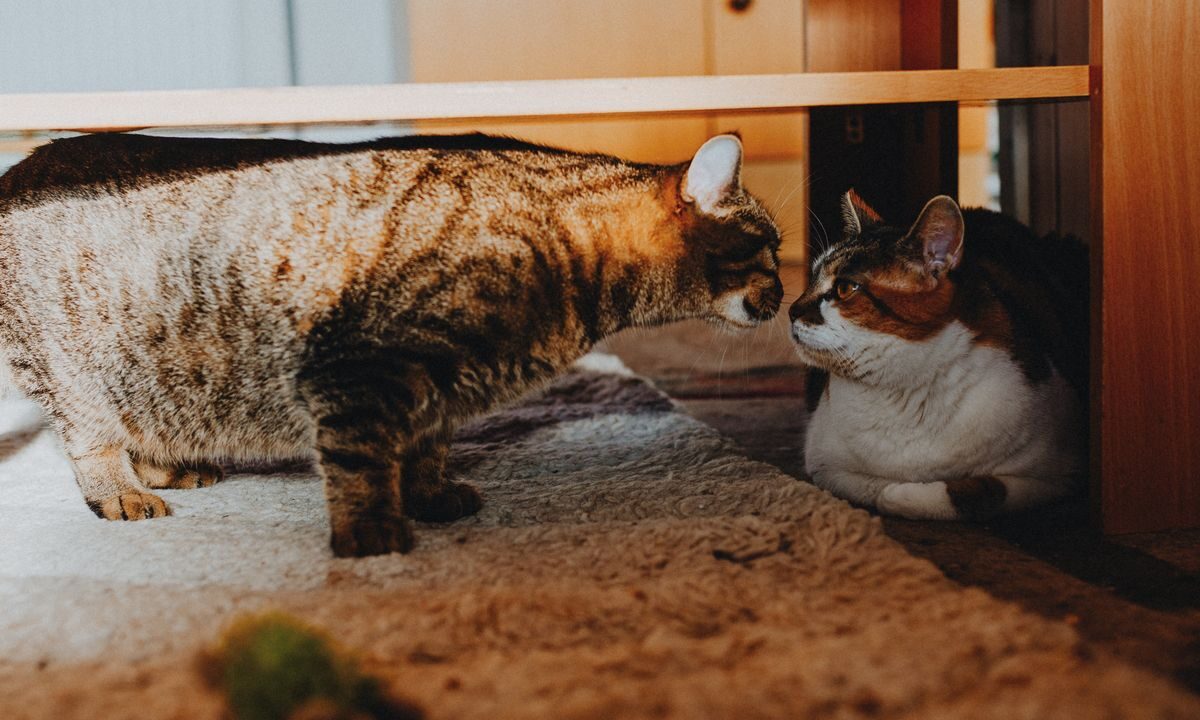
Putting two unfamiliar cats in the same room and hoping they “work it out” can create fear and long-term conflict. A safer introduction separates scent, sight and physical proximity into stages. If the newcomer is a kitten, our introducing a kitten to an older cat guide addresses age and energy differences.
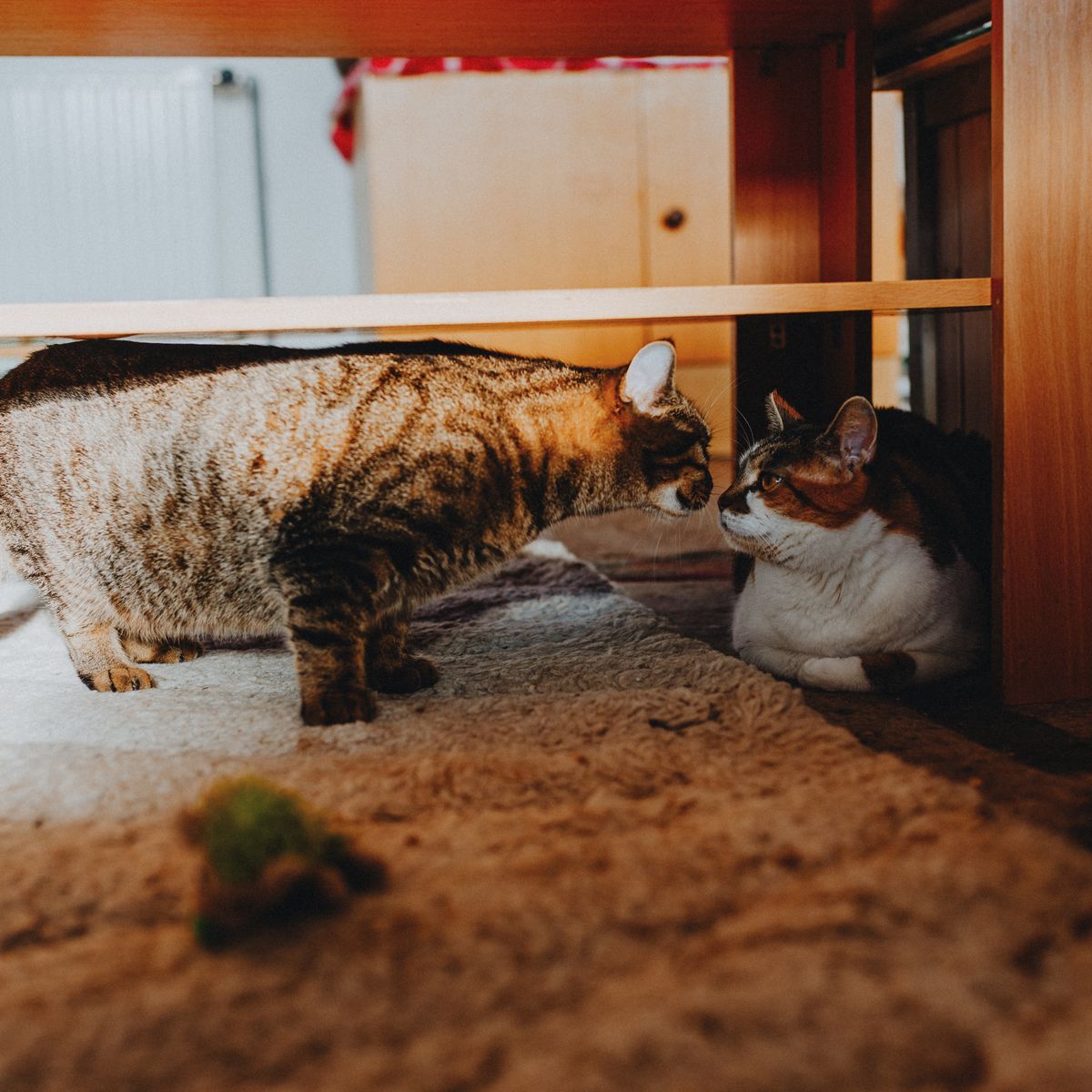
Start with a transition room
The new cat should have a quiet room with food, water, litter, hiding places, scratchers, beds and toys. The resident cat keeps access to the rest of the home.
Stage 1: scent exchange
Swap bedding or use a clean cloth to transfer facial scent between areas. Pair exposure with food or play at a comfortable distance.
Stage 2: site swapping
Let the new cat explore communal areas while the resident cat rests elsewhere, then switch back. This lets each investigate scent without direct confrontation.
Stage 3: closed-door positive sessions
Feed or play on opposite sides of a closed door, far enough away that both cats remain relaxed.
Stage 4: controlled visual access
Use a secure screen, tall gate or partly opened barrier. Keep sessions short and end before tension builds.
Stage 5: supervised proximity
When both cats can see each other calmly, allow brief supervised time in a larger space with escape routes and elevated options.
Signs to slow down
- persistent staring;
- stalking;
- blocking doors or resources;
- growling or repeated hissing;
- hiding or refusing food;
- chasing.
Do not punish hissing
Hissing communicates discomfort. Increase distance rather than correcting the warning.
Duplicate important resources
Separate food, water, litter, scratching and resting areas reduce competition after the cats begin sharing space.
For resource planning, see our cat-friendly home guide. If you are still choosing a second cat, our cat adoption checklist helps evaluate fit before the introduction starts.
Do not use one cat’s confidence as the timetable
The bolder cat may be ready to advance while the cautious cat is still hiding or refusing food near the door. Progress should be based on the less comfortable cat, because forcing proximity can create setbacks for both.
Resource layout after the introduction matters
Even cats that tolerate one another can compete indirectly. Spread litter boxes, water, beds, scratching areas and elevated resting places so access does not depend on passing through one narrow hallway or doorway.
Parallel activities can reduce social pressure
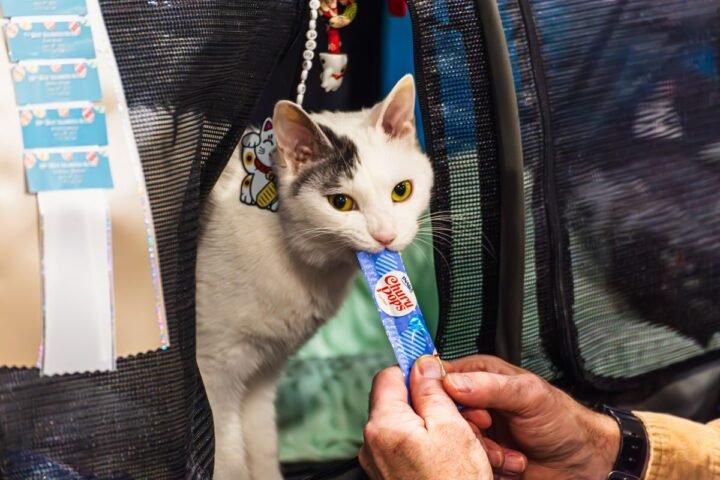
During early visual sessions, give each cat something separate to do—such as licking a food treat, chasing a wand toy or eating from its own station. The goal is calm coexistence, not mandatory interaction.
A brief hiss is not the same as a fight
Some warning communication can occur without escalation. Repeated lunging, cornering, screaming, fast pursuit or physical attack is different and requires immediate separation and a slower reintroduction.
Do not hold cats face-to-face
Restraining both animals removes their ability to create distance and can make an introduction feel threatening. Barriers and voluntary movement are safer than forced “nose-to-nose” greetings.
When professional help is useful
If conflict continues despite careful staging, one cat stops eating or using the litter box normally, or injuries occur, involve your veterinarian and a qualified feline behavior professional.
Start with separate territories
Give the new cat a dedicated room with food, water, litter, scratching and hiding. The resident cat should keep access to familiar resources elsewhere in the home.
Exchange scent before visual contact
Swap bedding or gently rub each cat with a separate soft cloth and place the scented item near the other cat’s resting area. The goal is neutral investigation, not forced proximity.
Use meals to create a positive association
Feed on opposite sides of a closed door at a distance where both cats remain comfortable. Move bowls closer only when neither cat is showing tension or refusing food.
Visual contact should be controlled
Use a secure barrier, cracked door or screen so the cats can see one another without immediate physical access. Keep early sessions brief and end before either cat becomes fixated.
Do not punish hissing or growling
These are distance-increasing signals. Punishment can add fear and does not make the other cat feel safer. Increase distance and return to an easier stage.
First physical meetings should be short
Allow voluntary movement in a room with escape routes and elevated options. Do not hold the cats or place them nose-to-nose.
Provide duplicated resources after introduction
Even cats that get along need more than one feeding, drinking, litter, scratching and resting option. Resource competition can be subtle and may appear as blocking rather than fighting.
Watch for hidden signs of tension
One cat avoiding a hallway, eating only at certain times, using the litter box less or sleeping in unusual places can indicate social pressure even when there are no obvious fights.
Progress can take weeks or longer
There is no universal timetable. Some pairs settle quickly; others need many gradual sessions. Moving backward is not failure if it restores calm.
Peaceful coexistence is a valid outcome
The cats do not need to sleep together or groom each other. If both can move around the home, eat, rest, toilet and play without chronic tension, the introduction can be considered successful.
Do not rush overnight access
A few calm supervised meetings do not automatically mean the cats are ready to share the home while everyone is asleep. Increase unsupervised time gradually after calm interactions become routine.
Keep litter boxes distributed
Use the common starting point of one box per cat plus one extra, placed in separate useful locations. Several trays lined up together can still be controlled by one cat.
Vertical space can reduce social pressure
Shelves, cat trees and stable elevated resting areas create additional routes and resting options. This is especially useful when one cat prefers to observe from above rather than pass close to the other.
Do not make shared resources the test
Forcing both cats to eat from one bowl or sleep on one bed does not prove friendship. Independence around essential resources is healthier than mandatory sharing.
Watch what happens after you leave the room
Pet cameras can reveal chasing, doorway blocking or stalking that is not obvious during supervised sessions. Use the information to adjust the environment rather than to punish either cat.
Do not use forced proximity to speed the process
Holding cats near one another, placing both into one carrier or feeding from the same bowl can increase stress. Let distance decrease through calm voluntary behavior.
Resource duplication reduces hidden competition
Provide separate feeding, drinking, litter, scratching and resting options in different parts of the home. Two bowls placed together can still be controlled by one confident cat.
Use short sessions before long access
Several calm ten-minute sessions are more useful than one long meeting that ends in chasing. End while both cats are still coping well and repeat later.
Know when to pause and get help
Repeated fighting, injury, one cat refusing food or litter access, or persistent stalking despite slow introduction are reasons to involve your veterinarian and a qualified feline behavior professional.
Do not keep repeating stressful meetings while waiting for the cats to “work it out”; repeated conflict can strengthen negative associations. Return to the last stage where both cats remained calm.


0 comments