
Crate Training a Dog: Step-by-Step Without Force or Cry-It-Out
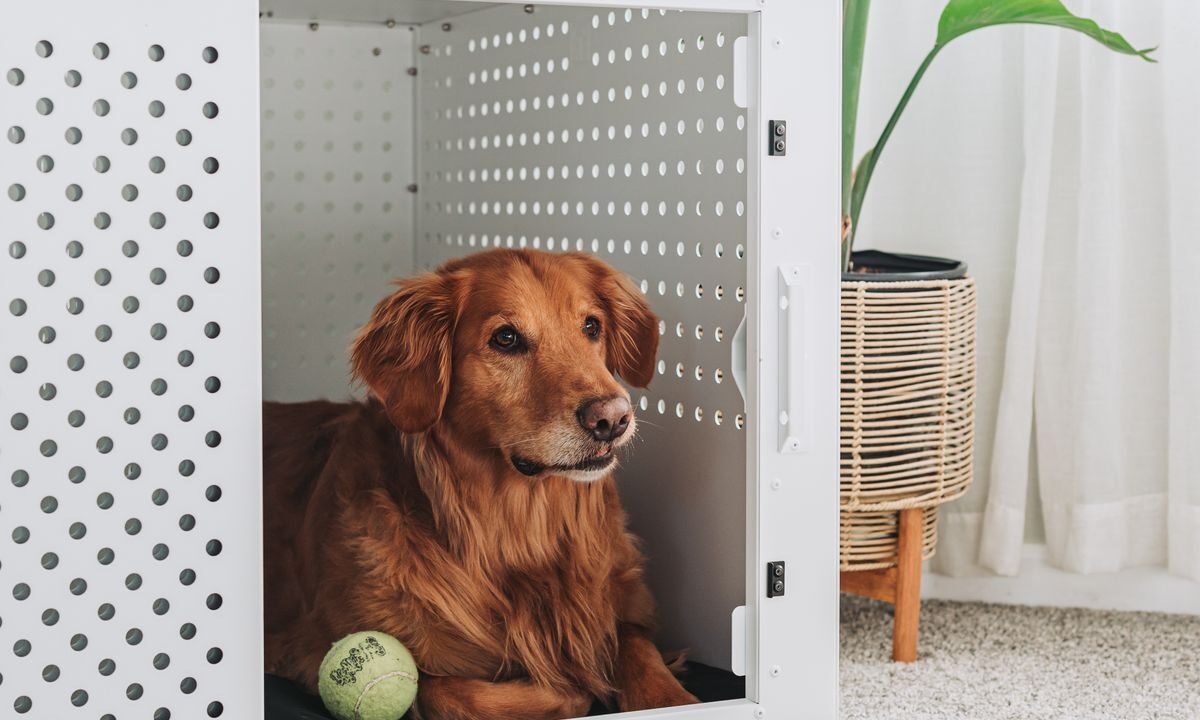
Crate training is useful for travel, veterinary care, recovery and giving a dog a predictable resting place. It works best when the crate is taught as a safe voluntary space, not somewhere the dog is pushed into after making a mistake.
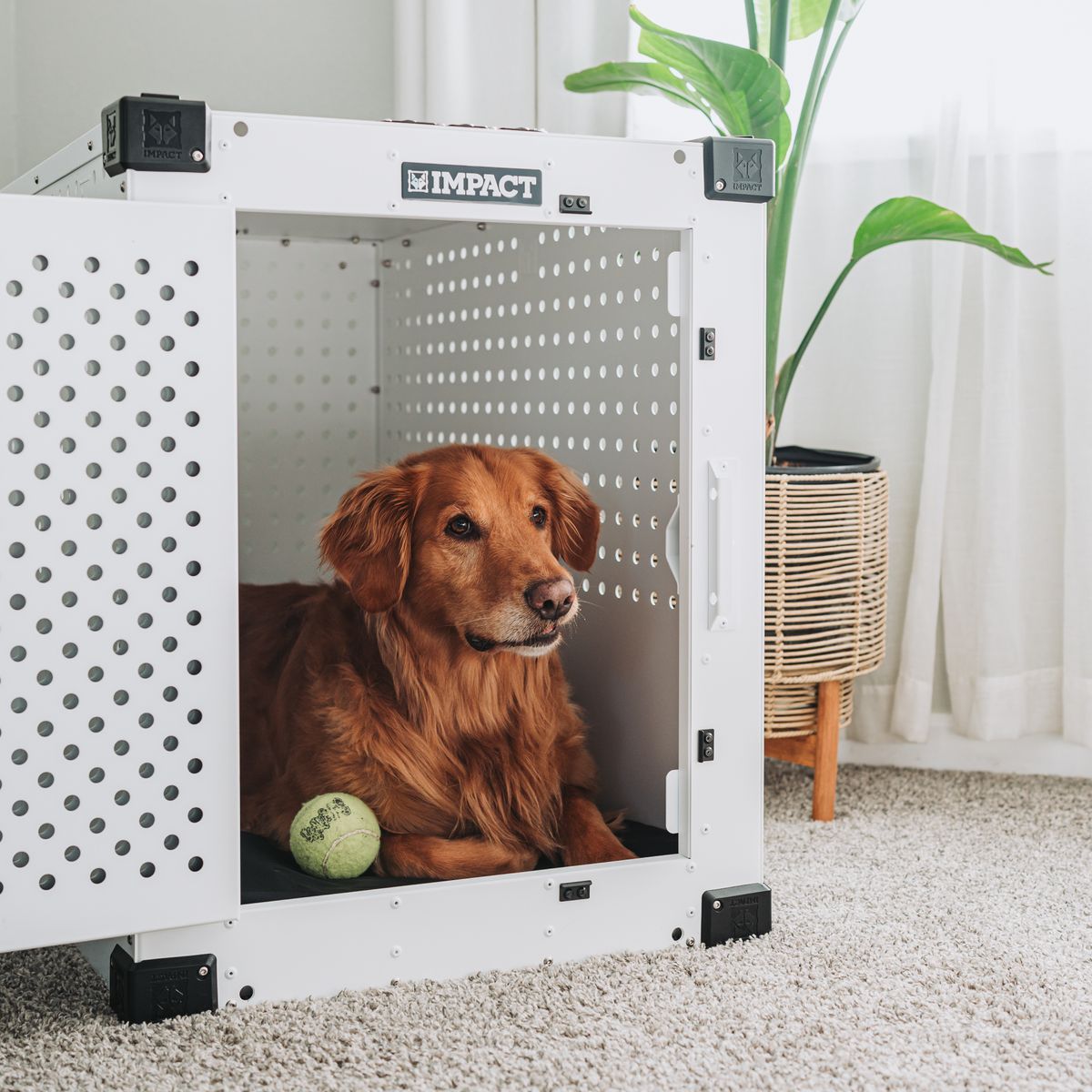
Choose the right crate size
The dog should be able to stand naturally, turn around and lie comfortably. For a growing puppy, a divider can reduce excess space while still allowing the crate to grow with the dog.
Stage 1: make the open crate valuable
Place the crate in a social part of the home. Leave the door secured open. Toss treats or part of the dog’s meal just inside, then progressively farther back. Let the dog leave whenever it wants.
Stage 2: build relaxed time inside
Feed a chew, stuffed food toy or meal in the crate while you remain nearby. The goal is calm resting, not simply getting the dog physically inside.
Stage 3: close the door for seconds
Once the dog chooses to enter comfortably, close the door briefly and reopen it before distress starts. Repeat with small increases in duration.
Stage 4: add distance
Take one step away, return and reward calm behavior. Build distance and duration separately rather than increasing both at once.
Nighttime crate use
Young puppies may need nighttime toilet breaks. A puppy vocalizing because it urgently needs to eliminate should not be ignored for hours. Keep trips boring and return the puppy to rest.
How long is too long?
A crate is not a full-day lifestyle. Puppies need frequent toilet opportunities, movement, social contact, training and sleep outside forced confinement. Adult dogs also need exercise and normal household participation.
Signs you are progressing too fast
- frantic scratching or biting at the crate;
- heavy drooling;
- persistent panic vocalization;
- refusing high-value food once confined;
- injuring teeth or paws trying to escape.
These signs call for a slower plan and, when severe, veterinary or qualified behavior help.
Never use the crate as punishment
If the crate repeatedly predicts isolation after “bad” behavior, the dog may learn to avoid it. Management should protect the dog without turning the resting area into a threat.
For broader puppy foundations, see our reward-based puppy training guide. For helping a puppy learn to settle indoors, our rainy-day puppy routine balances activity with rest.
Where to place the crate
For a puppy or newly adopted dog, a crate placed near ordinary household activity can feel less isolating than one hidden in a distant room. At night, some dogs settle more easily when the crate begins near the caregiver’s sleeping area and is moved gradually later if desired.
Crate training and separation training are not the same skill
A dog can love resting in a crate while still panicking when left alone. If confinement is comfortable but departure triggers barking, drooling, escape attempts or destruction, treat that as a possible separation-related problem rather than simply adding more crate time.
Use confinement to prevent rehearsal, not to replace teaching
A crate can keep a puppy from chewing electrical cords while you shower, but the puppy still needs supervised opportunities to learn what to chew, where to toilet and how to settle outside the crate.
Meals can help—but avoid creating one rigid rule
Feeding some meals in the crate can strengthen a positive association. Once the dog is comfortable, vary the routine so entering the crate does not depend on seeing a full food bowl first.
Build a crate-training progression you can measure
Use the Crate Training Progress Tracker to identify the last comfortable stage and choose the next small step without using cry-it-out as the progression rule.
Move to the next step only when the dog is comfortable at the current one. A practical progression is: entering voluntarily, eating or chewing with the door open, brief door closure while you stay beside the crate, short periods while you move around the room, then very brief out-of-sight periods. If distress appears, go back to the last easy stage.
Use the crate when the dog is ready to rest
Training often goes more smoothly after a toilet break and an appropriate amount of activity. A dog that is bursting with energy may struggle to settle, while an exhausted puppy can become overtired and frantic. Aim for calm readiness rather than trying to wear the dog out.
Do not wait for prolonged panic to end
If the dog is panting, drooling, biting bars, throwing its body at the door or escalating rather than settling, the session is too difficult. The RSPCA crate-training guidance recommends small steps and positive associations rather than using the crate as punishment.
Nighttime crying needs context
A young puppy may need a toilet trip, reassurance in a new environment, or a crate placed closer to the sleeping area. Brief fussing is different from escalating distress. Keep nighttime toilet trips calm and boring, then return the puppy to the sleeping area.
Crates are not an all-day childcare solution
A crate can be useful for short-term management, travel and rest, but dogs still need exercise, social interaction, toilet opportunities, training and freedom to move. Puppies need more frequent breaks than adults because bladder control and tolerance are still developing.
Make the crate useful outside departures
If the crate only predicts that you are leaving, it can acquire a negative association. Use it sometimes while you remain at home: for a chew while you cook, a nap after a walk, or a short calm period while you work nearby.
Practice opening the door calmly
Wait for a brief moment of stillness before opening when the dog is not distressed. This helps prevent frantic door-rushing without turning release into a battle. If the dog is panicking, do not use prolonged waiting as a training test; make the next session easier.
Crate location can change over time
A new puppy may settle better with the crate near the family, especially at night. Once the puppy is comfortable, you can move it gradually if a different long-term location suits the household.
Use the crate as one part of a broader routine
For general training, handling and everyday care, use the Dog Care Guide. If the dog is comfortable in the crate but panics specifically when you leave, use the Separation Anxiety guide rather than simply increasing confinement.
Travel and veterinary care are secondary benefits
A dog that is comfortable in a crate may cope better with car travel, boarding or temporary veterinary confinement. Those benefits come from the positive association, not from forcing the dog to tolerate long periods in a crate.
Recheck the crate as the dog grows
Puppies can outgrow a setup quickly. Make sure the dog can still stand, turn and lie comfortably and that collars, tags or bedding are not creating snag risks.
Leave room for individual differences
Some dogs relax in crates quickly; others need a slower progression. The correct pace is the one that keeps the dog comfortable enough to learn rather than simply endure confinement.
What success should look like
A well-conditioned dog should be able to enter without being pushed, settle with a relatively soft body, rest or chew quietly and leave calmly when released. The goal is emotional comfort, not simply silence.



0 comments