
Dog Breed Identification: Why Appearance Alone Can Be Misleading
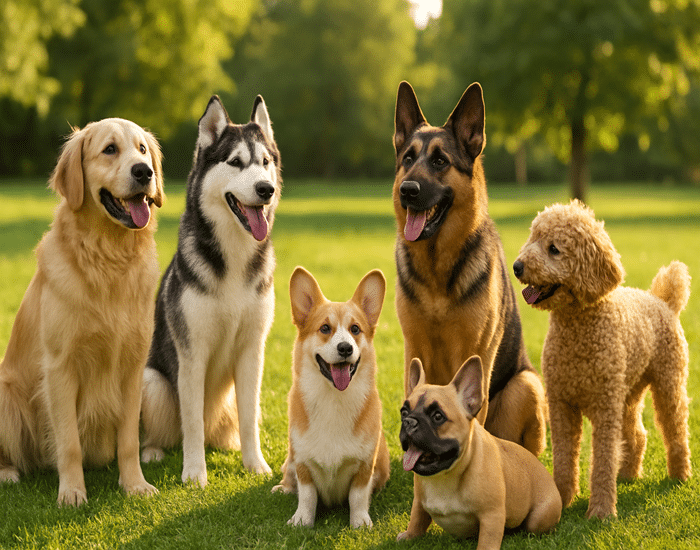
People are surprisingly confident when guessing a dog’s breed from a photo. Mixed ancestry makes that difficult. Coat length, ear shape, color and head width are influenced by many genes, so dogs with different ancestry can converge on a similar look.

What appearance can tell you
You can describe observable traits—approximate size, coat type, muzzle length, ear carriage and body proportions. Those descriptions are useful. Turning them into a precise ancestry percentage is a much bigger leap.
Shelter labels are often estimates
When a dog’s parents are unknown, breed labels may be based on visual assessment. Treat them as working descriptions rather than genetic certificates.
DNA tests
Commercial canine DNA tests can estimate ancestry by comparing a sample with company reference databases. Results may differ between companies because databases and algorithms differ. DNA ancestry is also not a behavior forecast.
Do not infer temperament from a guessed breed
If you need to know whether a dog can live with cats, tolerate handling or cope when left alone, observe those behaviors directly and ask about history. A guessed breed label is weaker evidence.
Identification in the lost-pet sense
For identifying and reuniting a lost dog, microchip scanning, visible tags, current registration records and recent owner photographs are more useful than guessing breed. Keep the registry’s contact details current. A search description should include observable size, coat, markings, sex, collar and distinctive scars rather than relying on a breed word. Record the microchip number with your private pet records and ask a shelter or veterinary clinic about scanning; a breed label does not establish who the dog belongs to. When preparing a missing-dog notice, choose clear recent photos that show the full body and distinctive markings so a finder can compare what they actually see.
Related guide
Our pit bull terminology guide shows why broad visual labels can become especially confusing.
Why this topic matters beyond curiosity
Breed labels can influence adoption decisions, housing rules, insurance, public perception and assumptions about behavior. When the label is only a visual guess, those consequences can rest on weak evidence.
Recent shelter research continues to note that visual breed labeling can be inaccurate and can influence how adopters perceive dogs. That is why careful language matters.
Phenotype is not ancestry
Phenotype means the traits you can observe: coat, color, head shape, body size, ear carriage and proportions. Ancestry describes inherited lineage. The two are related, but they are not interchangeable.
A mixed-breed dog can inherit a very visible trait from one ancestral line while much of the remaining ancestry leaves little obvious outward signal.
Why mixed ancestry produces unexpected appearances
Traits do not blend like paint. Some are influenced by a small number of genes with strong visible effects; others are polygenic and depend on many genetic variants.
This means a dog can look strongly like one breed without having that breed as the largest ancestry component—or can carry ancestry from a breed without looking recognizably like it.
What shelter research found
In the 2018 “canine identity crisis” study, researchers genetically tested dogs from two large U.S. shelters and compared the results with breed labels. The work demonstrated substantial complexity in mixed-breed ancestry and limits in visually assigned labels.
The lesson is not that every shelter label is wrong. It is that appearance-based labels should be treated as estimates when parentage is unknown.
Observer agreement can be poor
A separate study of pit-bull-type labeling found poor-to-moderate agreement between individual visual assessors and DNA-based classifications. Different people looking at the same dog can apply different breed labels.
That variability is important whenever a label has legal, housing or adoption consequences.
Computer vision does not automatically solve the labeling problem
A 2025 veterinary review examined breed-classification work in computer vision. Although some AI papers report very high image-classification accuracy, the review found that many training datasets use breed labels and definitions that are not sufficiently reliable for veterinary breed assignment.
An algorithm can reproduce the assumptions of its training data very efficiently. That does not make the underlying label biologically definitive.
Why a high accuracy score can still mislead
Machine-learning accuracy is measured against the dataset’s expected labels. If those labels are simplified, inconsistent or based on curated purebred images, strong performance within that dataset may not transfer to real mixed-breed dogs.
Real-world rescue dogs also appear in messy photographs, varied lighting, unusual poses and a far wider range of ancestry combinations than curated benchmark datasets.
Breed labels are socially meaningful even when genetically uncertain
Research has shown that breed labels can affect perceived adoptability. A label can change what people expect before they meet the dog.
For shelters and adopters, that makes neutral behavioral description especially valuable: sociable with familiar adults, fearful of traffic, high prey interest, relaxed during handling, and so on.
Describe what you can actually observe
When ancestry is unknown, descriptions such as “medium-sized, short-coated dog with upright ears” are factual. “German Shepherd mix” is an ancestry hypothesis unless documented.
Observable descriptions are often more useful for matching a dog to a home because they do not imply behavioral traits that may not be present.
Behavior is an individual outcome
Breed can contribute to population-level tendencies, but the individual dog’s learning history, socialization, health, environment and previous experiences also shape behavior.
Do not infer aggression, trainability, child compatibility or cat safety from a guessed breed label.
Use direct behavioral evidence for practical decisions
If the question is whether a dog can live with another dog, look at actual social behavior and history. If the question is whether the dog tolerates grooming, evaluate handling. If the question is whether the dog can settle alone, assess separation behavior.
Those observations answer the practical question more directly than ancestry speculation.
Health risk is also more complicated than a label
Some inherited diseases occur more often in particular breeds, but risk is not binary. A visual resemblance does not confirm a genetic predisposition, and absence of resemblance does not rule one out.
Your veterinarian should base screening on documented ancestry where available, family history, physical findings and current clinical evidence.
What pedigree can establish
For registered purebred dogs, pedigree documentation records ancestry through a recognized registry’s rules. That is different from a photograph-based guess.
A dog can visually resemble a registered breed without possessing a documented pedigree, just as a registered dog can fall outside a casual observer’s idea of the breed’s “typical” look.
What genetic ancestry testing can add
Commercial ancestry tests analyze DNA markers and compare them with reference populations. This provides evidence about inherited ancestry rather than only visible resemblance.
Results still depend on which breeds are represented, how reference dogs were selected and how the company reports mixed ancestry.
Purebred identification and mixed ancestry are different problems
Research published in 2024 found that several direct-to-consumer genetic tests could identify many purebred dogs successfully, but that does not mean every company will resolve complex mixed ancestry identically.
Large, well-represented ancestry components are generally easier to interpret than tiny percentages near a company’s reporting threshold.
AKC DNA profiling should not be confused with ancestry testing
The AKC states that its DNA Profile Program is used for genetic identity and parentage verification and does not determine a dog’s breed. This distinction is useful because “DNA test” is a broad phrase covering very different services.
Why photo and DNA results can disagree
A photo scanner predicts visual resemblance. A genetic ancestry service estimates lineage from markers. They are answering different questions, so disagreement should not be surprising.
The scanner may correctly identify the breed that most strongly influenced appearance even when that breed is not the largest ancestry component.
What about “pit bull” identification?
This is one of the clearest examples of why terminology matters. “Pit bull” may be used as a visual type label, a legal category or a reference to particular registered breeds, depending on context.
Studies have shown substantial inconsistency among observers. That makes visual classification especially risky when legal or housing decisions depend on the result.
Breed-specific legislation adds another layer
Legal definitions do not always map cleanly onto genetic ancestry or registry categories. If a breed designation has legal consequences, rely on the relevant jurisdiction’s rules and professional/legal guidance rather than an app, shelter guess or internet photo comparison.
How to talk about an unknown-breed dog accurately
- Use “mixed breed” when ancestry is unknown.
- Describe observable traits separately.
- State when a breed label is only an estimate.
- Avoid attaching predicted temperament to the label.
- Use documented pedigree or genetic testing when ancestry truly matters.
Questions to ask a shelter instead of “What breed is this?”
- How does the dog behave with unfamiliar people?
- Has the dog lived with children?
- What is known about dog-to-dog interactions?
- Has the dog been observed around cats?
- How does the dog respond to handling and restraint?
- What is the dog’s activity level?
- Are there known medical or behavioral needs?
Questions to ask a DNA company
- How large is the reference database?
- How are reference dogs verified?
- Which geographic populations are represented?
- How are low-percentage ancestry results handled?
- Can the company distinguish village-dog or regional populations?
- Does the report separate ancestry from health-risk testing?
What you can conclude confidently
You can confidently describe what a dog looks like. You can document behavior you have actually observed. You can verify pedigree when records exist. You can use genetic testing as evidence about ancestry within the limits of the test.
What you cannot do reliably is turn appearance alone into an exact family tree.
Why neutral descriptions are often better records
Veterinary clinics, shelters and foster homes may need consistent records even when ancestry is uncertain. Recording objective traits—size, coat length, color, ear carriage and distinctive markings—can be more reproducible than assigning a speculative breed mixture.
Breed identification and breed prediction are not the same task
Identifying a known purebred dog from a curated image set is a simpler classification problem than estimating the ancestry of an unknown mixed-breed dog from one photograph. Marketing language can blur those two tasks, so check what a tool was actually designed and validated to do.
Revisit labels when stronger evidence appears
If pedigree documents, parental information or a reputable genetic ancestry test later becomes available, update the record rather than defending the original visual guess. Good identification practice allows uncertainty to shrink when better evidence arrives.
That approach is especially important in shelters and veterinary records, where a speculative label can persist for years and influence later decisions long after its original basis has been forgotten.
Good records should therefore distinguish between documented breed, owner-reported breed, genetic ancestry result and visual estimate. Keeping those categories separate preserves useful information without pretending they have the same evidentiary strength.



0 comments