
Osprey Symbolism and Spiritual Meaning: Interpretation vs Natural History

People have long used birds as symbols, and the osprey’s dramatic fishing dives make it an easy bird onto which humans project ideas such as focus, timing, self-reliance and renewal. Those interpretations can be personally meaningful, but they are symbolic readings—not scientific facts about what an osprey “represents.”
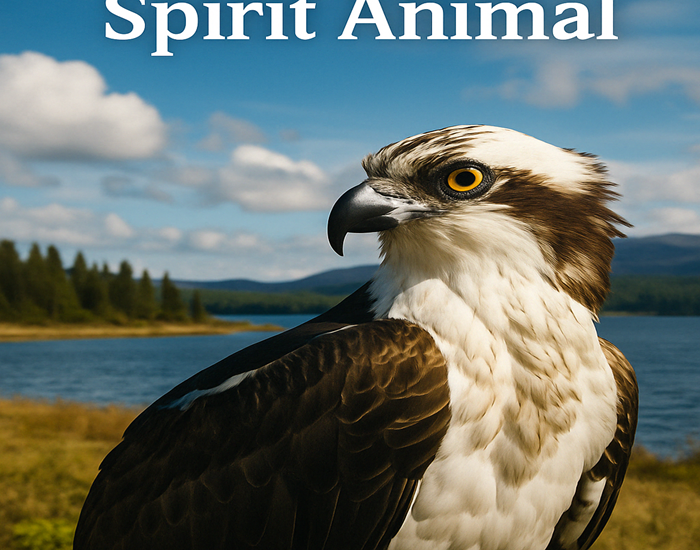
Why people associate ospreys with focus
An osprey often watches open water before committing to a dive. The Cornell Lab of Ornithology describes ospreys as specialist fish hunters that patrol waterways and plunge feet-first toward prey. It is understandable that a human observer might read that behavior as a metaphor for concentration and decisive action.
Perspective
Because ospreys soar and hunt from above, modern symbolic writing often connects them with “seeing the bigger picture.” That is a human interpretation layered onto a real hunting strategy; the bird is not consciously teaching a lesson about perspective.
Independence and return
Many osprey populations migrate between breeding and wintering areas, sometimes over long distances. For some readers, migration suggests return, resilience or seasonal renewal. Our osprey migration guide explains the biology behind those journeys.
Water symbolism
Ospreys are strongly tied to rivers, coasts, lakes and reservoirs because fish dominate their diet. Spiritual traditions often give water meanings such as emotion, change or cleansing; those meanings come from human culture, not ornithology.
How to use animal symbolism responsibly
- Treat symbolism as reflection, not prediction.
- Avoid claiming one universal Indigenous, religious or historical meaning without a documented source.
- Do not turn normal animal behavior into supernatural evidence.
- Keep conservation and welfare separate from spiritual interpretation.
What the real bird may teach without mysticism
Even without assigning supernatural meaning, observing an osprey can encourage patience and attention to habitat. The bird’s dependence on fish-rich waters makes it a useful doorway into wetland and shoreline ecology.
Why symbolism changes across writers and traditions
Modern animal-symbolism pages often present one neat list of meanings, but there is no single global “osprey meaning.” A writer focused on migration may emphasize return; someone focused on hunting may emphasize concentration; someone who notices the bird’s relationship with water may emphasize transition. Those associations are interpretations built from selected traits, not properties carried by the species itself.
Observation is a better starting point than projection
If you want to use an osprey encounter for reflection, begin with what actually happened. Was the bird hovering over water, carrying a fish, repairing a nest, or simply perched? A grounded description helps prevent a common mistake: assigning a dramatic meaning first and then forcing the behavior to fit it.
Migration can inspire reflection without becoming prophecy
Some northern ospreys travel enormous distances between breeding and wintering areas. It is reasonable to find personal meaning in that cycle, but migration does not predict what will happen in a person’s life. The biology is powerful enough on its own: a young bird may complete a long first journey without following both parents all the way.
Nesting suggests persistence, not a universal spiritual message
Pairs may return to the same general nesting area across seasons and add material to large stick nests. People sometimes read this as loyalty, rebuilding or homecoming. Those themes can be useful metaphors, but they should be kept separate from claims about the bird consciously “representing” family or destiny.
Fish specialization is more interesting than the cliché of “abundance”
Ospreys are unusually specialized on fish, and their anatomy reflects that. Reversible outer toes, strong curved talons and rough gripping surfaces on the feet help them handle slippery prey. If symbolism is used, it is more honest to connect it with a real biological feature than with vague claims that the bird guarantees prosperity.
How to write about osprey symbolism responsibly
Use phrases such as “can be interpreted as,” “may remind some people of,” or “has been used as a symbol of” instead of presenting metaphor as fact. When citing a specific cultural or religious tradition, identify the tradition and use a documented source rather than implying that one interpretation is universal.
Do not borrow Indigenous symbolism without evidence
Online spiritual content often attributes broad animal meanings to “Native American culture” as if hundreds of distinct nations shared one symbolic system. They do not. If a specific tradition is relevant, name the community and rely on a credible source connected to that culture. Otherwise, it is better to describe the symbolism as modern or personal.
Osprey encounters can still be meaningful
A meaningful experience does not have to be supernatural. Watching a bird repeatedly circle, dive and carry prey can create a strong sense of attention, timing or resilience. Personal interpretation is legitimate when it is clearly framed as personal.
Conservation is a practical way to honor the bird
If an osprey matters to you symbolically, supporting clean waterways, reducing fishing-line litter and respecting nest buffers does more for the species than repeating spiritual claims. Symbolism becomes more grounded when it leads to care for the habitat that allows the bird to survive.
Questions to ask after an osprey sighting
What behavior did you actually observe? What part of that behavior felt important to you? Are you interpreting the encounter through your own current concerns, or through a documented cultural tradition? Those questions keep reflection thoughtful without turning natural behavior into fortune-telling.
Symbolism should not erase the bird’s ecology
There is a risk that spiritual language turns a living species into a collection of human meanings. Ospreys depend on healthy water, abundant fish, safe nest sites and migration habitat. Any interpretation that ignores those realities misses the most important thing about the bird: it is an animal with ecological needs, not a message delivery system.
Personal reflection can stay personal
You do not need a universal tradition to find an encounter meaningful. If an osprey reminds you to be patient, focused or willing to change direction, that can be useful as long as the meaning is described as your own reflection rather than a fact about the species.
Repeated sightings have ordinary explanations too
Seeing an osprey several times near the same river may feel significant, but the simplest explanation may be territorial behavior, a productive fishing area or a nest nearby. Natural explanations and personal meaning can coexist without one replacing the other.
Photography can distort the symbolism people notice
Most dramatic osprey images show dives, fish catches or soaring. Quiet behaviors such as resting, preening or failed hunts are less likely to be photographed and shared. The symbolism people build therefore tends to reflect the most visually striking moments rather than the full life of the bird.
Use the bird to ask better ecological questions
If an osprey catches your attention, ask what water body supports it, where it may be nesting, whether fishing line is a local hazard and which migration route the population may use. Curiosity about the real animal is a strong way to deepen any symbolic experience.
That distinction matters: symbolism can enrich a personal encounter, but the bird’s real biology, habitat and behavior should remain the factual foundation.
That keeps the interpretation meaningful without confusing metaphor with ornithology or conservation.
Keep interpretation clearly personal and evidence clearly biological.
For species biology, diet and nesting rather than symbolism, continue with our osprey natural-history guide.
0 comments