
Cat Scratching Post Placement: Height, Texture and Setup That Cats Use
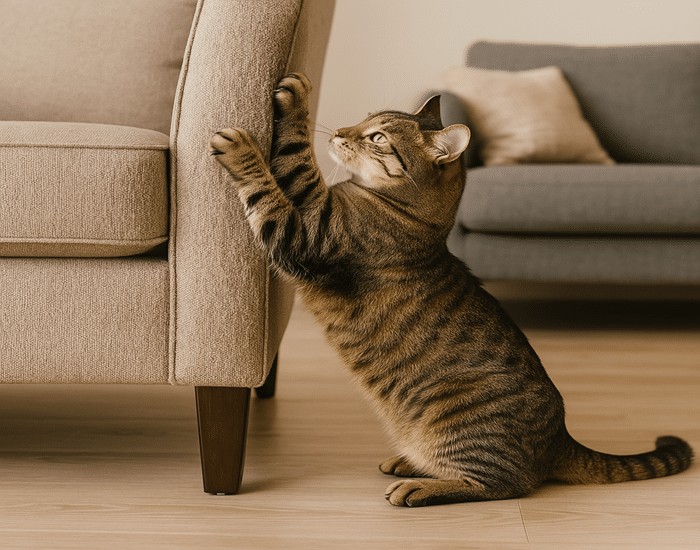
A scratching post works only if the cat wants to use it. Height, stability, texture and placement often matter more than the price or appearance of the product. This guide focuses on setting up scratching surfaces so they compete successfully with the sofa, carpet or doorframe.
For the broader behavior-and-training plan, see our cat scratching furniture guide.
Copy the orientation your cat already chooses
A cat scratching a vertical sofa arm may ignore a flat cardboard pad. A cat that claws carpet may prefer a horizontal or slanted surface. Start by matching the angle the cat already uses rather than buying the most popular post.
Match the texture too
Sisal, cardboard, rough wood and woven materials feel different under the claws. If the cat repeatedly returns to one furniture texture, offer a legal surface with a similar amount of resistance.
A vertical post should allow a full-body stretch
Short posts can be frustrating for an adult cat that wants to extend the spine and shoulders. Choose a post tall enough for the cat to stretch upward comfortably without reaching the top immediately.
Stability is non-negotiable
A post that rocks or tips when the cat leans into it teaches the cat that the sofa is the safer scratching surface. Test the base before expecting the cat to trust it.
Put the first post beside the existing target
The Cat Friendly Homes scratching guidance recommends placing an appropriate scratching surface close to the place the cat already scratches. This is more effective than hiding a post in a room the cat rarely visits.
Sleeping areas are another useful location
Cats often scratch after waking and stretching. A post beside a favorite bed or sleeping perch can attract natural use even if furniture damage is not occurring there.
Use several stations in a larger home
One post may not be enough in a multi-room household. Provide scratching opportunities near important travel routes, sleeping areas and social spaces instead of making the cat cross the whole home to reach one approved surface.
Multi-cat homes may need duplicated resources
One cat can block access to a favored post without an obvious fight. Multiple scratching stations give cats more choice and reduce competition around a single resource.
Reward use immediately
When the cat scratches the approved surface, follow with something the cat values: calm praise, a treat, a short play session or catnip if the cat responds to it. Do not grab the cat and place its paws on the post.
Protect the old target during the transition
A washable cover, furniture-safe barrier or another temporary surface change can make the old location less satisfying while the new scratching station becomes established. Avoid frightening or painful deterrents.
Move a successful post slowly
If the final location you want is different, wait until the cat uses the post reliably. Then move it a small distance at a time. Moving it across the room immediately can remove the exact location cue that made it successful.
Claw trimming does not replace scratching
Trimming can reduce sharp tips and accidental damage, but cats still scratch to stretch, mark and maintain normal behavior. Nail care and scratching surfaces solve different problems.
Sudden changes in scratching deserve attention
A major increase can accompany stress, new animals, outside cats visible through windows or changes in territory. If scratching changes alongside pain, skin problems or mobility changes, involve your veterinarian.
One post may not be enough
A single scratching station can be inadequate in a larger home or multi-cat household. Cats often scratch in more than one functional location: after waking, near social areas, beside entrances and close to existing furniture targets.
Use several well-placed surfaces rather than expecting one post in a spare room to solve every scratching need.
Match vertical and horizontal preferences
If the cat scratches sofa arms, a tall vertical post may be the best first match. If the cat scratches carpet, rugs or the stair landing, add a horizontal or slanted cardboard or sisal surface as well.
Cat Friendly Homes recommends observing the cat’s existing preference and providing a similar legal option rather than choosing from appearance alone.
Placement usually matters more than price
A premium post hidden behind furniture can fail while a simple cardboard scratcher in the correct location succeeds. Place the new surface directly beside the current target at first.
Once the cat uses it reliably, move it gradually if you need a different final location.
Sleeping areas are high-value locations
Cats often stretch and scratch after waking. A stable post beside a favourite sleeping area can therefore work better than one placed randomly in the centre of a room.
Entrances and social routes can matter too
Scratching can also have a marking function. Posts near room entrances, hallways or areas where the cat regularly passes may receive more use than a post tucked away from normal traffic.
Multi-cat homes need more than shared access
Two cats may both use the same post, but one cat can also control a preferred location through staring or blocking. Provide multiple scratching opportunities in different areas so a single resource does not become socially restricted.
Do not punish scratching
Spraying water, shouting or physically moving the paws does not teach the desired alternative. It can make the person or location frightening while the biological motivation to scratch remains.
Make the legal option easier and more rewarding instead.
Furniture protection should be temporary support
Use a washable cover, furniture-safe barrier or texture change while the replacement scratching surface becomes established. The goal is not to make the whole room unpleasant for the cat.
Trim claws for safety, not behavior replacement
Claw trimming can reduce sharp tips, but it does not remove the need to scratch. Scratching stretches muscles, marks territory and helps maintain the outer claw layers.
Watch for a sudden change in scratching pattern
A major increase in marking can follow household change, conflict with another cat, a new animal outside the window or other stressors. If scratching changes alongside pain, reduced mobility or skin problems, veterinary assessment is appropriate.
Bottom line
The best scratching post is one that matches the cat’s preferred orientation and texture, stays stable during a full stretch and is placed where the cat already wants to scratch. Once the correct setup is in place, reward use and make the furniture temporarily less attractive rather than punishing a normal behavior.
Use one post as a test, not a final verdict
If the cat ignores a post, change one variable at a time: move it closer to the target furniture, try a horizontal surface, change texture or improve stability. That tells you what the cat prefers instead of buying several random posts.
Height should allow a full-body stretch
Many vertical scratchers are too short once the cat is fully grown. The post should be tall enough for the cat to extend upward without the top wobbling or forcing a crouched posture.
Horizontal scratching needs a different solution
A cat that scratches carpet or rugs may prefer a flat corrugated-cardboard or sisal surface. A taller post will not solve a horizontal preference just because it is more expensive.
Location is part of the behavior
Scratching near entrances, sleeping areas or socially important furniture can be communication as well as claw care. Move the replacement surface close to the original target first, then reposition gradually if needed.

0 comments