
Foods Dogs Should Never Eat: Toxic Foods and What to Do
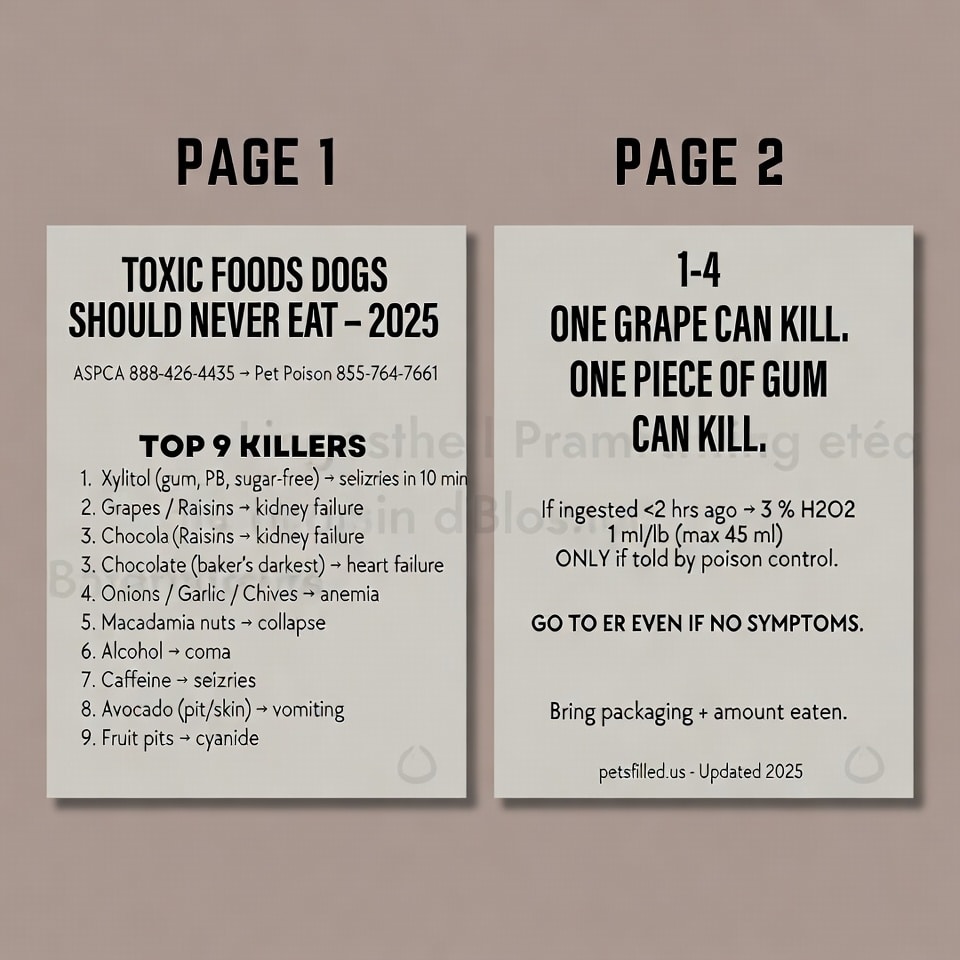
Urgent safety note: If you think your dog has eaten something toxic, contact your veterinarian, an emergency veterinary clinic, or an animal poison-control service promptly. Do not induce vomiting or give a home remedy unless a veterinary professional specifically tells you to do so.
Foods dogs should never eat
Many human foods are harmless in tiny amounts, but a smaller group can cause serious poisoning or other medical emergencies. Risk depends on the ingredient, the amount eaten, the dog’s size, and individual health factors. Because the dangerous dose is not the same for every dog or every substance, online serving charts should not be used to decide whether an exposure is safe.
Xylitol
Xylitol is a sweetener used in some sugar-free gum, candy, baked goods, dental products and other foods. In dogs it can trigger a rapid release of insulin, causing dangerously low blood sugar, and larger exposures can also damage the liver. Check ingredient labels carefully; xylitol may also be described as birch sugar or wood sugar.
If xylitol may have been swallowed, treat it as urgent and call a veterinarian or poison-control service right away.
Chocolate and caffeine
Chocolate contains methylxanthines, including theobromine and caffeine. Darker chocolate and baking chocolate generally contain more of these compounds than milk chocolate, so the same weight of dark chocolate can create a greater risk. Coffee, tea, energy products and caffeine tablets are also unsafe for dogs.
Grapes and raisins
Grapes, raisins, currants and sultanas have been associated with acute kidney injury in dogs. Sensitivity is unpredictable, which means there is no dependable household amount that can be called safe after an accidental exposure. Contact a veterinary professional if your dog eats them.
Onions, garlic, chives, leeks and related alliums
Members of the allium family can irritate the digestive tract and damage red blood cells. Problems may follow a single large exposure or repeated smaller exposures. Cooked, powdered and concentrated forms still count, so remember to check sauces, seasoning mixes and prepared foods.
Macadamia nuts
Macadamia nuts can cause weakness, vomiting, tremors, poor coordination and increased body temperature in dogs. Keep nut mixes and baked goods that contain them out of reach.
Alcohol and raw yeast dough
Alcohol can cause serious neurologic and breathing problems. Raw yeast dough is hazardous because it can expand in the stomach and may also produce alcohol as it ferments. Both situations warrant prompt veterinary advice.
Other foods that are dangerous for a different reason
Not every food emergency is a poisoning. Corn cobs, fruit pits, bones, skewers and food packaging can cause choking or a gastrointestinal blockage. Very fatty meals can also trigger severe digestive upset and may contribute to pancreatitis in susceptible dogs. These risks are different from toxicity, but they still deserve veterinary attention when symptoms or a meaningful ingestion occurs.
What to do after a suspected exposure
- Remove access. Put the remaining food, wrapper or product out of reach.
- Keep the packaging. The exact ingredient list, product name and strength can matter.
- Note what happened. Record the estimated amount, the time of exposure and your dog’s approximate weight.
- Call for professional guidance. A veterinarian or animal poison-control service can decide whether home monitoring, decontamination or emergency treatment is appropriate.
- Do not wait for symptoms when the ingredient is known to be dangerous. Some problems develop before obvious signs appear.
Signs that need urgent veterinary care
Seek urgent care for collapse, seizures, severe weakness, repeated vomiting, trouble breathing, marked tremors, loss of coordination, a swollen or painful abdomen, or any rapidly worsening condition. The absence of symptoms immediately after an exposure does not prove that the dog is safe.
Safer treat habits
A dog’s main diet should provide complete and balanced nutrition for the appropriate life stage. Treats and extras should stay modest; veterinary nutrition guidance commonly recommends keeping treats at no more than about 10% of daily calories so they do not displace the nutrients in the main diet.
If you want to share human food, choose simple foods that are known to be dog-safe and serve small amounts. For example, our guide to bananas for dogs explains how to use banana as an occasional treat rather than as a nutritional supplement.
Prevention is easier than treatment
- Keep gum, candy, supplements and medications in closed cabinets.
- Do not leave bags of grapes, raisins, chocolate or baked goods on accessible counters.
- Check peanut butter and other flavored products for xylitol before using them in food toys.
- Use a lidded trash can if your dog raids the garbage.
- Teach household members not to offer table food without checking first.
Sources and further reading
- U.S. FDA: Potentially Dangerous Items for Your Pet
- U.S. FDA: Paws Off Xylitol; It’s Dangerous for Dogs
- ASPCA Animal Poison Control: People Foods to Avoid Feeding Your Pets
- WSAVA: Feeding Treats to Your Dog
This article is educational and does not replace veterinary diagnosis or poison-control advice.
0 comments