
Great Dane Feeding Guide: Puppy Growth, Adult Portions and Giant-Breed Nutrition
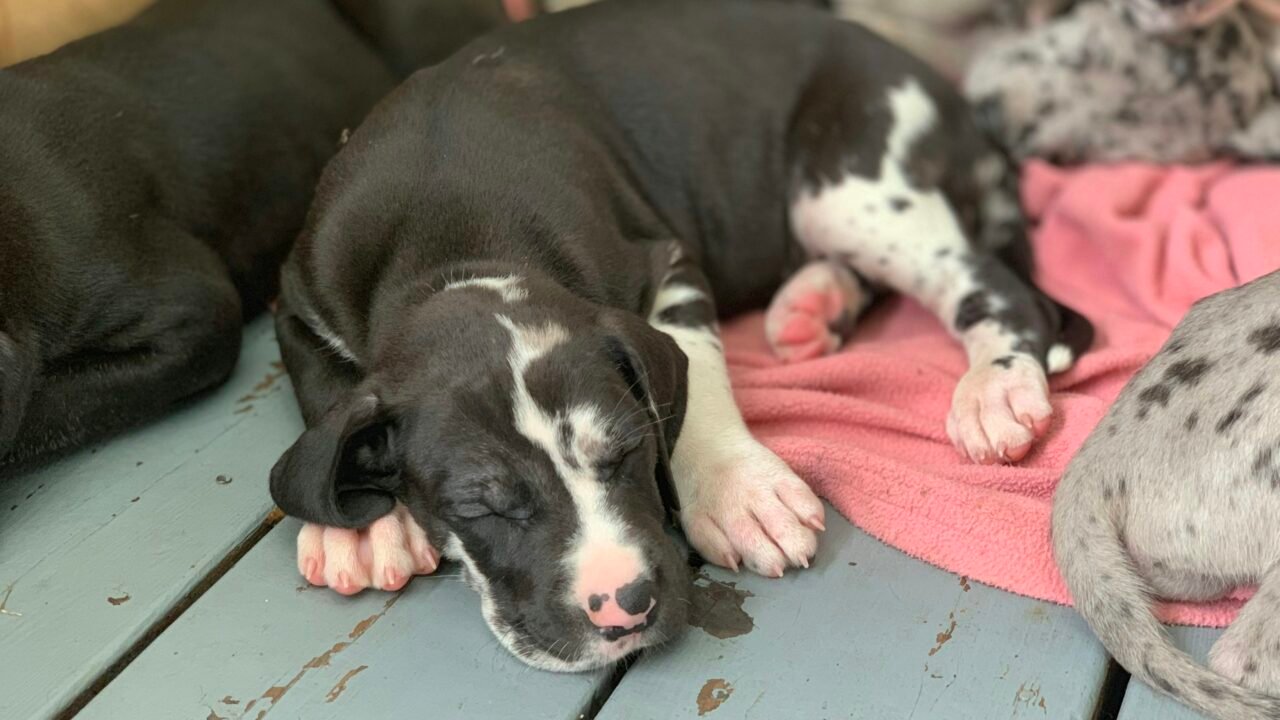
Feeding a Great Dane is less about finding a breed-specific brand and more about managing giant-breed growth, calorie intake and body condition carefully. A Great Dane puppy can become very large in a short time, but faster growth is not the goal. Controlled, steady growth on a complete diet designed for large or giant puppies is the safer target.
Once the dog is mature, the question changes from “How do I support growth?” to “How much food keeps this individual Dane lean and well muscled?” The number printed on a bag is a starting point, not a permanent prescription.
Great Dane puppies need large-breed growth nutrition
For a puppy expected to reach giant adult size, choose a complete and balanced growth diet whose nutritional-adequacy statement says it is appropriate for the growth of large-size dogs. Merck Veterinary Manual notes that large- and giant-breed puppies should be fed diets specifically appropriate for large-size growth.
This matters because mineral balance and calorie intake influence skeletal development. “Puppy food” alone is not enough information; check the actual adequacy statement.
Do not push a Great Dane puppy to grow as fast as possible
Overfeeding does not make a puppy reach a genetically larger adult frame. It mainly increases the risk of excess body fat and overly rapid growth. Merck’s feeding guidance specifically warns that overfeeding during growth increases growth rate and is not desirable for skeletal development.
A healthy Great Dane puppy should look athletic rather than padded. You should be able to feel the ribs with a light covering of tissue, and the puppy should have a visible waist when viewed from above. Because puppies change quickly, weigh them regularly and adjust food in small steps.
Avoid adding calcium to a complete puppy diet unless your veterinarian directs it
One of the most important giant-breed feeding rules is not to “improve” a properly formulated growth food by adding calcium powders, bone meal or large amounts of dairy. Growing large and giant dogs are particularly sensitive to excess calcium.
Merck’s nutritional requirements review explains that excessive calcium is especially problematic in growing large- and giant-breed dogs. If the diet is complete and balanced for large-breed growth, extra mineral supplementation is usually unnecessary and can be counterproductive.
How many meals should a Great Dane puppy eat?
Young puppies generally do better with several measured meals instead of one large daily feeding. A common pattern is three meals a day in the earlier puppy months, then two meals daily later in growth. Merck’s general puppy guidance recommends three meals daily from weaning to about six months, then twice daily from six to twelve months.
Individual veterinary advice can differ, especially if the puppy has digestive issues, poor appetite or a medical condition.
How much should you feed?
There is no trustworthy cup number that applies to every Great Dane. Foods vary widely in calories per cup, and Great Danes of the same age may differ in sex, activity, metabolism and current body condition.
Start with the manufacturer’s feeding range for the dog’s age and weight, then adjust by results. AAFCO explains that feeding directions are guidelines and may need modification to meet an individual animal’s needs.
For a more precise comparison between foods, use calories rather than cups. A cup of one kibble may contain far more calories than a cup of another.
Use body condition, not appetite, as the main guide
Many dogs will eat more than they need if given the chance. Appetite does not tell you the correct portion. Look at weight trend, rib coverage, waist and muscle condition.
If the dog is getting rounder and the waist is disappearing, reduce calories modestly and reassess. If ribs, spine or hip bones are becoming unusually prominent, or the dog is losing weight despite a strong appetite, consult a veterinarian rather than simply doubling the food.
Measure meals consistently
A kitchen gram scale is more consistent than estimating with a scoop. This becomes especially useful when a food change alters calorie density. If weighing every meal feels impractical, weigh the daily amount once, place it in a container, and divide that allotment between meals and training.
Treats count toward the day’s calories
Large dogs can consume a surprising number of calories from chews, training treats and table extras. If you use food frequently for training, reserve part of the daily ration or choose very small treat pieces.
Do not let treats displace a substantial amount of complete food during growth, when nutrient balance matters most.
When should a Great Dane switch to adult food?
Giant breeds mature more slowly than small dogs. Merck notes that large and giant breeds can take close to two years to reach adulthood. That does not mean every Great Dane must stay on the same puppy formula until an exact birthday.
Use the diet manufacturer’s life-stage guidance and your veterinarian’s assessment of growth, body condition and maturity. Switching too early to an adult maintenance diet that is not intended for growth can be inappropriate; staying on an energy-dense growth diet too long can make weight control difficult in some dogs.
Adult Great Danes still need portion control
Once growth is complete, feed a complete adult-maintenance diet that the dog digests well and that allows you to maintain a lean body condition. Large bag size, “high protein,” “grain free” or a photo of a Great Dane on the package are not enough to establish quality.
Our dog food evaluation guide explains how to look at nutritional adequacy, manufacturer transparency and current safety information rather than relying on permanent best-or-worst brand lists.
Wet, dry or mixed feeding can all work
Dry food is convenient and easy to measure. Wet food adds moisture and can be useful for appetite or texture preference. Mixed feeding can work too, as long as the combined calories are calculated instead of serving a full dry portion plus a full wet portion.
For the differences in purpose and calorie handling, see our wet dog food guide.
Change food gradually
A sudden switch can trigger vomiting, loose stool or refusal, even when the new food is appropriate. Unless your veterinarian needs a faster medical transition, introduce the new diet over several days and slow down if the dog develops digestive upset.
Keep the food fresh
Giant dogs go through food quickly, but freshness still matters. Store dry food in a cool, dry place and keep identifying information from the original package. The FDA recommends retaining the original package information so lot number and best-by details are available if a product problem or recall occurs.
What about elevated bowls and bloat?
Great Dane owners often encounter strong claims about bowl height, feeding speed and gastric dilatation-volvulus (GDV). GDV is a life-threatening emergency in which the stomach distends and may twist. A feeding setup should not be treated as a guarantee against it.
Discuss individual risk with your veterinarian, particularly if your dog has a close relative with GDV or other known risk factors. Ask about preventive gastropexy when appropriate, especially if another abdominal surgery such as spay or neuter is being planned.
When appetite changes deserve veterinary attention
A Great Dane skipping one meal but otherwise behaving normally is different from a dog that repeatedly refuses food, retches without producing vomit, develops a swollen abdomen, seems restless, collapses, vomits repeatedly or has severe diarrhea. Those signs can require urgent veterinary care.
Do not keep changing foods in an attempt to solve a persistent appetite problem without finding out why the dog is not eating.
A practical Great Dane feeding routine
Choose an appropriate complete diet, measure meals, feed more than once daily, keep treats modest, monitor weight and rib coverage, and make changes based on the dog in front of you. For puppies, protect steady growth rather than chasing size. For adults, protect lean body condition rather than feeding to appetite.
The broader principles in our dog care guide still apply: nutrition works best when it sits alongside preventive veterinary care, suitable exercise, dental care, training and a safe home routine.
Build a weekly growth check, not a daily feeding guess
Because giant-breed puppies change quickly, use a repeatable weekly check rather than reacting to one hungry-looking evening. Weigh the puppy on the same scale when practical, note body condition, and record how much food is being offered. If the puppy is gaining too quickly or becoming soft over the ribs, reduce the daily amount modestly rather than making a dramatic cut. If growth stalls unexpectedly, appetite falls, or the puppy becomes unusually thin, speak with your veterinarian.
Photographs can also help. A side and overhead photo taken every few weeks can make changes in waist and rib coverage easier to see than memory alone. This is especially useful in a lanky breed where height changes can make a puppy look thinner or heavier from one week to the next.
Exercise and feeding have to be considered together
A Great Dane that spends most of the day resting does not need the same calorie intake as one doing long, age-appropriate walks and training sessions. Growing puppies should not be pushed into repetitive high-impact exercise simply to “burn off” food. Nutrition and exercise should support steady development together.
For adult Danes, changes in activity, neuter status, injury, season and age can all alter calorie needs. Recheck portions after any sustained change rather than assuming the amount that worked last year will always be right.
How to compare two foods without being distracted by marketing
Start with the nutritional-adequacy statement, calorie content and intended life stage. Then consider whether the company can explain who formulates the food, how quality control works and whether detailed nutrient information is available. Ingredient-list order alone cannot tell you whether the finished diet is appropriate for a giant-breed puppy.
Our dog food cost guide shows why price per bag can also be misleading. For a Great Dane, cost per day or per 1,000 kcal is far more useful than sticker price because giant dogs consume so much food.
What to do if your Great Dane is always hungry
First confirm that the daily ration has been measured accurately and that everyone in the household is not unknowingly feeding extra meals or treats. If body condition is lean and growth is appropriate, a strong appetite can still be normal. You can divide the same calories into more meals, use part of the ration in slow feeders, or add feeding enrichment so meals last longer.
Persistent ravenous appetite accompanied by weight loss, diarrhea, vomiting, increased thirst or a pot-bellied appearance deserves veterinary assessment. Hunger is not always a simple sign that the portion is too small.
What to do if your Great Dane is a poor eater
A healthy dog occasionally eating less can happen, but repeated refusal should not be managed by endlessly adding richer toppers. First rule out pain, gastrointestinal disease, dental problems and other medical causes. If the dog is otherwise well and the issue is preference, keep meal times predictable, avoid constant grazing and make diet changes gradually.
For puppies, poor intake deserves extra attention because growth nutrition has less room for prolonged inconsistency. Contact your veterinarian if a young Great Dane is repeatedly skipping meals or losing weight.
Senior Great Danes may need a different calorie strategy
Older Danes often become less active and may lose muscle while gaining fat if portions are not adjusted. A senior label by itself does not guarantee a better diet. The useful targets are adequate complete nutrition, appropriate calories, good protein quality, and a body condition that supports mobility.
If kidney, heart, gastrointestinal or other disease develops, therapeutic nutrition may become part of treatment. Do not switch to a restricted diet simply because the dog is old; use the diagnosis and veterinary plan to guide the change.
Keep a written feeding record when portions change
When you alter food amount, brand or calorie density, record the date and new daily total. Recheck weight and body condition after a couple of weeks rather than changing the ration again after a single meal or one unusually active day. A short feeding record is especially useful during rapid puppy growth because it shows whether adjustments are producing steady development instead of repeated swings between overfeeding and restriction.
0 comments