
Senior Cat Litter Box Setup: Low Entry, Easy Access and Mobility-Friendly Changes


A senior cat that starts missing the litter box may not have “forgotten” its training. Arthritis, muscle weakness, constipation, urinary disease, kidney disease, diabetes, cognitive changes and reduced balance can all change how easy it is to reach, enter or comfortably use a box.
A good senior-cat setup reduces physical effort while treating a sudden elimination change as useful health information rather than bad behavior.
Use a low-entry litter box
The AAHA/AAFP senior-cat guidance recommends easy access and lower box height for cats with mobility limitations. Cornell similarly advises low-sided boxes for older cats that find climbing painful.
The entry should be low enough that the cat does not have to lift painful hips or knees over a tall wall. The rest of the box can still be high enough to contain litter if the design provides one accessible doorway.
Keep the box large enough to turn comfortably
A lower entry should not mean a tiny tray. Senior cats may be stiffer and need extra room to turn, posture and dig without balancing awkwardly.
Put a box on every floor the cat uses
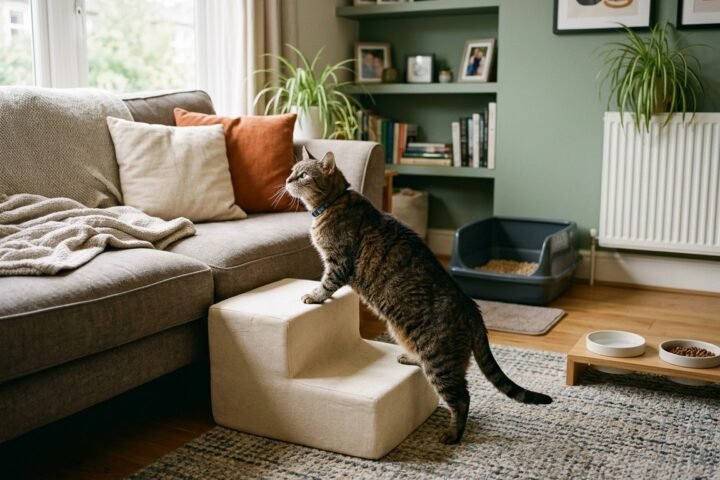
Cornell recommends easy access to litter boxes for older cats and notes that avoiding stairs can matter. If your cat spends time on two floors, forcing every toilet trip to involve stairs adds unnecessary effort.
Shorten the route from resting areas
Older cats often sleep more and may move less efficiently after waking. A litter box reasonably close to favorite resting areas can be more useful than one placed across the house for human convenience.
Use nonslip flooring around the box
Slippery tile can make entering or exiting difficult for a cat with arthritis or weakness. A stable nonslip mat outside the box can improve footing, but avoid loose rugs that bunch under the paws.
Do not make the cat climb into covered furniture
A hidden litter cabinet may require a step, turn or narrow passage that an older cat finds difficult. If elimination problems begin, simplify the route before buying more complicated litter furniture.
Keep litter depth comfortable
Very deep, unstable litter can be harder for a weak cat to stand on. Most cats prefer an unscented, fine-textured substrate, but individual preference matters. Keep enough litter for normal digging without making the surface excessively loose.
Scoop frequently
Senior cats with kidney disease, diabetes or other conditions may urinate more often, so boxes can become dirty more quickly. Cornell notes that increased urine production can contribute to litter-box avoidance when the box becomes soiled faster than expected.
Our cat litter cleaning and replacement guide explains daily scooping versus full litter changes.
Add another box before assuming the cat is confused
More frequent urination, slower walking or difficulty reaching a distant box can make the old setup inadequate. Adding a nearby low-entry box is often more informative and kinder than repeatedly carrying the cat to one inconvenient tray.
Watch how the cat enters and leaves
Useful clues include:
- hesitating before stepping over the side;
- placing the front feet in but leaving the back feet outside;
- eliminating immediately beside the box;
- crying or moving stiffly while posturing;
- avoiding stairs that lead to the litter area;
- taking much longer to dig or turn.
Arthritis may be subtle
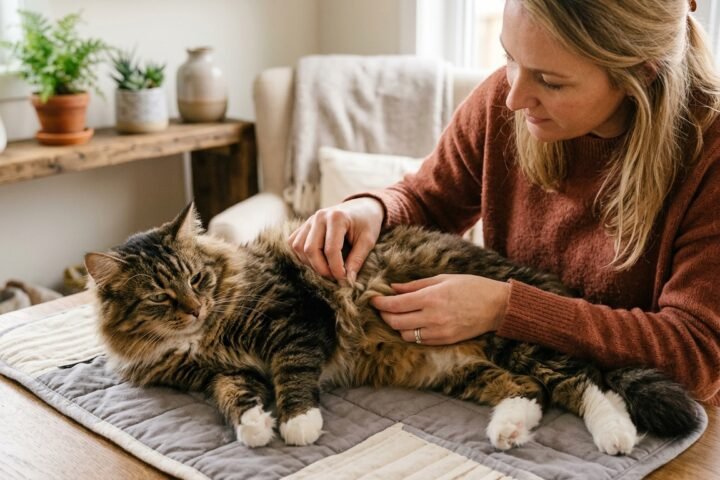
Cats often do not show obvious lameness. Reduced jumping, reluctance to use stairs, sleeping in lower locations and difficulty grooming the back can all accompany joint pain. Our cat arthritis guide covers the less dramatic signs owners may notice first.
Do not assume accidents are “just old age”
The Cornell Feline Health Center stresses that behavior and physical changes in older cats should not automatically be dismissed as aging. Urinary disease, constipation, diabetes, kidney disease, hyperthyroidism, pain and cognitive dysfunction can all affect elimination.
Urgent urinary signs still apply to senior cats
Repeated straining with little or no urine, crying, collapse, vomiting or severe distress requires prompt veterinary attention. A low-entry box is a comfort modification, not treatment for urinary obstruction or another medical problem.
Keep the rest of the home senior-friendly too
Litter access is one part of mobility support. Our senior cat care guide covers steps, resting areas, food and water access, grooming and health monitoring.
Choose the entry height by watching the cat
A senior cat should be able to step into the box without lifting the hind legs unusually high or pausing before entry. If the front half enters while the back feet remain outside, the doorway may still be too tall.
High sides can still be useful away from the doorway
Low entry does not require a completely shallow tray. A box with one cut-down entrance and higher walls elsewhere can reduce litter scatter while keeping access comfortable.
Large boxes help stiff cats turn
Arthritis can make tight turns uncomfortable. A generous box gives the cat room to position the body gradually rather than twisting sharply in a small commercial tray.
Use stable footing inside and outside the box
The tray should not slide when the cat steps in. Place a nonslip mat outside if flooring is slick, but keep the mat flat so paws cannot catch on curled edges.
Do not hide the box behind obstacles
Laundry baskets, furniture or narrow doorways can make access harder than the box itself. A senior cat needs a clear path wide enough to approach and leave comfortably.
Keep one box close to the main sleeping area
Older cats often rest for long periods and may wake stiff. A nearby box can reduce the distance they need to travel before muscles loosen up.
Multi-level homes need redundancy
Even if the cat can still use stairs, requiring every toilet trip to involve them adds unnecessary effort. A box on each frequently used floor is a practical adaptation.
Covered boxes may become harder with age
A covered box can require a tighter turn and provide only one exit. Some senior cats continue using them comfortably; others prefer an open tray with more visibility and space.
Watch whether the cat balances on the rim
Perching on the edge, eliminating with the rear outside or stepping in only partially can signal discomfort with size, entry height, litter depth or cleanliness.
Do not change litter and box style at the same time
If you are introducing a low-entry tray, keep the familiar litter at first. Changing several variables together makes it harder to know what the cat accepts.
Keep litter depth predictable
Deep loose litter may feel unstable under arthritic paws. Use enough for normal digging without creating a surface that shifts dramatically under the cat’s weight.
Clean more often when urine volume increases
Kidney disease, diabetes and other senior conditions can increase urination. A box that used to stay clean all day may now need more frequent scooping.
Accidents beside the box are useful information
When stool or urine appears immediately next to the tray, the cat may be trying to use the correct area but struggling with entry, posture or substrate. That pattern deserves a setup review and a health check.
Carrying the cat to the box is not a long-term solution
Repeatedly placing the cat in the tray does not fix a difficult route or painful entry. Adapt the environment so the cat can toilet independently.
Night lighting can make routes easier
A low night-light near stairs or the litter area may help cats with reduced vision or cognitive changes navigate more confidently.
Keep other pets from blocking access
A younger cat or dog can make a senior cat hesitate at a doorway. Use gates or room arrangement so the litter route remains calm and predictable.
Monitor stool and urine changes, not just location
Hard dry stool, diarrhea, increased urine volume, blood, repeated straining or very frequent trips can point toward medical disease rather than a purely environmental problem.
When veterinary care should come first
Sudden house soiling, pain, reduced appetite, weight loss, excessive thirst or straining deserves assessment. Environmental changes can improve comfort, but they do not diagnose urinary, gastrointestinal or metabolic disease.
A practical senior-box checklist
- low doorway;
- large turning space;
- stable nonslip approach;
- quiet accessible location;
- one box on each frequently used floor;
- familiar unscented litter;
- frequent scooping;
- clear escape route;
- medical review for new elimination changes.
Bottom line
A senior-friendly litter setup uses a large, low-entry box in an easy-to-reach location with stable footing. Add boxes where the cat actually spends time, clean them frequently, and involve a veterinarian when elimination behavior changes rather than treating accidents as stubbornness or inevitable aging.
0 comments