
Safest Toys for Kittens: What to Choose and What to Avoid
The safest toys for kittens are simple enough to inspect and sturdy enough to survive the way kittens actually play. Young cats bite, grab, kick, chase and climb over almost anything that moves. That curiosity is healthy, but it also means a loose thread or tiny plastic part can become more important than the toy itself.
Choose toys that are too large to swallow
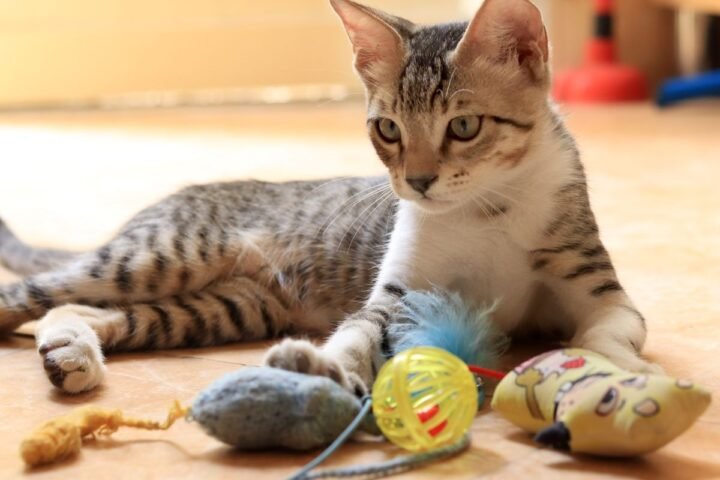
Small balls, toy mice and soft toys should be large enough that your kitten cannot fit the whole item into their mouth. Check for detachable eyes, bells, feathers, elastic loops and glued decorations. Cats Protection specifically advises choosing robust kitten toys without small parts, loose threads or pieces that could be swallowed in its new-kitten safety guidance.
Fishing-rod toys are excellent when you are holding them
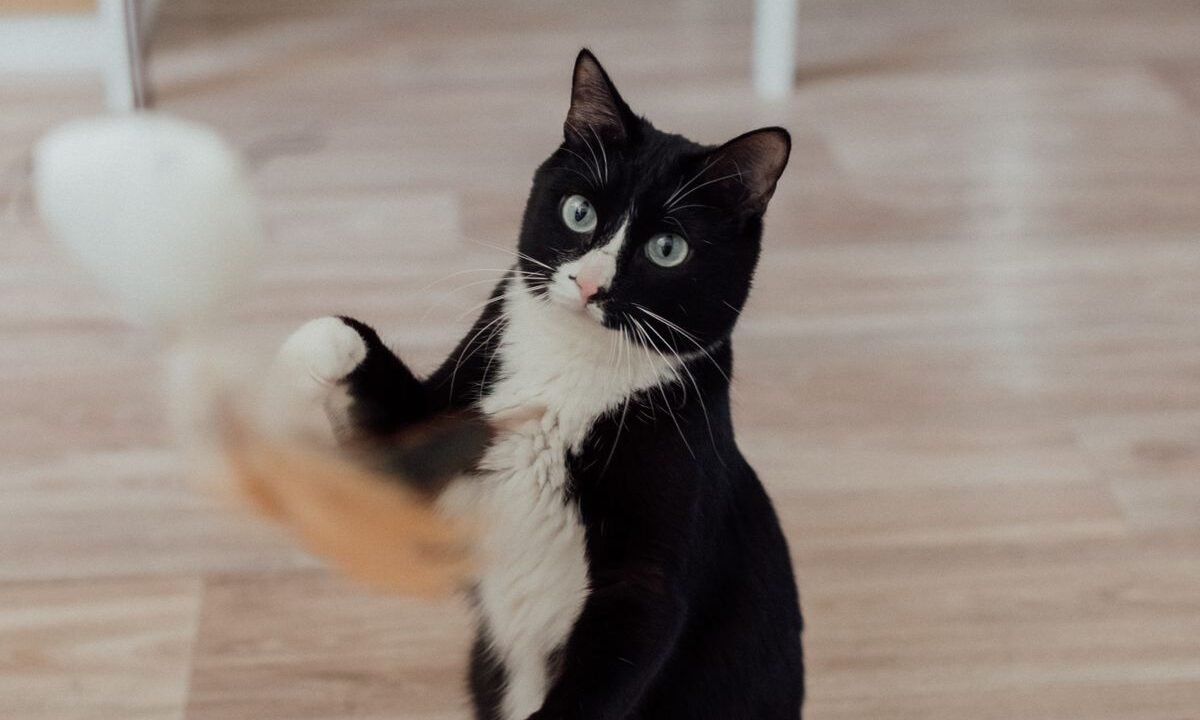
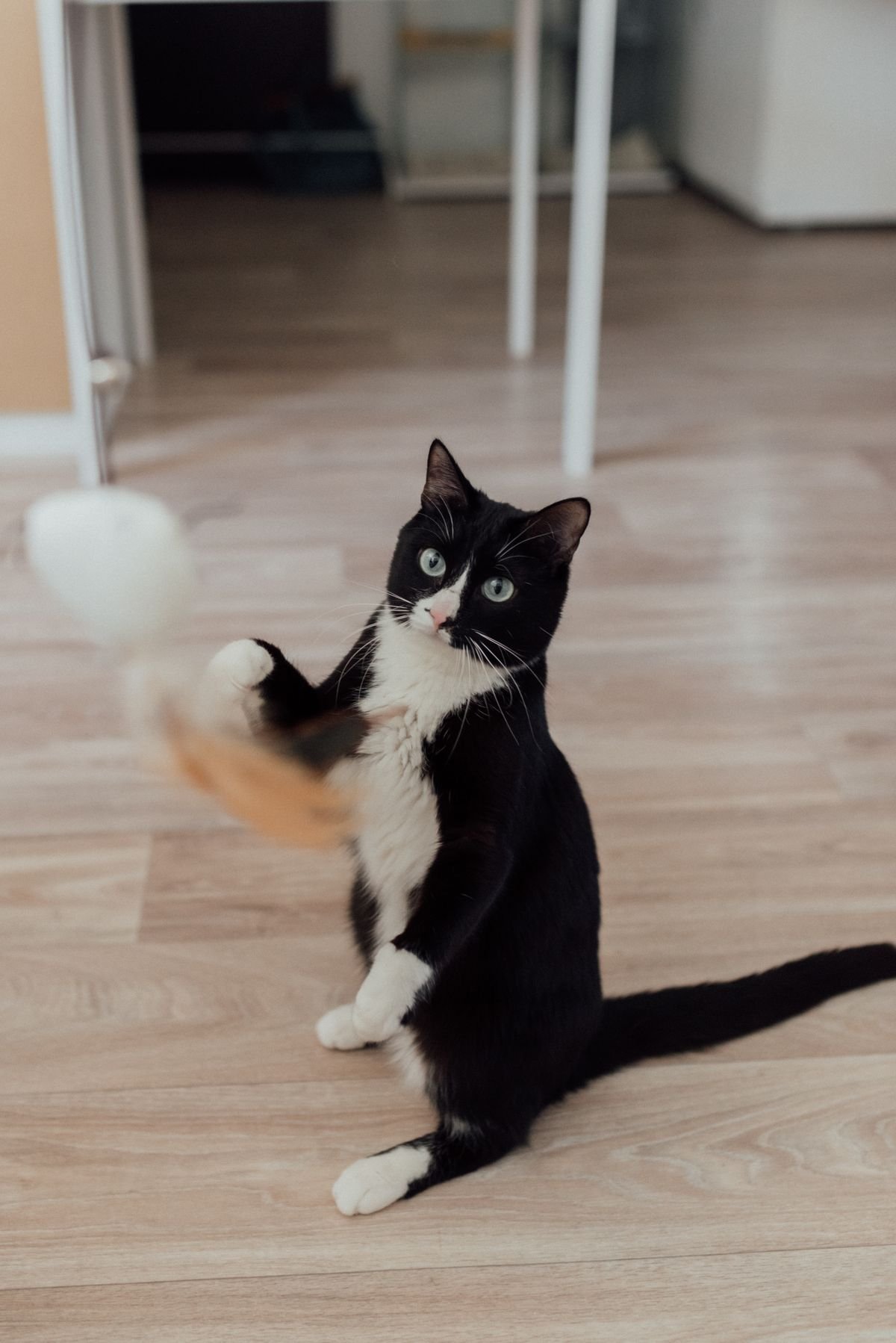
A wand keeps claws and teeth away from your hands and lets the kitten stalk and chase. It should, however, be put away after play. String, ribbon and elastic can become entanglement or swallowing hazards when nobody is watching.
Soft kicker toys suit rough play
Some kittens want to hug a toy with the front legs and kick hard with the back feet. A soft, elongated toy can give them somewhere appropriate to do that. Inspect the seams regularly because a kitten that finds a small opening can turn it into a large one quickly.
Balls should be sturdy, not brittle
A lightweight ball that rolls easily can keep a kitten moving without requiring complicated equipment. Avoid brittle plastic that cracks into sharp pieces. If a ball has a bell inside, make sure the casing cannot be pulled apart.
Paper toys can be fine when they stay simple
A loosely crumpled paper ball can be surprisingly effective. Remove staples, tape, string, plastic film and anything coated in a substance you would not want your kitten chewing. Replace homemade toys when they become soggy or torn apart.
Do not use fingers and toes as prey
A tiny kitten biting a finger may not hurt much, but the same habit is less charming in an adult cat. Blue Cross recommends using toys rather than hands and allowing kittens to chase and catch an object during play. Their kitten play advice also favors several short sessions rather than forcing a kitten to continue when they have had enough.
Be careful with yarn, thread and hair ties
These objects move in exactly the way many kittens love, but they are poor unsupervised toys. Long, thin materials can be swallowed and cause intestinal injury. Store sewing supplies, hair bands and ribbon where a kitten cannot raid them.
Laser pointers are not necessary
A moving light can trigger chasing, but the kitten can never physically catch it. If you use light-based play at all, finish with a real toy or food reward the kitten can capture. In most homes, a wand, ball or toy mouse provides a simpler play sequence.
Check every toy after a hard play session
Look for split seams, exposed wire, loose feathers, cracked plastic, detached bells and stretched elastic. The safest toy can become unsafe after enough chewing. A quick inspection takes less time than trying to find a missing piece later.
Match the toy to the kitten in front of you
One kitten may carry soft mice around the house while another only wants to chase objects under furniture. Keep several safe types and notice which behavior each one brings out. Our broader cat-toy safety guide explains how hunting, chasing and independent play differ.
Supervision matters most with complicated toys
A sturdy ball on an open floor is different from a feather toy tied to elastic or a motorized toy with moving parts. The more a toy can wrap, pinch, break or expose a mechanism, the more closely you should supervise it.
Safe play should still feel like real play
Do not make kitten play so controlled that it becomes boring. Let them stalk, miss, chase, catch and carry safe objects. Good toys protect the kitten without removing the movement and unpredictability that make play worthwhile.
0 comments