
The Starling in Shakespeare: Hotspur’s ‘Mortimer’ Bird in Henry IV

The common starling has one of the most memorable bird references in Shakespeare because the joke depends on something the bird can actually do: imitate sounds. In Henry IV, Part 1, Hotspur imagines teaching a starling to repeat the name “Mortimer” so relentlessly that King Henry cannot escape the reminder.
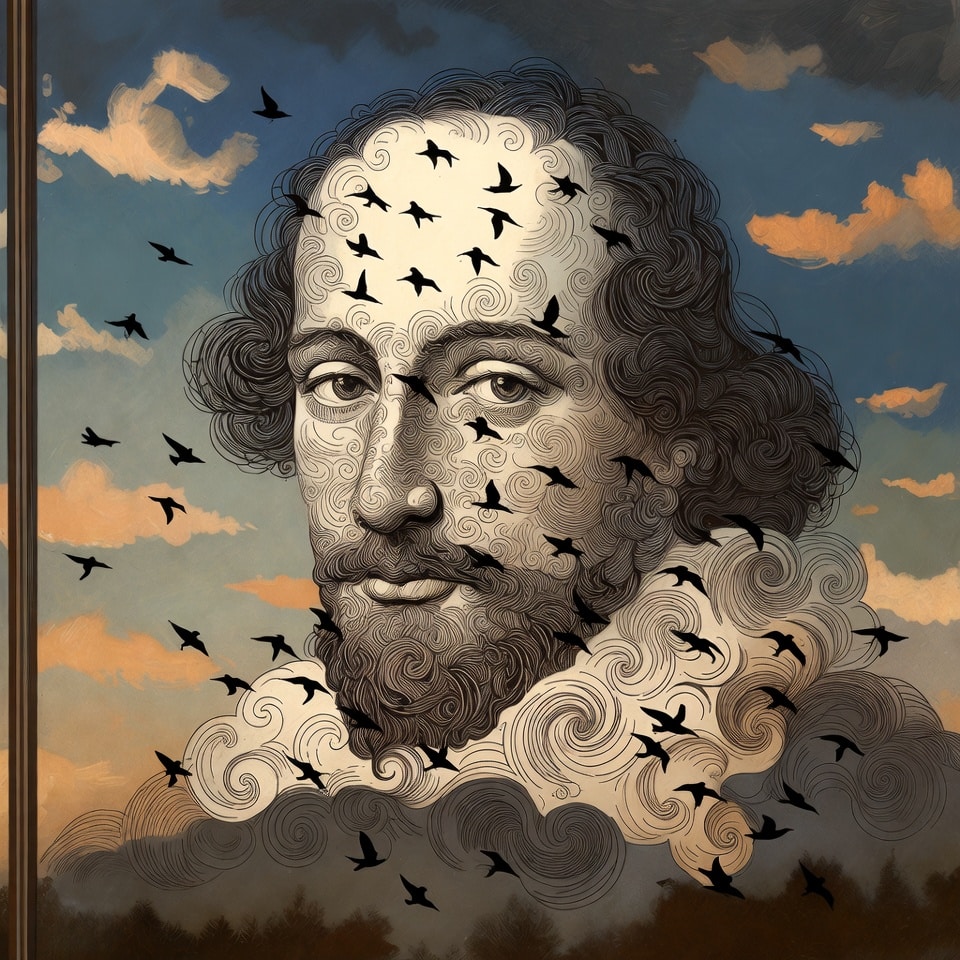
The Folger Shakespeare Library’s discussion of the common starling identifies this as the bird’s sole explicit appearance in Shakespeare’s collected works and explains why its mimicry makes Hotspur’s threat work.
Where the starling appears
The passage occurs in Henry IV, Part 1, Act 1, Scene 3. Hotspur is furious that King Henry refuses to ransom Mortimer and has forbidden him to keep pressing the subject.
Hotspur responds not by letting the grievance go but by imagining a new way to keep the forbidden name constantly present.
Why choose a starling?
Starlings are skilled vocal mimics. They can copy other birds, environmental sounds and, in captivity, elements of human speech.
That makes the plan comic because Hotspur wants to outsource his defiance to a bird that can repeat the same word mechanically.
The joke is also a character study
The starling is not merely a clever animal reference. Hotspur’s plan reveals how completely the dispute has occupied him.
He cannot stop thinking about Mortimer, so he imagines creating a creature whose only purpose is to keep the grievance alive.
Repetition matters
The humor depends on repetition. A single mention of Mortimer would not be enough. Hotspur wants the king subjected to the name over and over again.
The bird becomes a tool for irritation precisely because mimicry can turn speech into relentless repetition.
Hotspur’s anger becomes theatrical
Hotspur frequently turns emotion into vivid performance. He does not simply say that he is angry. He imagines elaborate actions, confrontations and gestures.
The trained starling belongs to that same theatrical imagination.
Why the bird is more than comic relief
The scene is funny, but it also shows a political problem. Hotspur is unable to let a challenge to honor or loyalty pass quietly.
The joke therefore supports a larger portrait of a man whose intensity can become inflexibility.
Mimicry and meaning
A starling can reproduce sound without understanding the political meaning of the word. That difference between repetition and understanding makes the idea especially sharp.
Hotspur wants the king harassed by a sound that carries enormous political meaning for humans even though the bird itself would know nothing of the dispute.
The starling as an extension of Hotspur
In effect, the bird becomes another voice for Hotspur after Hotspur has been told to stop speaking.
That makes the image a small act of imagined resistance: if his own tongue is restrained, he will train another tongue to continue the provocation.
The later American starling story
Modern discussions often connect Shakespeare’s starling with the introduction of European starlings to North America. That later history is interesting, but it should not be folded into the meaning of the original play.
Shakespeare was using a familiar mimicking bird to characterize Hotspur. North American invasion history came centuries later.
Did Shakespeare cause starlings to be introduced to America?
No. Shakespeare died long before the nineteenth-century introductions often associated with the species’ North American history.
The connection is cultural: people later invoked Shakespeare while discussing the introduction. That is different from saying the play caused the ecological event.
Why separating literary and ecological history matters
If you are writing about Henry IV, Part 1, stay with Hotspur, Mortimer, repetition and defiance. If you are writing about invasive species, use environmental-history and wildlife sources.
Our invasive species and exotic pets guide explains how modern introductions and releases can affect ecosystems, which is a separate topic from Shakespeare’s scene.
The natural-history fact behind the metaphor
The reference succeeds because early audiences could plausibly recognize the starling as a bird capable of learning repeated sounds.
Shakespeare often uses animal behavior that is concrete enough to make a figurative point immediately understandable.
What not to overclaim
Do not turn this one passage into a broad statement that starlings symbolize anger throughout Shakespeare. The evidence is narrower.
Here, the starling’s specific value is mimicry.
How to discuss the scene in an essay
A strong paragraph can:
- Place the image in Act 1, Scene 3.
- Explain why Hotspur is angry about Mortimer.
- Identify the starling’s ability to mimic sound.
- Show how the imagined repetition reveals Hotspur’s obsession and defiance.
That keeps the interpretation grounded in both the text and the bird’s relevant behavior.
Does the bird understand “Mortimer”?
No literary point requires the bird to understand the name. In fact, the opposite makes the joke better: the word becomes pure repeated sound, while King Henry supplies all the political meaning.
Why this tiny reference lasts
The scene compresses personality, politics and natural history into a few lines. A mimicking bird becomes the perfect device for a man who refuses to stop repeating a grievance.
Hotspur’s language and comic excess
Hotspur’s imagined revenge is funny because it is disproportionate. He does not merely want to make one argument again; he imagines engineering a permanent acoustic nuisance.
That excess is consistent with the speed and intensity of his speech elsewhere in the play. The bird becomes part of Shakespeare’s characterization through verbal energy.
A useful comparison with other Shakespeare birds
Different birds do different literary work. The osprey in our Coriolanus osprey guide represents predatory advantage, while the turtle dove in our turtle-dove guide draws on traditions of fidelity and mourning.
The starling is distinctive because its literary usefulness comes from a behavior—mimicry—that can be turned into a human political joke.
Why the scene is useful for close reading
The reference is small enough to analyze precisely. A student can connect one biological trait, one political grievance and one aspect of Hotspur’s personality without having to invent a broad symbolic system.
That makes the passage a good example of how Shakespeare often uses a concrete animal behavior to make characterization immediate.
The starling turns censorship into noise
King Henry has tried to control the political conversation by forbidding Hotspur to press Mortimer’s name. Hotspur’s imagined bird mocks that attempt: the forbidden name would return as repetitive sound, outside the normal rules of debate.
That is why the moment is more than an animal joke. It turns a dispute over speech and authority into a memorable comic image.
The bird makes anger portable
Hotspur imagines a grievance that no longer depends on his own physical presence. Once trained, the bird could carry the forbidden word into the king’s space again and again. That fantasy makes his resentment seem both inventive and uncontrollable.
That tight relationship between a bird’s real behavior and Hotspur’s imagined prank is what makes the reference unusually easy to defend with textual evidence.
Bottom line
Shakespeare’s starling in Henry IV, Part 1 is memorable because Hotspur wants to train it to repeat “Mortimer” endlessly. The bird’s real capacity for mimicry makes the joke work, while the imagined prank exposes Hotspur’s obsession, defiance and inability to let the political insult rest. The later North American starling story is separate cultural history and should not be confused with the meaning of the scene itself.

0 comments