
Black and White Wading Birds: How to Identify Common Species
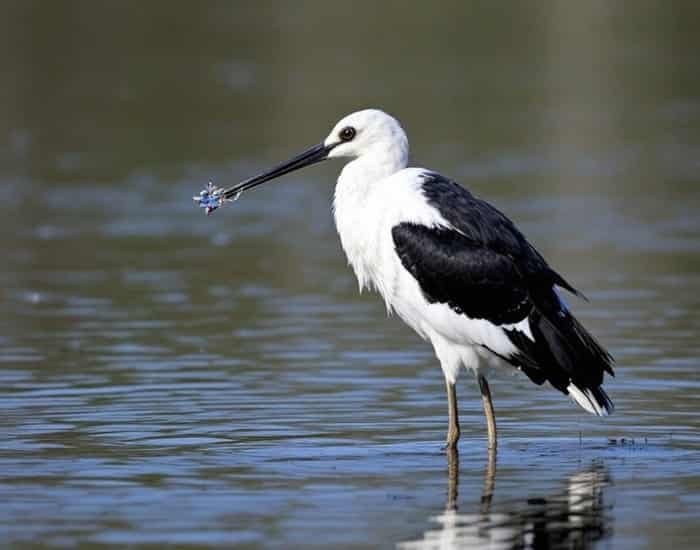
“Black and white wading bird” is not one species. It is a useful starting description for several long-legged birds that feed in shallow wetlands, mudflats, salt ponds and marshes. The fastest way to narrow an identification is to look at bill shape, leg color, body proportions, habitat and feeding style.

Two classic black-and-white waders
Avocets
Avocets are elegant shorebirds with long legs and a distinctive upturned bill. In North America, the American Avocet has a mostly black-and-white body outside the breeding season; breeding adults develop a rusty head and neck. They often feed by sweeping the bill side to side through shallow water for small aquatic animals.
Black-necked Stilts
Black-necked Stilts are slimmer, with an extremely long-legged appearance, a straight thin black bill, black upperparts, white underparts and conspicuous pink legs. They usually pick small aquatic invertebrates from shallow water and mud.
What to check when identifying a wader
- Bill: straight, curved upward, or curved downward?
- Legs: pink, gray, black or another color?
- Neck and body: compact or very slender?
- Feeding: pecking, probing or sweeping the bill?
- Habitat: freshwater marsh, tidal mudflat, beach, salt pond or flooded field?
- Season and location: plumage and likely species change by region and time of year.
Why photographs can be misleading
Lighting can make gray plumage look black, while distance can hide leg color and bill shape. Juveniles may also look different from adults. If possible, note several features instead of relying on one color pattern.
Use location to narrow the list
A bird seen in Britain will have a different shortlist from one seen in Florida or Australia. Record the country, habitat and date, then compare your observation with a regional field guide or trusted bird-identification database.
Related bird guides
If unusual bird adaptations interest you, see our guide to the kākāpō of New Zealand.
Sources and further reading
Bird identification is strongest when color, structure, behavior, location and season are considered together.
0 comments