
Cat Nutrition Guide: Complete Diets, Protein, Water, Treats and Life Stage

Good cat nutrition starts with one basic question: Is this food complete and balanced for the cat’s life stage? Marketing terms such as “premium,” “natural” or “high meat” are secondary to nutritional adequacy and the individual cat’s health.

Use the adequacy statement
The AAFCO consumer guide explains how life-stage and complete-and-balanced statements help owners distinguish a full diet from treats, toppers and supplements.
Cats have specific nutrient requirements
Cats require nutrients such as taurine, preformed vitamin A and arachidonic acid in appropriate amounts. A diet designed for dogs is not nutritionally interchangeable with cat food.
Wet vs dry
Either format can be appropriate when complete and balanced. Wet food contributes more dietary moisture; dry food can be convenient and energy-dense. Mixed feeding requires counting calories from both.
Protein quality is more important than a marketing number
A high crude-protein percentage alone does not tell you whether the overall diet is balanced or well formulated.
Life stage matters
Kittens need growth nutrition. Healthy adults generally need maintenance. Senior cats should be fed according to body condition, muscle condition and diagnosed disease rather than age marketing alone.
Treats should stay secondary
Too many treats can dilute complete nutrition and add excess calories. Use small portions and account for them in the daily intake.
Medical diets are different
Kidney, urinary, gastrointestinal or other disease may justify a therapeutic diet. Choose these with veterinary guidance.
The WSAVA nutrition resources recommend evaluating the manufacturer’s expertise and quality controls rather than ranking food from the ingredient list alone.
The adequacy statement matters more than front-of-pack claims
AAFCO describes the nutritional-adequacy statement as the key part of a pet-food label for identifying whether a product is complete and balanced and which life stage it is intended to support. Terms such as “premium,” “holistic,” “natural” or “high meat” do not answer that question by themselves.
A product intended only for intermittent or supplemental feeding should not quietly become the entire diet unless a veterinary professional has designed the overall feeding plan.
Life stage changes nutrient needs
Kittens, healthy adults and reproducing cats do not have identical nutrient requirements. Growth diets must support development, while an adult-maintenance diet is formulated for a different physiological stage. “All life stages” food is designed to meet growth/reproduction requirements, which can also make it more calorie-dense than some adult cats need.
Age labels such as “senior” can be useful for product positioning, but the more important questions in an older cat are body condition, muscle condition, dental health, kidney function, activity and diagnosed disease.
Cats cannot simply eat a dog diet
Cats have species-specific nutritional requirements. AAFCO specifically notes nutrients such as taurine and preformed vitamin A that illustrate why dog food is not nutritionally interchangeable with cat food. Occasional accidental bites are different from using dog food as the cat’s regular diet.
How to think about protein
Cats require dietary protein, but the crude-protein percentage on a label is not a stand-alone quality score. It does not tell you the amino-acid profile, digestibility, calorie density, formulation expertise or whether the finished diet is appropriate for the individual cat.
Comparing two foods only by “which has more protein” can therefore be misleading. The complete formulation and the cat’s health status matter more.
Wet versus dry food
Both wet and dry foods can provide complete nutrition when properly formulated. Wet food contributes more water with each meal; dry food is usually more energy-dense and can be convenient for measured feeding or food puzzles.
Mixed feeding can work well, but the calories from both formats need to be counted. Serving a full dry ration plus an unmeasured amount of wet food can gradually increase total energy intake.
Water intake deserves attention
Cats vary in how much they drink voluntarily. Fresh water should remain available, and many households find that multiple water locations, wide bowls or fountains encourage use. Wet food can increase total dietary water intake, but a sudden increase or decrease in drinking can also be a medical clue.
Calories are part of nutrition, not a separate issue
AAFCO requires calorie information on U.S. pet-food labels in kilocalories per kilogram and per familiar household unit such as a cup or can. That information is more useful for portion comparisons than package size alone.
Feeding directions are starting points. Adjust intake from the cat’s weight trend and body condition. If a cat is gaining or losing weight unexpectedly, investigate the cause rather than simply making large unsupervised changes.
Treats can distort an otherwise balanced diet
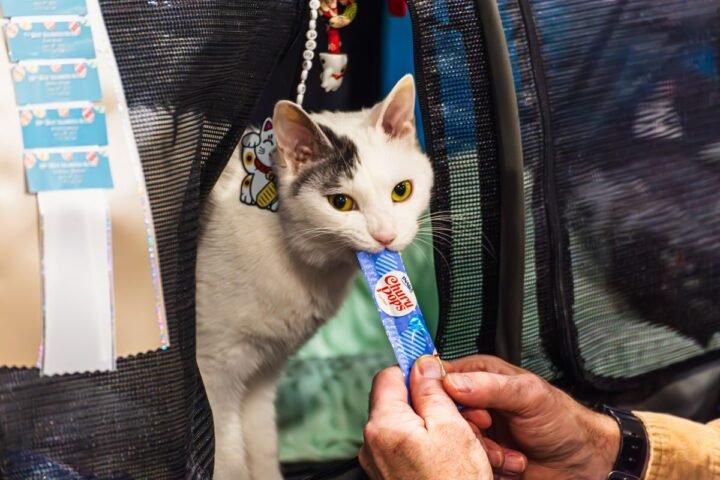
Treats, table food, lickable snacks and toppers all contribute calories. They can also displace complete nutrition if they become a large part of the daily intake.
For most healthy cats, keep extras modest and use part of the measured daily food for training or enrichment where practical.
Supplements are not automatically helpful
AAFCO notes that healthy cats already eating an appropriate complete-and-balanced diet generally do not need routine vitamin or mineral supplementation. Adding supplements without a reason can push some nutrients above safe levels or alter the balance of the diet.
Use supplements when there is a defined nutritional or medical purpose and the dose has been selected appropriately.
Ingredient lists have limits
WSAVA cautions that ingredient lists can be misleading when used as the main measure of food quality. They show ingredients in order by weight before processing, but they do not reveal quality-control systems, nutrient consistency or the expertise behind the formulation.
A familiar-looking ingredient list is not proof that the final diet is more complete or better suited to the cat.
Questions worth asking a manufacturer
WSAVA’s pet-food selection guidance recommends looking beyond advertising and asking who formulates the diet, what nutrition qualifications are available, what quality-control procedures are used, whether the company conducts or supports nutrition research, and whether detailed nutrient information can be provided when needed.
A company that cannot answer reasonable product questions should not receive extra trust simply because the packaging looks scientific.
Raw and homemade diets require extra caution
Raw animal products can carry pathogens that affect cats and people. Home-prepared diets can also be nutritionally incomplete when recipes are improvised from meat, rice, vegetables or supplements without professional formulation.
If you want to feed a home-prepared diet long term, use a formulation created for the individual cat by a veterinarian with advanced nutrition expertise or a board-certified veterinary nutrition specialist.
Medical diets should be chosen for the diagnosis
Kidney disease, urinary disease, gastrointestinal disorders, obesity, diabetes and food reactions can all change the ideal nutrient profile. A therapeutic diet should be selected from the medical problem and treatment plan rather than from a generic “healthy cat food” ranking.
If a veterinarian has prescribed a diet for a specific nutrient target, do not replace it with an ordinary retail food because the front label uses similar words.
A simple cat-food comparison checklist
- Confirm the food is for cats and matches the intended life stage.
- Read the nutritional-adequacy statement.
- Check calories per can, cup or gram.
- Review manufacturer expertise and quality control.
- Consider wet, dry or mixed format based on the cat and household.
- Measure portions and monitor body condition.
- Keep treats and supplements secondary unless medically indicated.
- Use veterinary guidance when disease changes nutrient needs.
Sources and related PetsFilled guides
- AAFCO: Selecting the Right Pet Food
- AAFCO: Reading Pet Food Labels
- WSAVA: Global Nutrition Guidelines and Toolkit
How to judge whether a diet is working for your cat
A label can tell you whether a food is intended to be complete and balanced, but the cat’s response still matters. Monitor body weight, body condition, muscle condition, stool quality, coat condition, appetite, energy and hydration. A food that appears nutritionally appropriate on paper may still need adjustment if the cat gains excessive weight, loses muscle or develops persistent digestive signs.
Protein quality matters more than marketing language
Cats are obligate carnivores and require nutrients that are naturally abundant in animal tissues, but an ingredient list alone cannot tell you whether a finished diet is nutritionally adequate. WSAVA specifically cautions against judging pet food quality from ingredient-list impressions alone. Nutrient formulation, manufacturer expertise, feeding trials or formulation standards and quality control are more informative than whether a package sounds “premium.”
Water intake is part of nutrition
Wet food contributes substantially more moisture than dry food, but either format can be appropriate depending on the individual cat. The better question is whether total water intake, urine output and health status fit the cat’s needs. Cats with urinary or kidney disease may have specific moisture goals that should come from the veterinary plan.
Use treats deliberately
Treats are useful for training and bonding, but they can quietly add calories and unbalance the overall diet if they become a large part of daily intake. Keep treats modest, count them as part of the daily energy budget, and avoid using multiple supplements as a substitute for a complete diet.
Life stage changes the nutrition question
Kittens need growth nutrition, adult cats need maintenance appropriate to their activity and body condition, and older cats may need changes based on health rather than age alone. Do not switch to a “senior” product automatically if the cat has a medical condition requiring a more specific nutrient profile.
Weight change should trigger reassessment
Unplanned weight loss, especially with normal or increased appetite, can be a sign of disease rather than a feeding problem. Unplanned weight gain usually means calorie intake exceeds need, but reduced activity, neuter status and medical conditions can contribute. Reassess the cat, not just the portion size.
Questions worth asking a manufacturer
- Who formulates the diet and what are their qualifications?
- How does the company verify nutrient content?
- Where is the food manufactured?
- What quality-control and recall procedures are used?
- Can the company provide calorie information and a typical nutrient analysis?
For brand evaluation, see our cat food safety and quality guide. New owners can use our first-week cat guide for the immediate settling-in period, while the Cat Care for Beginners guide provides the broader long-term framework for routine care, environment, health and behavior.


0 comments