
Dog Separation Anxiety: Signs, Management and Gradual Alone-Time Training
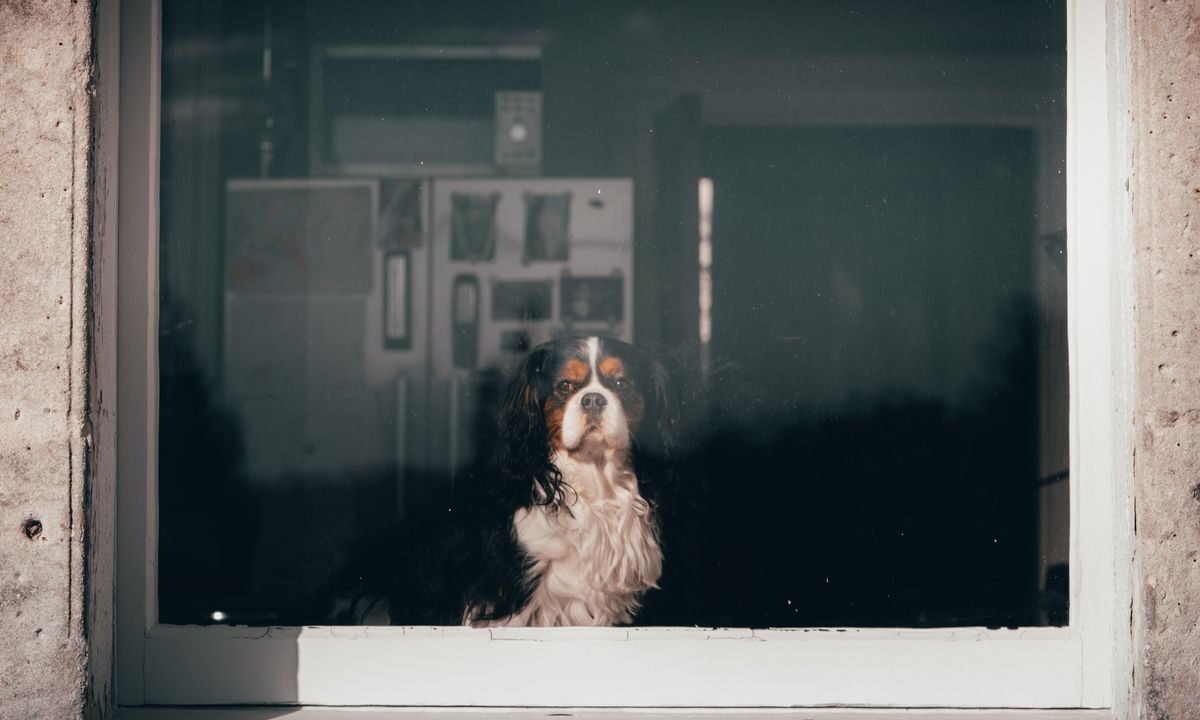
Separation anxiety is not stubbornness and it is not solved by letting a dog “cry it out.” A dog that panics when left alone may vocalize, pace, drool, destroy exit points or toilet indoors because the absence itself has become frightening.

Signs often cluster around departures
Possible signs include pacing, panting, drooling, vocalizing, destructive escape attempts, house soiling, inability to settle and refusing food when alone. Some dogs begin showing distress when they notice departure cues such as shoes, keys or a work bag.
Use video instead of guessing
A simple camera recording can reveal when distress begins, whether the dog ever settles and whether outside sounds or confinement appear to be triggers. Video also gives a veterinarian or qualified behavior professional better information than a description based only on the damage found after returning home.
Punishment does not treat panic
Scolding after you return cannot teach a dog to feel safe during the absence and can add more anxiety around reunions. Focus on management, predictable routines and reinforcement-based training instead.
Keep practice below the panic threshold
Gradual alone-time work begins with absences short enough that the dog remains comfortable. Duration is increased in small steps rather than forcing the dog to ‘get used to it’ through prolonged distress. Progress is rarely perfectly linear.
Management prevents repeated rehearsals of severe distress
During treatment, arrange the environment so the dog experiences as few full panic episodes as practical. Depending on the individual dog, that may involve help from family, a sitter or another safe care arrangement while training progresses.
Some dogs need veterinary treatment as well as training
Moderate or severe separation anxiety can require a veterinarian-led plan and, in some cases, medication. Medication decisions are individualized and should not be copied from another dog or from online dosage advice.
What to record before the veterinary visit
Record what happens before departure, how soon signs begin, whether the dog eats, vocalizes or tries to escape, the longest comfortable absence and any recent schedule or household changes. Bring video when possible.
Bottom line
Separation distress is a welfare problem, not stubbornness. Confirm the pattern, prevent repeated panic where possible, use gradual reward-based training and involve a veterinarian or qualified behavior professional when distress is significant.
Veterinary reference: Merck Veterinary Manual — Behavior Problems of Dogs.
For broader preventive care, see our everyday dog care guide and our force-free crate-training guide.
First confirm that the problem truly occurs during absence
Video can distinguish separation distress from barking at passersby, confinement frustration, noise fear or destruction that happens hours later from boredom. Record several ordinary departures if possible. The timing and sequence of behavior often guide the treatment plan.
Pre-departure cues can become part of the fear chain
Keys, shoes, a laptop bag or closing blinds can predict a long absence. In some treatment plans these cues are practiced at times when the owner does not leave, reducing their predictive power. This should be done gently and only while the dog remains comfortable.
Crates help some dogs and worsen distress in others
A dog with positive crate training may relax in a familiar enclosure. A dog that panics when confined can injure teeth, nails or paws while trying to escape. Do not assume crating is automatically the safest choice for separation-related behavior; evaluate what the video shows.
Medication can support learning when distress is severe
Veterinary medication is not a substitute for behavior modification, but reducing panic can make gradual training possible for some dogs. The decision depends on severity, medical history and response to management. Never use another pet’s prescription or change doses without the prescribing veterinarian.
Think in minutes, not endurance
Training works best below the point where panic starts. If your dog can stay relaxed for two minutes, practise around that level instead of jumping to thirty. A camera can help you see the first subtle stress signs. Severe cases often benefit from a veterinarian or qualified behavior professional rather than repeated trial and error.
0 comments