
Dog Eye Problems: Redness, Discharge, Squinting and Emergency Signs
A watery eye can look minor, but eye problems deserve more caution than many owners realize. Corneal scratches, ulcers, foreign material, infection, dry eye, glaucoma, trauma, and eyelid problems can all begin with redness, discharge, blinking, or squinting.
The reason to act early is simple: some eye conditions become more painful and harder to treat if veterinary care is delayed.
Common eye signs to watch for
- Redness
- Squinting or holding an eye closed
- Watery discharge
- Yellow, green, or bloody discharge
- Cloudiness or a blue-grey appearance
- Swollen eyelids
- Rubbing the face or eye
- Sensitivity to light
- A suddenly enlarged, bulging, or sunken-looking eye
- Visible injury or foreign material
The appearance alone does not identify the cause. A red eye can be irritation, but it can also be a sign of a painful corneal or pressure problem.
Squinting usually means discomfort
Dogs often squint, blink repeatedly, or hold an eye closed when it hurts. VCA Urgent Care recommends veterinary assessment for signs such as squinting, marked redness, cloudy eyes, unusual drainage, swelling, or visible injury.
If your dog suddenly begins squinting one eye, do not assume it will resolve after sleep.
What eye discharge can mean
Clear tearing may occur with irritation, wind, hair touching the eye, tear drainage problems, or early eye disease. Thick yellow or green discharge may be associated with infection or inflammation. Stringy mucus can occur with dry eye.
Color is only one clue. Pain, redness, cloudiness, swelling, and sudden change matter just as much.
Corneal scratches and ulcers
The cornea is the clear outer surface of the eye. Scratches can occur from rough play, branches, cat claws, foreign material, or self-trauma. A corneal ulcer can be intensely painful and may worsen quickly.
Signs often include squinting, tearing, redness, pawing at the eye, and light sensitivity. Veterinary staining tests can help identify an ulcer that may not be visible to an owner.
Glaucoma is an emergency
Glaucoma involves dangerously increased pressure inside the eye. It can cause severe pain and vision loss. Owners may notice redness, cloudiness, a dilated pupil, a larger-looking eye, or sudden visual difficulty.
Sudden severe eye pain or a visibly enlarged or cloudy eye deserves urgent veterinary care.
When eye problems need urgent care
Seek prompt veterinary help if:
- Your dog is squinting or will not open the eye
- The eye becomes suddenly cloudy
- There is marked redness or swelling
- You see a cut, puncture, bite, or other trauma
- The eyeball is bulging or displaced
- There is blood in or around the eye
- Your dog suddenly appears unable to see
- Chemical exposure is possible
- Pain is severe or worsening
What not to put in your dog’s eye
Do not use leftover prescription eye drops from another pet or a previous illness. Some medications that are appropriate for one eye condition can make another condition worse.
Avoid human redness-relief drops unless a veterinarian specifically instructs you to use a product. If a chemical gets into the eye, contact a veterinarian or poison service promptly for flushing guidance and next steps.
Can you rinse an irritated eye?
If loose dust or debris is the suspected problem and there is no penetrating injury, sterile saline eye wash may sometimes be used to gently rinse the surface while you contact your veterinarian. Do not force the eyelids open or try to remove an object embedded in the eye.
What your veterinarian may check
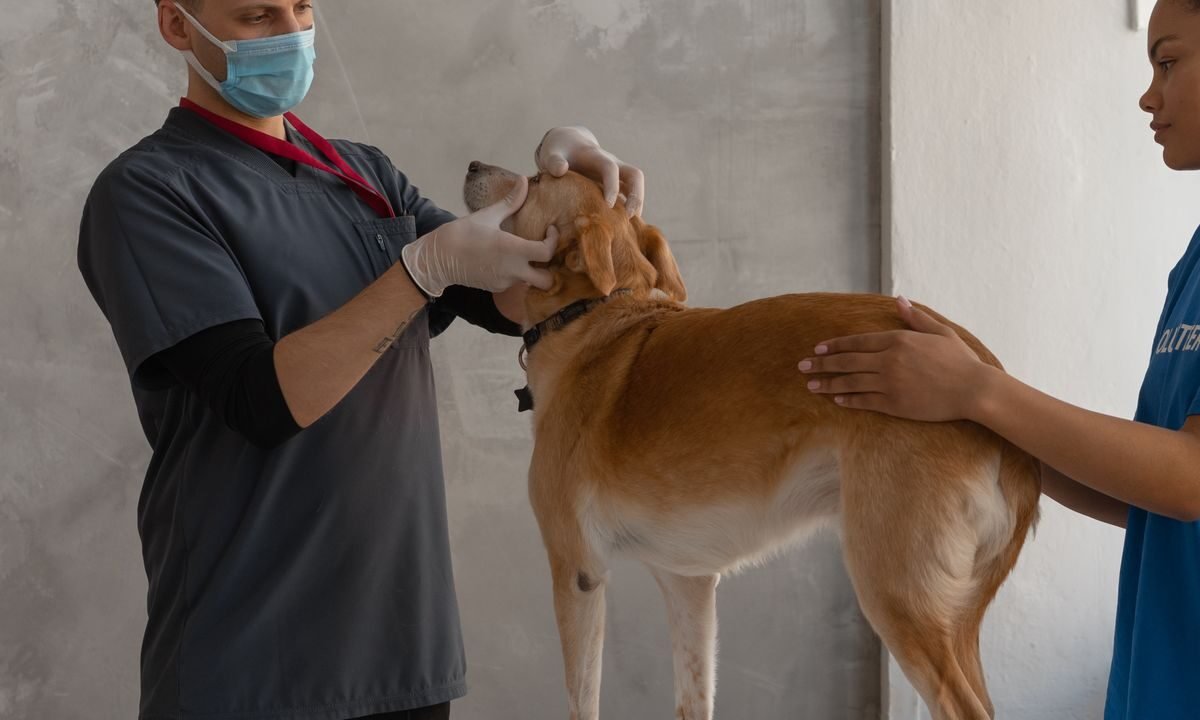
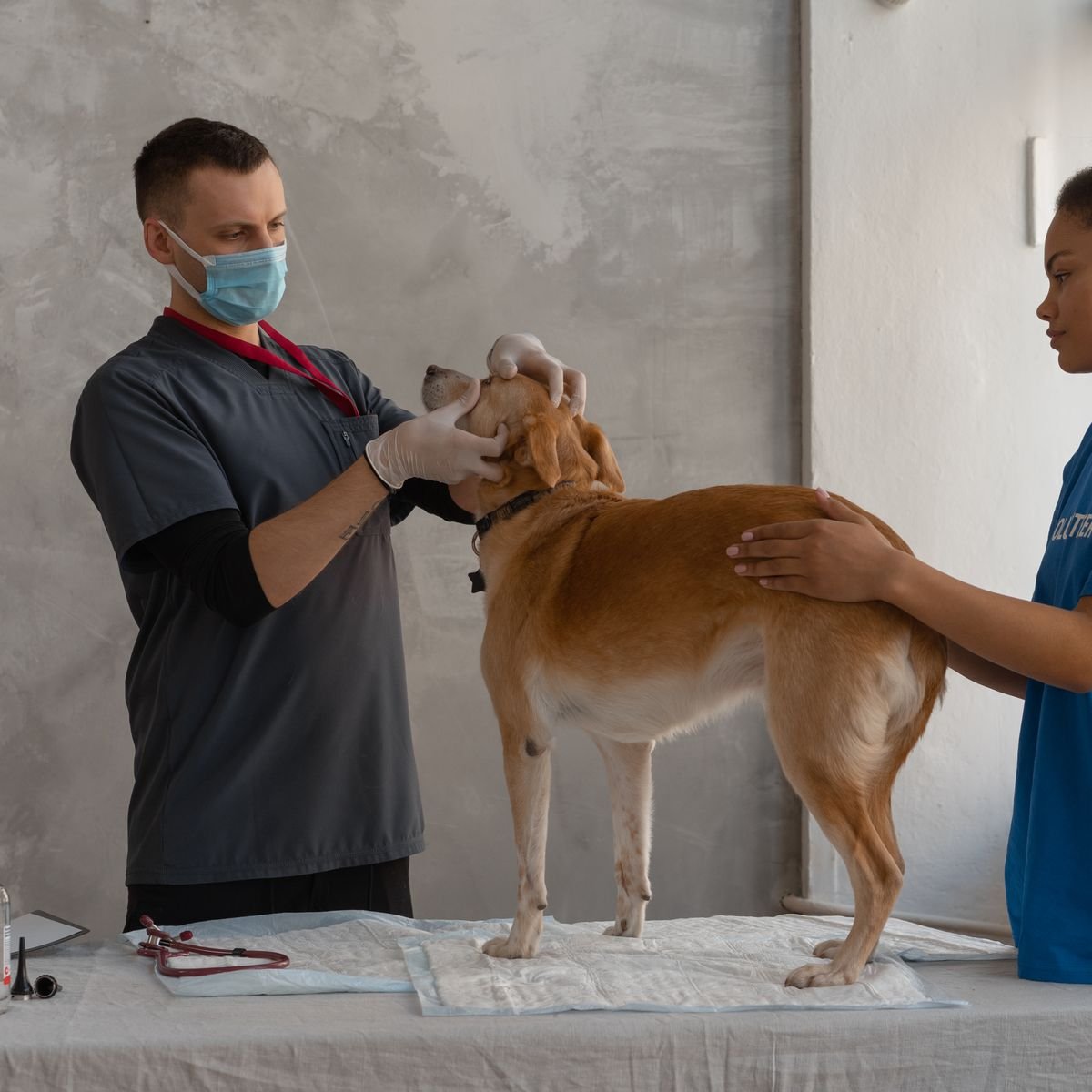
The exam may include close inspection of the eyelids and cornea, fluorescein staining to look for ulcers, tear testing, and measurement of eye pressure. The treatment depends entirely on the diagnosis.
Preventing avoidable eye injuries
Keep long facial hair from constantly rubbing the eyes, supervise rough play when needed, and avoid letting dogs push their faces through thorny brush or moving car windows. If your dog is prone to eye disease because of breed anatomy, ask your veterinarian what routine monitoring is appropriate.
Prevent self-trauma while you arrange care
A painful dog may rub the face on furniture or scratch at the eye, potentially worsening a corneal injury. If you already have a properly fitted Elizabethan collar and your dog tolerates it, your veterinarian may recommend using it while traveling to the clinic.
Some breeds need extra vigilance
Dogs with prominent eyes or shallow eye sockets can be more vulnerable to surface injury and trauma. Dogs with heavy facial folds or hair rubbing the cornea may also develop recurring irritation. Breed anatomy does not make redness “normal.”
Why eye pressure and tear tests matter
Two red eyes can have very different causes. Measuring tear production can help identify dry eye, while measuring intraocular pressure can help detect glaucoma or inflammation inside the eye. That is why leftover drops are risky—the correct medication depends on the diagnosis.
The bottom line
Eye problems are an area where “wait and see” can be risky. Mild tearing may be temporary, but squinting, cloudiness, marked redness, injury, swelling, or sudden vision changes deserve veterinary attention. If your dog appears to be in pain, treat the change as important even if the eye still looks mostly normal.
This article is for general pet-owner education and is not a substitute for diagnosis or treatment by a veterinarian.
0 comments