
Anatolian Shepherd vs Kangal: History, Size, Temperament and Working Style

The Anatolian Shepherd Dog and Kangal are both large livestock-guardian dogs associated with Türkiye, but the names should not be treated as perfectly interchangeable in every country or registry. The confusion is real because historical populations overlap while modern kennel organizations draw their breed boundaries differently.
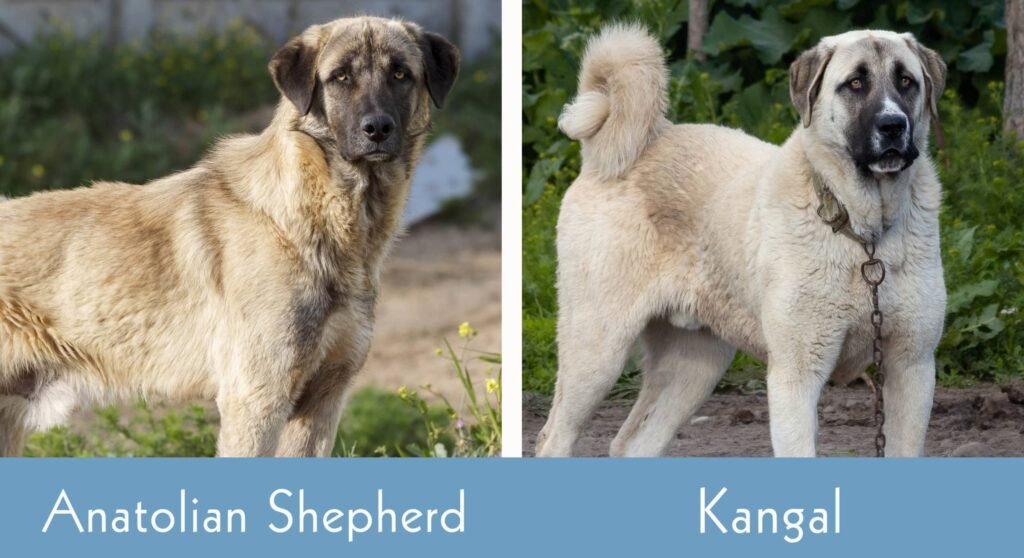
If you are comparing the two for ownership, the registry argument is less important than their shared reality: these are powerful, independent guardian dogs developed to make decisions around livestock, not giant obedience dogs designed to wait constantly for human direction.
The most important distinction: registry context
The Fédération Cynologique Internationale recognizes the Kangal Shepherd Dog under its own standard. The FCI Kangal Shepherd Dog standard lists Türkiye as the country of origin and describes the breed as a shepherd dog used for guarding sheep.
The American Kennel Club recognizes the Anatolian Shepherd Dog. The AKC breed profile describes the Anatolian as an independent, protective livestock guardian.
Because organizations classify the dogs differently, a statement such as “Kangal and Anatolian Shepherd are exactly the same breed everywhere” is too broad.
Why the names overlap
Anatolia is a large historical and geographic region, and livestock-protection dogs developed across Türkiye under practical working selection. Modern breed standards attempt to define populations that historically were not always managed under the same formal kennel-club boundaries used today.
That helps explain why English-language sources sometimes use Anatolian, Kangal and other Turkish guardian terms loosely even when official registry standards separate them.
Kangal Shepherd Dog under FCI
The FCI standard presents the Kangal as a Turkish livestock guardian and places emphasis on its functional ability to protect sheep under difficult climate conditions.
The modern standard gives a more unified type than the broad range historically associated with Anatolian livestock guardians.
Anatolian Shepherd Dog under AKC
The AKC Anatolian Shepherd Dog standard allows a broader range of colors and describes a large, powerful, agile livestock guardian with an independent and territorial character.
For an American puppy buyer, the registered name and pedigree should be interpreted according to the registry actually issuing the records.
Size comparison
Both are very large dogs. Exact standard heights and weights differ by organization, sex and individual.
The practical ownership point is that either dog can be physically difficult to control if training and management fail. Adult strength changes fencing, transport, veterinary handling and visitor management.
Livestock guardian versus herding dog
This is one of the most important distinctions for new owners. Livestock guardians protect animals from perceived threats. Herding breeds move animals under closer human direction.
An Anatolian or Kangal may spend long periods observing territory and make independent decisions. An Australian Shepherd or Border Collie has a different working relationship with livestock and handler.
Independence is not disobedience
Guardian breeds were selected to work at distance from people. That history can produce dogs that evaluate a situation before responding rather than instantly repeating trained behaviors.
Owners who want competition-style handler focus may find that frustrating. Training still matters, but expectations should fit the breed’s working history.
Protective and territorial behavior
Both types can be strongly territorial and reserved with unfamiliar people or animals. That does not mean every individual will be aggressive, but it does mean management should be planned before problems occur.
Secure gates, clear visitor routines and responsible introductions are more useful than deliberately encouraging suspicion.
Do they need protection training?
Generally, adding formal protection or guard-dog training to a livestock guardian is unnecessary for ordinary ownership and can create additional management risk.
The AKC’s Anatolian guidance specifically emphasizes the breed’s instinctive protective nature and the importance of socialization and obedience rather than teaching extra guarding behavior.
Socialization should build neutrality
For guardian breeds, socialization does not mean making the dog greet every stranger. The goal is calm exposure and the ability to remain manageable around normal people, animals, surfaces, sounds and handling.
Forcing a naturally reserved puppy into constant contact can create stress rather than confidence.
Training approach
Use reward-based training, clear boundaries and management. Practise leash skills, recall where realistic, handling, waiting at gates, settling and moving away from triggers.
Our positive-reinforcement training guide gives the general learning principles, but owners of livestock guardians often benefit from trainers with direct experience of guardian breeds.
Fencing is not optional management
A tall, secure physical fence and locked gates are important for many guardian-dog homes. These dogs may patrol large areas if given the opportunity and may make their own decisions about unfamiliar animals or people entering perceived territory.
Do not assume an invisible fence is enough for a powerful territorial guardian.
Exercise needs
Neither type should be chosen as a marathon running partner simply because the dog is large. Their traditional work involves steady movement, observation and guarding rather than repetitive high-speed exercise.
Provide daily walks, appropriate free movement in secure areas and mental engagement while maintaining healthy body condition.
Apartment or dense urban living
Some individual dogs may adapt, but dense housing can make guardian behavior difficult to manage. Constant hallway traffic, neighboring dogs, shared entrances and limited secure outdoor space may create repeated triggers.
Property type should be considered honestly before acquiring either breed.
Living with children
A stable guardian may be devoted to its own household, but size and protective behavior still require adult management. Children should not supervise visitors or manage a giant dog at the door.
Teach calm interaction and separate when adults cannot actively supervise.
Living with other dogs
Compatibility varies. Same-sex conflict, territorial behavior and intolerance of unfamiliar dogs can occur in guardian breeds.
Early positive exposure helps, but it cannot guarantee universal sociability in adulthood.
Livestock homes
A working livestock guardian should come from lines selected for appropriate livestock behavior when that is the intended job. Simply putting a pet-bred adolescent dog with sheep does not guarantee safe guarding.
Working placement requires mentorship, gradual introductions and careful supervision.
Grooming
Both have practical working coats rather than high-maintenance decorative coats, but shedding can still be substantial. Routine brushing helps manage loose undercoat and allows skin checks.
Health screening
Ask breed clubs and responsible breeders which orthopedic, eye, cardiac or genetic evaluations are relevant in the specific population. Because registry definitions differ, use recommendations appropriate to the actual registered breed and country.
Our responsible breeder checklist explains how to verify health results instead of accepting “healthy parents” as proof.
Which is better for a first-time owner?
For most beginners, neither should be chosen mainly because the dog looks impressive or protective. Large independent guardians demand strong management, secure containment and realistic expectations around strangers and territory.
An experienced, well-supported first-time owner may succeed, but there are easier breeds for someone still learning basic dog management.
How should you choose between them?
First identify which registry and breeding population you are actually considering. Then evaluate the breeder’s goals, adult temperament, health screening, working history and the environment where the dog will live.
Do not buy based only on claims such as “pure Turkish Kangal,” “more powerful than an Anatolian” or exaggerated bite-force marketing. Those slogans do little to predict whether a specific dog fits your household.
Bottom line
The Anatolian Shepherd Dog and Kangal share Turkish livestock-guardian roots, but modern registry definitions differ. The FCI recognizes the Kangal Shepherd Dog, while the AKC recognizes the Anatolian Shepherd Dog. For owners, both demand respect for independent guardian behavior, strong containment, thoughtful socialization and experienced management. Choose based on the actual dog, breeding program and living situation—not internet arguments over which label sounds more authentic or powerful.

0 comments