
Cavapoos for Adoption: How to Search Rescues and Evaluate a Match
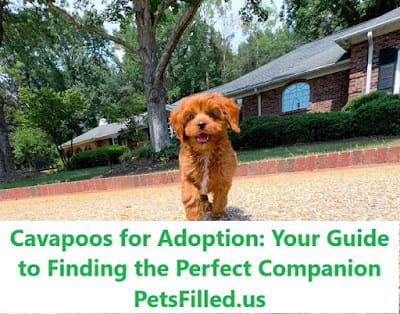
Adopting a Cavapoo starts with the individual dog, not the label
A Cavapoo is usually described as a Cavalier King Charles Spaniel–Poodle mix, but that label does not guarantee size, coat, shedding level, temperament or health. Rescue dogs may also have uncertain parentage, so a dog listed as a Cavapoo may be a best estimate based on appearance rather than a DNA-confirmed cross.
The safest approach is to evaluate the dog in front of you: health, behavior, grooming needs, activity level, history and fit with your household. The RSPCA’s dog-adoption guidance makes the same broader point for rescue dogs: successful placement depends on lifestyle, working pattern, children, other pets and the individual dog’s needs.
Cavapoo adoption-fit tool
Swipe horizontally to view the full table.
| Question | Why it matters |
|---|---|
| How long is the dog comfortable being alone? | Some companion-oriented dogs struggle with long absences. |
| What is the grooming routine? | Curly or wavy coats can mat quickly and may need professional grooming. |
| How does the dog behave around children? | History and supervision matter more than the mix label. |
| How does the dog react to other dogs or cats? | Individual social history is more useful than breed stereotypes. |
| Any heart, eye, joint or neurologic history? | Cavalier and Poodle ancestry can carry different inherited risks. |
| What happens when the dog is handled? | Coat care, ears, paws and veterinary handling will be recurring needs. |
Where to look for a Cavapoo to adopt
Start with municipal shelters, established rescue charities, foster-based rescues and breed-specific rescues for Cavaliers and Poodles. A mixed-breed dog may enter any of those systems. Search by size, age and temperament as well as by “Cavapoo,” because rescue labels can be approximate.
Be cautious with websites that use “adoption” language while functioning like commercial puppy sellers. A legitimate rescue should be able to explain where the dog came from, what veterinary care has been completed and how the adoption process works.
Ask about the dog’s real history
Useful questions include why the dog was surrendered, how long it has been in foster care, whether there is video of the dog at home, how it behaves when left, whether it is housetrained, and what the foster or shelter has observed around visitors, children and other animals.
“Friendly” is too broad. Ask what friendly looks like: approaches strangers calmly, jumps repeatedly, hides at first, or becomes overexcited around other dogs.
Health screening matters even for a mixed breed
Mixed breeding does not erase inherited disease. Cavaliers are monitored for important cardiac, eye, patella and hip concerns. The Cavalier King Charles Spaniel Club’s health-testing guidance recommends cardiology, eye, patella and hip screening for breeding dogs.
Poodles have their own health-testing recommendations that vary by size variety. The Poodle Club of America lists eye, patella, hip and DNA testing recommendations depending on whether the dog is Toy, Miniature or Standard.
An adopted adult will not always come with parental test results. That does not make the dog a bad choice; it simply means you should not assume the word “hybrid” guarantees health.
Do not assume a Cavapoo is hypoallergenic
Poodles are known for a low-shedding coat, but mixed puppies can inherit coat traits in unpredictable combinations. A Cavapoo may shed very little, moderately or more than expected. Saliva and skin proteins can also trigger allergies, so coat type alone cannot guarantee an allergy-safe dog.
If someone in the household has significant dog allergy, spend time with the individual dog before committing and discuss medical allergy management with a healthcare professional.
Grooming can be a major ownership cost
A soft wavy or curly coat can mat around the ears, collar, armpits, legs and tail. Some Cavapoos need brushing several times a week plus professional grooming on a regular schedule. Dogs that dislike handling may need gradual cooperative-care training.
Ask the rescue when the dog was last groomed, how it behaves for brushing and clipping, and whether there is a history of ear or skin problems.
Temperament is not predictable from “best of both breeds” marketing
Cavaliers are described by the AKC as affectionate, gentle and people-oriented, while Poodles are active, intelligent and highly trainable. A mix may show some of those tendencies, but genetics do not blend like equal amounts of paint.
The individual dog may be quiet or energetic, confident or cautious, highly social or selective. Foster-home observations are often more useful than generic breed descriptions.
Separation concerns deserve special attention
Both parent breeds are strongly associated with human companionship, so ask specifically what happens when the dog is alone. Barking, pacing, drooling, destruction around doors and refusal of food can indicate separation-related distress rather than simple boredom.
If a dog already has a history of separation anxiety, be realistic about your work schedule. PetsFilled’s separation anxiety guide explains how treatment can require gradual training and management.
Children and other pets
Do not rely on “Cavapoos are good with kids” as a safety rule. Ask what ages of children the dog has lived with and how interactions were managed. Small dogs can be injured by rough handling, and any dog can become uncomfortable when cornered or disturbed while resting.
For other pets, controlled introductions matter. A dog that lived peacefully with one cat may still react differently to another.
Meet the dog more than once when possible
Many dogs behave differently in a shelter kennel than in a quiet room or foster home. If the rescue allows it, have multiple household members meet the dog. Bring resident dogs for a managed introduction when the organization recommends it.
The RSPCA notes that some dogs benefit from several meetings before adoption, particularly when children or other pets are involved.
Red flags in an adoption listing
- No verifiable rescue organization or physical contact information.
- Pressure to pay immediately to “reserve” a dog.
- No veterinary records.
- Shipping offered with little or no matching process.
- Claims that every Cavapoo is non-shedding, perfectly healthy or ideal for every family.
- Refusal to discuss behavior problems honestly.
Budget beyond the adoption fee
Plan for food, preventive care, vaccines, grooming, dental care, training, insurance or emergency savings, identification and supplies. A lower adoption fee does not mean a low-cost dog over a lifetime.
PetsFilled’s pet adoption budgeting guide can help you build a first-year and ongoing cost plan.
The first veterinary visit
Arrange a post-adoption examination even when the rescue has already provided care. Bring vaccination, microchip, deworming, surgical and medication records. Ask about body condition, dental health, ears, skin, heart, joints and any condition mentioned in the history.
This visit is also a good time to create a parasite-prevention plan based on where the dog lives and travels.
The first two weeks should be boring enough to succeed
New adopters often want to introduce every relative, dog park and café immediately. A quieter start is usually easier. Establish feeding, toilet and sleep routines; let the dog learn the home; and add experiences gradually.
Stress can temporarily affect appetite, stool, sleep and behavior. Give the dog information and predictability rather than constant novelty.
Training after adoption
Use reward-based methods. The dog may arrive with established cues, no formal training or a history you do not fully know. Start with name response, recall foundations, handling, settling and household routines.
PetsFilled’s positive-reinforcement training guide provides a practical framework.
Adoption versus buying a Cavapoo puppy
Adoption is not always faster or easier. Specific designer mixes can be uncommon in rescue, and an adult dog may come with medical or behavior needs. The advantage is that an adult foster dog may already have observable size, coat and temperament.
If you decide to buy instead, health testing of both parent breeds matters. Do not substitute a generic DNA panel or a “vet checked” statement for relevant screening documentation.

The practical bottom line
Do not adopt a Cavapoo because the label promises a teddy-bear coat, easy temperament or allergy-friendly home. Adopt because the individual dog’s needs fit your household and you are prepared for grooming, companionship, training and veterinary care. A careful match is more important than finding the exact mix name.



0 comments