
Dog Barking at Night: Causes, Training and When to See a Vet
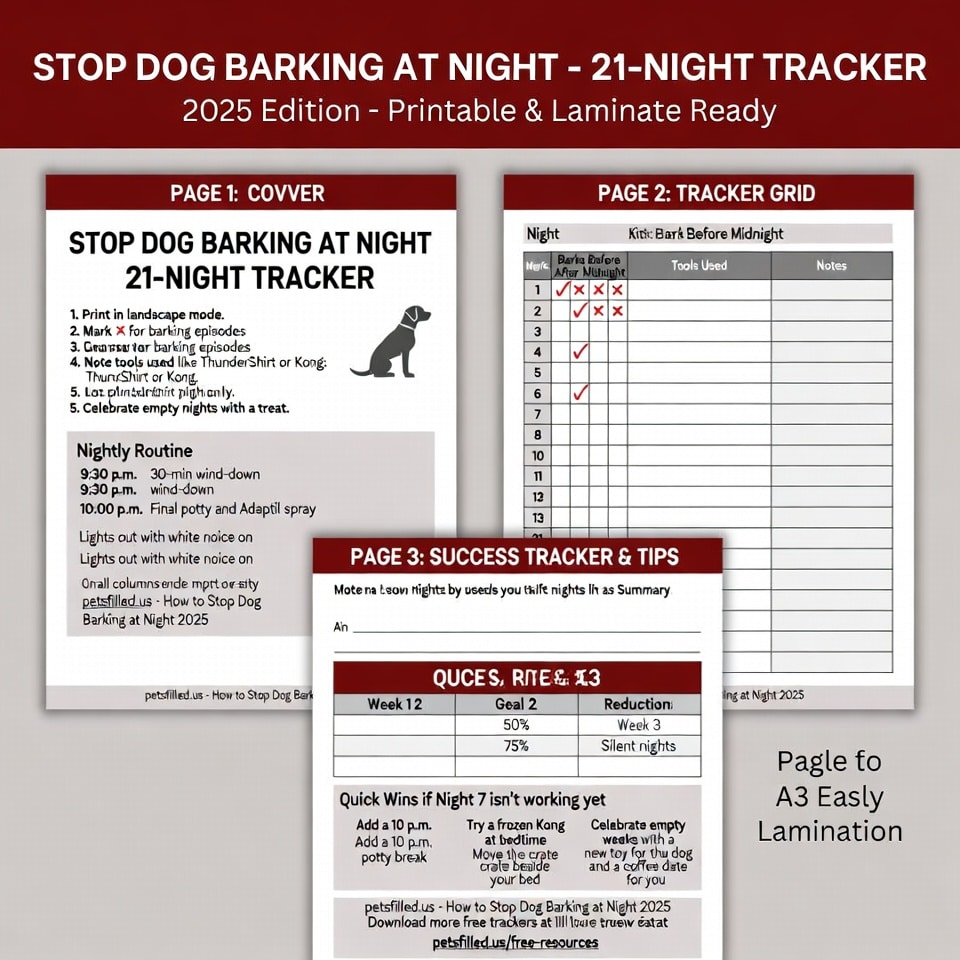
Night barking is a behavior, not a diagnosis. A dog may bark because of outside sounds, unmet toilet needs, separation distress, fear, pain, cognitive changes, frustration or a learned pattern that has been repeatedly reinforced. The most effective response depends on the cause.
Start by asking what happens immediately before the barking
For several nights, note the time, location and trigger if you can identify one. A simple camera can help when barking happens after you leave the room. Look for patterns such as passing animals, hallway noise, a need to urinate, restlessness, panting, pacing or waking in confusion.
Rule out medical causes when the behavior is new
Contact your veterinarian when nighttime barking begins suddenly, especially in a senior dog or when it appears with pain, increased thirst, frequent urination, coughing, breathing changes, digestive signs, disorientation or major sleep changes. Pain and illness can reduce a dog’s ability to settle.
Reduce predictable environmental triggers
- Close curtains or move the resting area away from a window if visual triggers are a problem.
- Use steady background sound to reduce intermittent hallway or street noise.
- Provide a comfortable sleeping area with an appropriate temperature.
- Give a final toilet opportunity before bed.
- Keep a consistent but flexible bedtime routine.
Meet daytime needs without trying to “exhaust” the dog
Appropriate exercise, sniffing and enrichment can support better rest, but excessive activity is not a treatment for anxiety or pain. Match exercise to age and health. A short sniff walk or calm food puzzle may be more useful than intense late-night play.
Reward quiet settling
Teach a calm resting behavior during the day when the dog is already capable of relaxing. Reward lying on a mat or bed, then gradually practice with mild distractions. At night, keep responses calm and functional rather than turning barking into a long play or attention session.
Avoid punishment and bark collars
Yelling, startling or using aversive collars may suppress sound without addressing fear, discomfort or the trigger. Veterinary behavior guidance recommends reward-based methods and warns against aversive training.
What if the dog barks when left alone?
Record a short video after departure if it is safe to do so. Barking paired with pacing, escape attempts, drooling, destruction near exits or inability to eat may suggest separation-related distress. This problem usually needs a structured behavior plan rather than simply ignoring the dog until the barking stops.
See our dog anxiety guide for a broader approach to fear and distress.
Senior dogs may need a different plan
Nighttime vocalization in an older dog can be associated with pain, sensory changes, medical disease or cognitive dysfunction. Do not assume the dog is being demanding. A veterinary assessment is appropriate when the pattern is new or progressing.
When to seek professional behavior help
Get help when barking is associated with panic, aggression, severe sleep disruption, repeated escape attempts or a trigger you cannot safely manage. A veterinarian can also help identify whether a medical problem is contributing and refer to a qualified behavior professional when needed.
Sources and further reading
This article is educational. Sudden barking with pain, breathing problems, disorientation or other illness signs should be discussed with a veterinarian.



0 comments