
Why Is My Dog Licking Their Paws? Allergies, Pain, Infection and Behavior
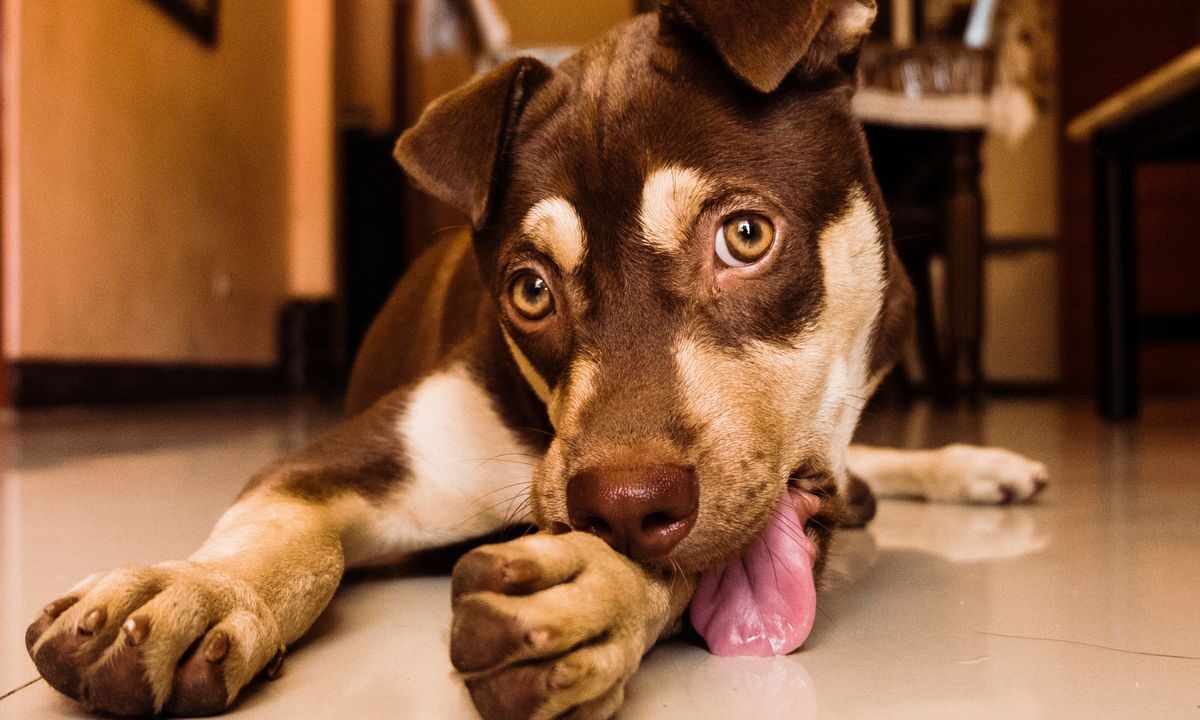
An occasional lick after a walk is normal grooming. Repeated chewing, licking or staining of the feet is different. Paw licking is a sign, not a diagnosis, and the pattern can help narrow the cause.
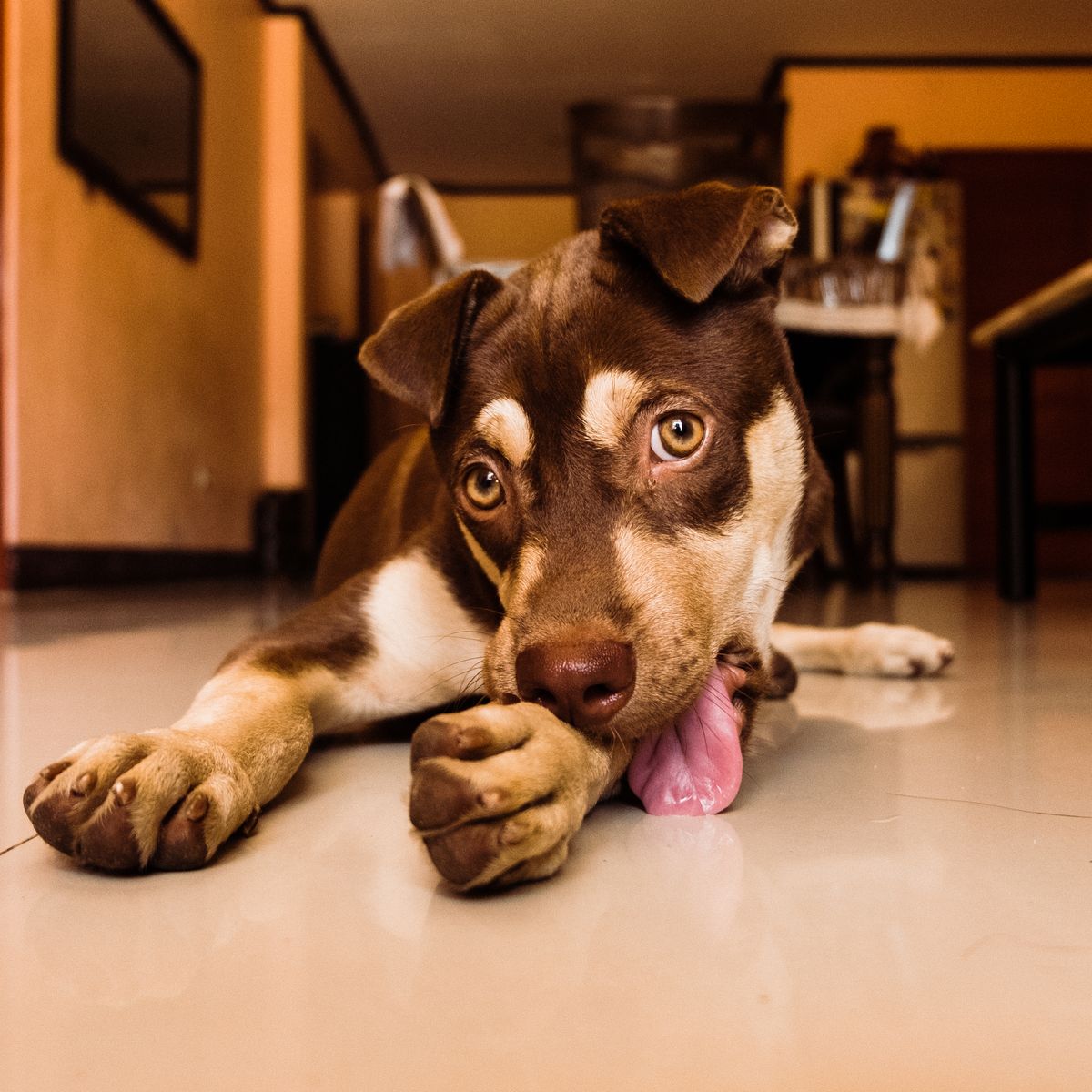
Allergies are a common cause
The Merck Veterinary Manual notes that allergic dogs commonly lick or chew the feet, and the ears, face and abdomen may also be affected.
Secondary infection can keep the cycle going
Moist irritated skin can develop bacterial or yeast overgrowth. Odor, redness, greasy skin, pustules or discharge make infection more likely and warrant veterinary assessment.
Check for injury or a foreign body
A sudden focus on one paw after a walk may indicate a cut, thorn, splinter, torn nail, burn or something lodged between the toes.
Parasites
Fleas, mites and other parasites can cause itching. Flea-allergic dogs may react strongly even when owners do not see many fleas.
Pain can look like skin licking
A dog may repeatedly lick over a painful joint, nail bed or limb. Merck’s behavior guidance notes that medical causes such as orthopedic or neurologic pain should be considered when a dog repeatedly self-traumatizes one area.
Behavioral repetition is a diagnosis of exclusion
Stress or compulsive behavior can contribute to persistent licking, but a medical workup should come first. Labeling it “anxiety” before checking the skin, nails and joints can delay treatment.
What to check at home
- between the toes;
- pads;
- nails and nail beds;
- redness or swelling;
- odor or moisture;
- whether one paw or all four are affected;
- whether licking is seasonal.
When to see the veterinarian
Arrange an exam for persistent licking, limping, swelling, bleeding, discharge, broken nails, sores, bad odor or obvious pain.
Do not keep applying random creams
Human creams can be unsafe if licked and may mask the appearance of the problem. Treatment should match the cause.
If allergies are suspected, our dog allergy and elimination-diet guide explains how food trials actually work. For parasite prevention, see our flea, tick and worm prevention framework.
The pattern can narrow the possibilities
All four feet becoming itchy in the same season points in a different direction from one suddenly painful toe after a hike. Note whether the problem is symmetrical, seasonal, linked to certain surfaces or worse after outdoor activity.
Saliva staining is a clue, not a diagnosis
Light-colored fur may become reddish-brown after repeated licking. The color tells you the area is chronically wet with saliva; it does not tell you whether allergy, infection, pain or behavior caused the licking.
Environmental contact can matter
Grass, lawn products, road salt and cleaning residues may irritate susceptible feet. Rinsing and drying paws after exposure can be useful while the underlying cause is being assessed, but persistent inflammation still needs veterinary attention.
Boots can help some environmental problems
Well-fitted boots can reduce contact with salt, rough surfaces or known irritants on walks. They should not be used to seal an already moist infected paw without veterinary advice.
Break the lick–irritation cycle safely
If a veterinarian recommends an Elizabethan collar, boot or other barrier, its purpose is to protect healing tissue while the cause is treated. A barrier alone rarely solves chronic paw licking.
One paw versus all four matters
A single sore paw points more strongly toward a local problem such as a torn nail, foreign body, pad injury or focal pain. Licking several feet, especially in a seasonal pattern, makes allergy or environmental irritation more likely. That pattern helps your veterinarian decide where to start.
Check between every toe
Moisture, redness, small swellings and plant material can hide between the toes even when the top of the paw looks normal. Use good light and stop if the dog is painful rather than squeezing or digging into the webbing.
Odor and discharge suggest infection needs consideration
A musty or foul smell, greasy skin, pustules or sticky discharge can accompany bacterial or yeast overgrowth. Infection may develop secondarily after allergy or repeated licking, so treating only the surface without addressing the trigger can lead to recurrence.
Seasonal patterns are worth writing down
If licking reliably worsens during spring, summer, after grass exposure or in one home environment, record that. A simple calendar can make an allergy pattern much clearer than trying to reconstruct several months from memory.
Food allergy cannot be diagnosed from one ingredient list
If food allergy is suspected, a properly controlled elimination diet is more informative than repeatedly switching between retail foods. Follow the veterinary plan closely because treats, flavored medications and accidental foods can undermine the trial.
Do not bandage a wet paw without guidance
Covering a moist inflamed paw can trap heat and moisture and worsen infection. If protection is needed, ask the veterinary team what type of barrier is appropriate and how often it should be changed.
Repeated licking can create its own injury
Even when the original trigger was minor, constant saliva and friction can damage the skin barrier. Breaking that cycle safely while treating the underlying cause is often part of recovery.
Moisture between the toes can keep inflammation going
After walks, bathing or rinsing, dry between the toes gently. Constant dampness can encourage yeast and bacterial overgrowth, especially in dogs that already lick heavily.
Repeated paw licking can alter gait
A sore paw may make the dog shorten a stride or shift weight. If licking and limping happen together, think beyond allergy and consider pain, a nail injury or another orthopedic problem.
Seasonal allergy patterns can evolve
A dog that once licked paws only in spring may later show longer or more severe seasons. Keep notes over time because treatment may need adjustment as the pattern changes.
Do not use socks or boots continuously without checking skin
Protective coverings can help in some situations, but they can also trap moisture and heat. Remove them as directed and inspect the skin rather than leaving a covered paw unchecked for long periods.
Recovery should include less licking and healthier skin
Do not judge treatment only by whether redness fades. Hair regrowth, less odor, reduced licking and normal comfort on walks are all useful signs that the underlying problem is improving.
Also note whether licking changes after walks, bathing, grass exposure or time indoors. A clear trigger pattern can make the veterinary history much more useful.
If one paw becomes swollen, painful or suddenly worse than the others, treat that as a local problem until proven otherwise rather than assuming it is only allergy.
Check the nails as part of every paw review
A split nail, damaged nail bed or overgrown dewclaw can cause persistent licking that looks like skin allergy. Compare all four feet and note whether one nail is unusually sensitive.
Watch what happens when licking is interrupted
If the dog immediately returns to one spot, becomes protective of the paw or begins limping, pain deserves more attention than simple habit.
Record whether the problem is confined to one paw or spreads to several feet over time.
Persistent pain or swelling deserves prompt veterinary assessment and follow-up care.
Photographs help track change
Take clear weekly photos in similar lighting. Skin color, swelling and hair loss are easier to compare over time than from memory.

0 comments