
Hairless Dog Breeds: Skin Care, Temperature and What Ownership Is Really Like

Hairless dogs are sometimes chosen by people who want less coat shedding, but “no fur” does not mean no grooming. In a hairless dog, exposed skin becomes the main care focus. Sun, cold, friction, acne-like bumps, dryness and minor injuries may require more attention than new owners expect.
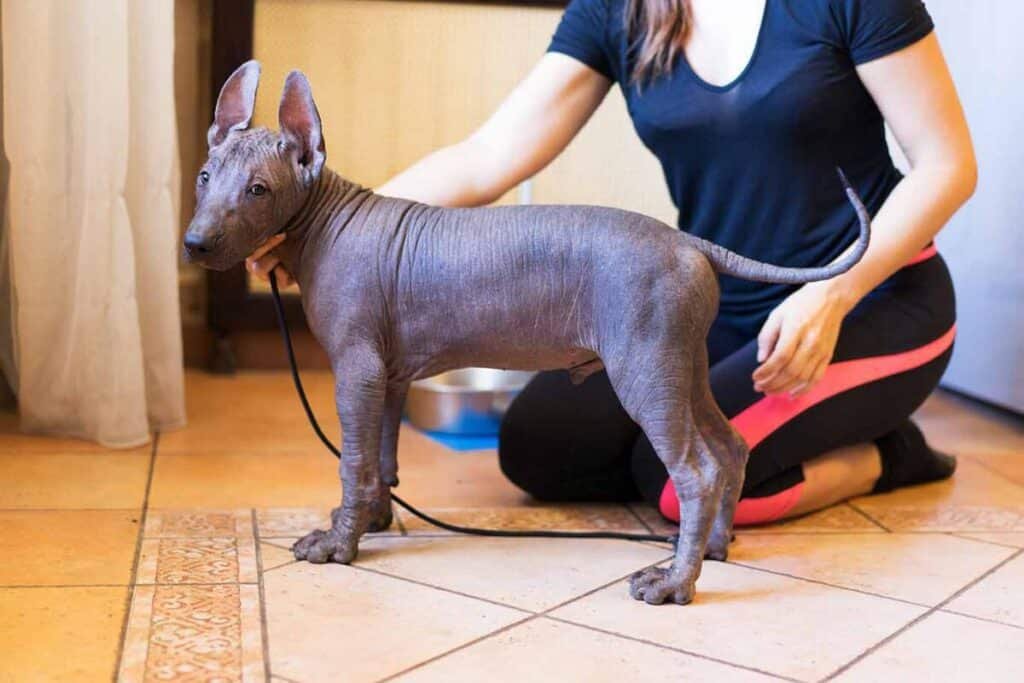
Hairless breeds are also not all genetically or physically identical. Some have coated varieties, some retain furnishings on the head or tail, and the genetic basis of hairlessness can be linked with dental differences in certain breeds.
Which dog breeds can be hairless?
Recognized hairless breeds include the Xoloitzcuintli, Chinese Crested, American Hairless Terrier and Peruvian Inca Orchid. Recognition varies by registry and country, and some of these breeds occur in both hairless and coated forms.
The American Kennel Club’s hairless-breed overview highlights the Xoloitzcuintli, Chinese Crested, American Hairless Terrier and Peruvian Inca Orchid while also noting that bare skin still requires protection and care.
Xoloitzcuintli
The Xoloitzcuintli, often shortened to Xolo, is an ancient Mexican breed that comes in hairless and coated varieties and in more than one size.
Hairless Xolos often have incomplete dentition because the genetic trait associated with hairlessness is linked with tooth development. This is a breed feature, not evidence that every missing tooth results from poor care.
Chinese Crested
The hairless Chinese Crested usually retains hair on the head, feet and tail. A fully coated variety, the Powderpuff, also exists.
The remaining furnishings still require brushing and maintenance while the exposed body skin needs appropriate bathing and protection.
American Hairless Terrier
The American Hairless Terrier developed from Rat Terrier lines in the United States. Its hairlessness differs genetically from that of breeds such as the Xolo and Chinese Crested.
One practical difference is dentition: the American Hairless Terrier generally has normal dentition rather than the tooth pattern associated with the dominant hairless trait in some other breeds.
Peruvian Inca Orchid
The Peruvian Inca Orchid is another breed that can occur in hairless form. It is athletic and relatively uncommon in many countries.
As with the Xolo and Chinese Crested, prospective owners should research the specific line, breeder health testing and actual temperament rather than treating all hairless dogs as one category.
Hairless does not mean hypoallergenic
No dog breed can be guaranteed allergy-free. People may react to proteins in saliva, dander and other secretions rather than to hair itself.
A hairless dog may reduce loose fur in the home, but that does not remove all dog allergens. If someone in the household has allergies, spend meaningful time with the individual dog before committing and discuss significant allergies with a healthcare professional.
Skin care should usually stay simple
New owners sometimes over-treat hairless skin because every pore and blemish is visible. Constant scrubbing, harsh exfoliation, heavy oils and frequent product changes can make irritation worse.
The AKC’s hairless-dog grooming guidance notes that these dogs still need regular skin, nail and dental care. A veterinarian can help you decide whether a particular cleanser or moisturizer is appropriate for your dog.
How often should a hairless dog be bathed?
There is no universal calendar. Bathing frequency depends on skin oiliness, activity, environment and veterinary advice.
Use a gentle dog-appropriate product and rinse thoroughly. If the skin becomes dry, red, itchy or develops recurrent pustules, do not simply bathe more often. Persistent skin disease deserves a veterinary examination.
Sun protection
Hair normally provides some protection from ultraviolet exposure, so bare skin can be more vulnerable to sunburn. Limit prolonged direct midday sun, provide shade and ask your veterinarian which pet-safe sun-protection products are suitable.
Do not automatically use human sunscreen. Some formulations contain ingredients that are inappropriate if licked.
Cold-weather care
Hairless dogs may lose heat faster in cold conditions because they lack a normal insulating coat. Some individuals benefit from well-fitting clothing outdoors.
Clothes should not rub the armpits, neck or chest. Remove damp garments promptly, and check the skin underneath for friction or trapped moisture.
Warm-weather care
Hairlessness does not protect a dog from overheating. Shade, water, sensible exercise timing and attention to heat stress remain essential.
A dark-skinned hairless dog can still overheat, and a light-skinned dog can both overheat and burn.
Acne-like bumps and blackheads
Hairless dogs may develop comedones or pimple-like skin lesions. Resist the urge to squeeze them. Trauma can increase inflammation and infection risk.
Recurring bumps, crusts, odor, pain or widespread redness should be assessed by a veterinarian because bacterial infection, allergy and other skin disease can mimic “normal hairless skin.”
Dental care deserves extra attention
In some hairless breeds, the genetic variant associated with hairlessness can affect dentition. That makes regular dental assessment especially important.
Begin tooth brushing early with a dog-safe toothpaste and follow your veterinarian’s recommendations for professional dental care.
Nail care
Hairless dogs still need routine nail maintenance. Overgrown nails can affect gait and become painful.
Handle feet gently from puppyhood so trimming becomes easier. If nails are black or you are unsure where the quick ends, ask a groomer or veterinary professional to demonstrate.
Clothing is functional, not just decorative
Coats and shirts can protect against cold, sun and minor scratches, but clothing is not automatically beneficial all day. Fabric can trap moisture, rub the skin or cover developing irritation.
Use clothing when conditions justify it, check fit and give the skin time uncovered indoors.
Do hairless dogs smell less?
They may hold less odor in a coat simply because they have little coat, but the skin itself still produces oils and can develop infection or irritation.
Strong or sudden odor is not something to mask with perfume. It can be a clue that the skin or ears need examination.
Do hairless dogs shed?
Hairless varieties shed very little body hair, though breeds such as the Chinese Crested may shed from their furnishings. Coated varieties of nominally hairless breeds obviously have normal coat maintenance needs.
If low shedding is your main priority, ask whether the specific puppy is genetically and phenotypically hairless rather than relying only on the breed name.
Exercise needs still depend on breed
No coat does not mean low energy. An American Hairless Terrier has terrier heritage and may be lively and inquisitive. A Xolo may have a different activity profile. A Peruvian Inca Orchid is not simply a skin-care project.
Research the whole dog: temperament, exercise, prey drive, social behavior, trainability and health.
Buying from a breeder
Ask about breed-specific health testing, skin issues in the line, dentition where relevant and the temperament of close relatives. Do not assume a rare or unusual appearance proves careful breeding.
Our responsible breeder checklist explains how to verify health testing and contracts before paying a deposit.
Adopting an adult hairless dog
An adult can offer one advantage: you can already see the dog’s mature skin, teeth, size and much of its behavior. Ask the rescue or foster home about sensitivity to weather, bathing routine, allergies, current medications and how the dog behaves around other animals and children.
Is a hairless dog easier to own?
Not necessarily. You may vacuum less coat, but skin protection, bathing, clothing and dental care can replace some of the grooming work.
Choose a hairless breed because the whole dog’s needs fit your household, not because the lack of coat appears maintenance-free.
Bottom line
Hairless dogs can be wonderful companions, but they are not “no-grooming” dogs and cannot be guaranteed hypoallergenic. Protect exposed skin from sun and cold, keep the care routine gentle, monitor dental health and investigate persistent skin changes rather than treating them as cosmetic issues. Most importantly, compare breeds by temperament and lifestyle needs as well as appearance.


0 comments